


Sonic games are taking much longer to make than they used to, and SEGA has responded by changing how the entire series is developed.
Speaking with AUTOMATON at Tokyo Game Show 2026, Sonic series general producer Takashi Iizuka explained that SEGA has historically managed to release some form of new Sonic game virtually every year. That does not mean a new mainline platformer every 12 months. The wider pipeline includes mobile games, downloadable releases and other kinds of Sonic titles.
But keeping that rhythm going has become much harder as individual productions have grown.
“Over the past 35 years, the Sonic series has released something new every year in one form or another. And by ‘something new,’ I don’t just mean the mainline series. We’ve continued releasing new titles in some form, whether mobile games or downloadable titles.
However, development cycles have become longer in recent years. In the past, we could develop games in around two years, so releasing something every year wasn’t particularly difficult. But now, we have titles that take three or even five years to develop, so the intervals have become longer. That has made it more difficult to manage our lineup.”
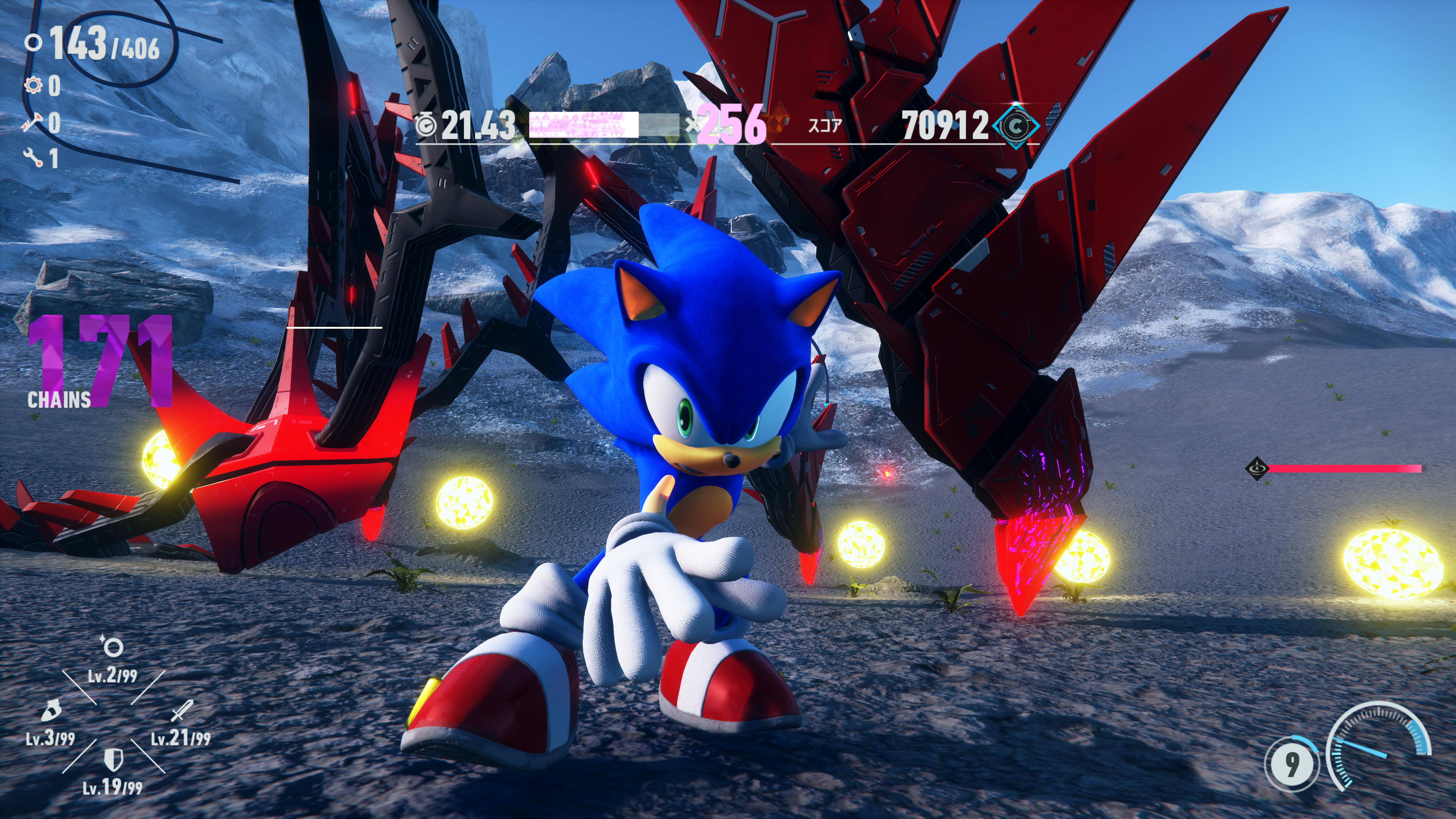
That three-to-five-year range is important. Sonic City previously reported that Sonic Frontiers spent roughly five years in development, around twice as long as what Iizuka described at the time as a more traditional Sonic production cycle. Sonic Superstars was also developed for around two and a half years, overlapping with Frontiers rather than waiting for it to finish.
That overlap is no longer an exception. According to Iizuka, it is now fundamental to how SEGA keeps the Sonic series moving.
When AUTOMATON asked how SEGA continues releasing games consistently despite those longer schedules, Iizuka said multiple projects are kept in production simultaneously. He then made the structure even clearer when asked about major yearly releases:
“It really is difficult (laughs). Since development periods have gotten longer, it’s obviously impossible to achieve that with a single development line, and it would still be difficult even with two lines. So, to make annual releases possible, we secure multiple development lines and work on the games simultaneously.”
That is the key new detail. SEGA is not simply alternating between two Sonic teams while one project finishes and another begins. Iizuka says even two lines would still make the schedule difficult, so the company maintains several projects in parallel.
The stronger Sonic brand has helped make that possible. Asked whether this was something SEGA could have done under its older structure, Iizuka said it was not, adding that Sonic’s increased brand strength has allowed the company to put more money into development.
Running several projects at once also changes Iizuka’s own role. He has previously discussed moving away from directly directing individual Sonic games and into a broader producer position, but the AUTOMATON interview gives a much more detailed picture of how that structure works today.
Each Sonic project has its own director and producer, while Iizuka sits above the individual teams as general producer:
“I’m currently in a position where I oversee all the titles as general producer. Each project has its own director and producer, with a structure in place for bringing it to completion. I oversee all of them as a whole, which allows us to maintain consistency in terms of the characters and overall balance.
In the past, when the Sonic series had a different organizational structure, each project evolved independently. One title might evolve in a certain way, while another title wouldn’t inherit that evolution and would go off in a completely different direction.
Now, however, by managing game production as a whole, if one title develops a new move, for example, we can carry that move over into another title. Being able to maintain an overall balance even in terms of game design is a major benefit.”
That means the parallel structure is not only about getting games out more frequently. Iizuka describes it as a way of preventing separate Sonic projects from drifting too far apart creatively, allowing ideas and gameplay developments from one title to carry into another where appropriate.
The larger organization also gives SEGA more flexibility when an individual project runs into trouble. Iizuka says Sonic development teams have grown enough that staff can now move between projects when necessary:
“I think the lack of resources was a very significant factor. Now that our development teams have grown considerably, if, for example, one title looks like it might not make its deadline, staff from elsewhere can come in to support the project, allowing us to maintain both quality and stay on schedule. We now have that kind of support structure within the team.”
That additional support does not mean development has become relaxed. Iizuka says expectations have risen alongside the resources available to Sonic, with greater pressure to maintain quality and strong review scores.
The comments also add useful context to Iizuka’s confirmation earlier in the interview that he is working on “some new titles” that SEGA cannot discuss yet. With multiple development lines now operating in parallel, those projects can be at very different stages of production while Iizuka oversees the wider Sonic lineup.
With individual Sonic projects now capable of taking three to five years, parallel development has effectively become the mechanism that lets SEGA keep releasing new games regularly without forcing every project through a much shorter production cycle.
Stay tuned to Sonic City for more Sonic the Hedgehog News and Updates!
Discover more from Sonic City ⋆★ Sonic the Hedgehog News, Media, & Community ★⋆
Subscribe to get the latest posts sent to your email.



![Read more about the article Famitsu Translation: Sonic × Shadow Generations is Designed to be the “First Game” for Sonic Beginners. We Also Heard Development Stories About the DLC Featuring Keanu Reeves as a Voice Actor [TGS2024]](https://media.sonic-city.net/2024/10/image-1-300x169.png)
