


Takashi Iizuka has named Sonic Adventure as the first major turning point that comes to mind when he looks back over Sonic’s 35-year history, and his explanation goes well beyond the move from sprites to polygons.
Speaking with Malaysian outlet Wanuxi during Tokyo Game Show 2026, Sonic’s Creative Officer described the 1998 Dreamcast game as the foundation of Modern Sonic. It was the first game to let the character properly race through a 3D world, but the change was not limited to gameplay. Sonic began speaking, the music moved toward rock, and the series established much of the style it still uses today.
Iizuka also remembers just how hard the game was to make. Looking back, he joked that simply thinking about how the team managed to finish it still gives him a headache.
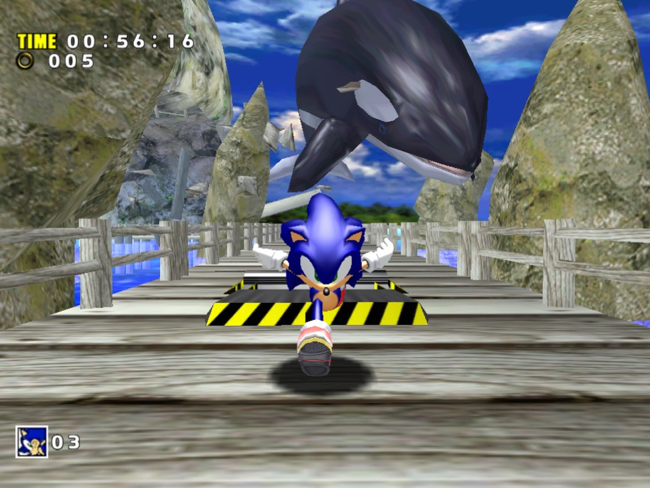
One of the team’s main design problems was making Sonic’s speed enjoyable in a three-dimensional space. Two of its answers became permanent parts of the series.
The first was the camera. Iizuka explained that players could keep moving in the direction the camera faced and make progress toward the goal without becoming lost, even if they were not especially good at judging direction in 3D. The second was the Homing Attack, created because accurately aiming at targets while moving through that space was difficult.
Those ideas did not stay on the Dreamcast. Iizuka said the camera principles and Homing Attack introduced for Sonic Adventure have carried through the 3D games all the way to Sonic Frontiers.

For Iizuka, Adventure remains the starting point rather than a finished answer. Frontiers took the same basic challenge of moving Sonic through 3D space and opened it up, allowing players to travel freely across much larger areas. He said the Open Zone experiment and the game’s five million sales have given Sonic Team a base from which to keep changing how Sonic plays.
The interview also reveals a more personal turning point in Iizuka’s career. He identifies 2010 and Sonic Colors as the year his way of making Sonic games changed.
From Sonic the Hedgehog 3 through Sonic Adventure, Sonic Heroes and Shadow the Hedgehog, Iizuka had worked directly with his teams to build games he designed. As a director, he could see an individual project from one end to the other and remain involved in almost every detail.
That changed with Sonic Colors, when he moved into a producer role. Iizuka began working with separate directors, leaving the finer details of each game in their hands while he stepped back to oversee several Sonic projects at once. Sonic Generations was also in development during that period.

Iizuka has discussed becoming a producer with Sonic Colors before, including in Sonic City’s translated Famitsu coverage. The Wanuxi interview gives that change more weight. He describes 2010 as a major shift in both his position and his working style, from directing one game in detail to guiding several projects from further back.
The full interview also covers Sonic’s supporting cast, the separate Classic and Modern development paths, and Sonic Team’s appetite for new types of play. We covered many of those subjects in our September 17 report on Iizuka’s GamerBraves interview. Wanuxi’s discussion adds something different: a direct account of how Sonic Adventure solved the first problems of 3D Sonic, and how Iizuka’s own job changed as the series grew.
Nearly 28 years later, the Homing Attack is still here, the camera principles remain in use, and Frontiers is still building on questions first asked during Adventure’s development. Modern Sonic has changed plenty since 1998, but Iizuka’s account makes his starting point clear.
Which part of Sonic Adventure’s design do you think has had the biggest effect on the modern games? Let us know in the comments below.
Stay tuned to Sonic City for more Sonic Games News and Updates!
Discover more from Sonic City ⋆★ Sonic the Hedgehog News, Media, & Community ★⋆
Subscribe to get the latest posts sent to your email.





![Translation: [CEDEC+KYUSHU] “Efforts Toward Realizing Open Zones in Sonic Frontiers” Lecture Report](https://media.sonic-city.net/2023/12/029-300x169.jpg)
