Nearly three years after Sonic Frontiers: The Final Horizon rewrote the game’s final act, director Morio Kishimoto has finally given a particularly straightforward answer to a question fans have been debating ever since:
What exactly is that ending supposed to be in relation to the original one?
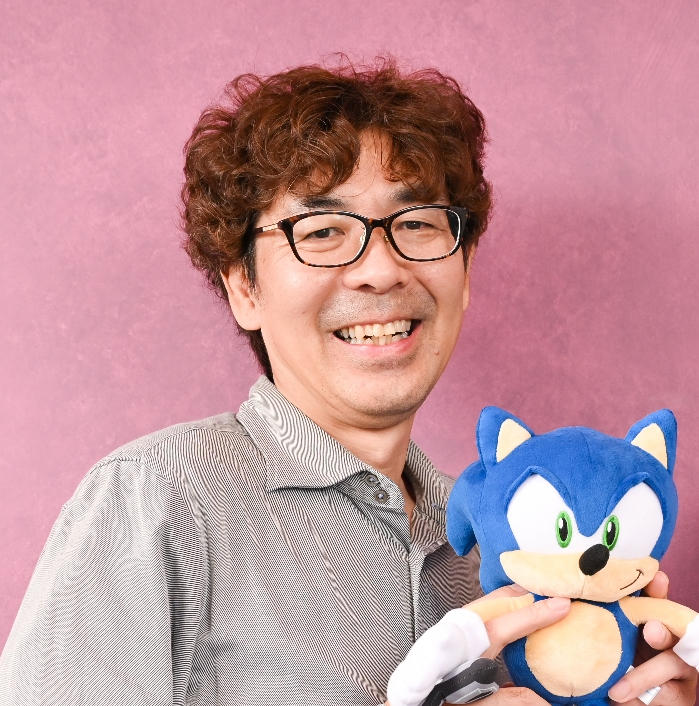
In the third installment of his official “It’s a Column, but I Want to Talk With Everyone!” Q&A series on Sonic Channel, Kishimoto was directly asked whether The Final Horizon’s version of the story was intended to replace the ending included with the original release of Sonic Frontiers.
His answer was clear.
“The story of the third update’s ‘Super Final Battle’ is a different ending from the main game.”
That makes the distinction considerably more explicit than it has previously been.
The Final Horizon, known as “Super Final Battle” in Japan, does not simply add material onto the end of the original scenario. According to Kishimoto, it presents a separate ending from the main game’s conclusion.
What he does not say is equally important.
Kishimoto does not declare one version the “true” or canonical ending, nor does he say that The Final Horizon retroactively replaces or invalidates the original conclusion. His response simply establishes that Sonic Team intentionally created the third update as a different version of how the story can end.
That clarification addresses a question that has followed The Final Horizon since its release.
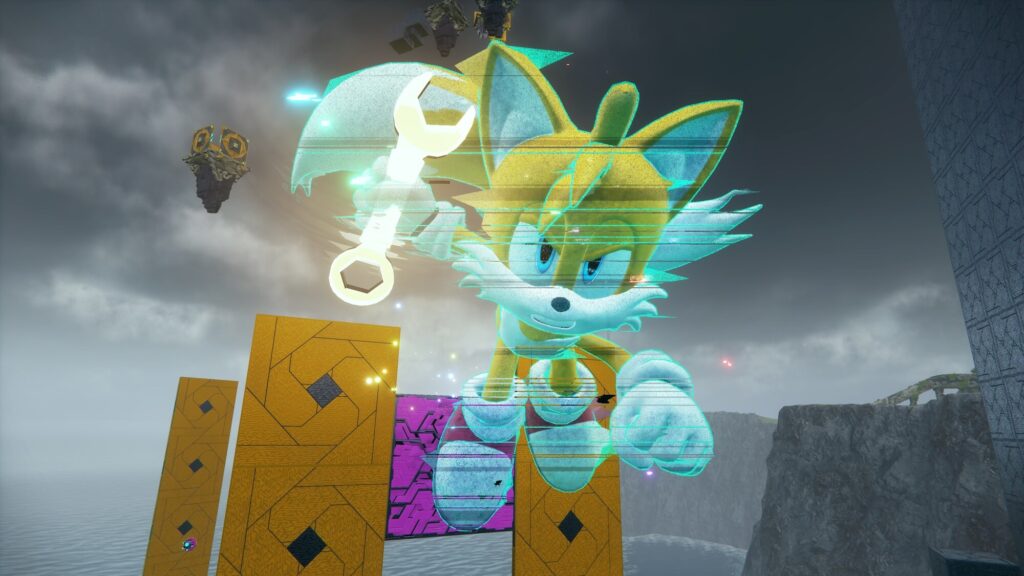
The original Sonic Frontiers finale sees Sonic recover from his cyber corruption before confronting Supreme, with Sage ultimately taking control of the Titan and sacrificing herself during the final confrontation with The End. The Final Horizon instead sends the story down another path, allowing Amy, Knuckles and Tails to participate directly while Sonic learns to harness his cyber corruption before facing a substantially reworked final battle.
The question submitted to Kishimoto also asked why Sonic Team created an alternate version of the story in the first place.
His answer goes back to something he has discussed repeatedly since Frontiers launched: the sheer scale of the response from players.
Kishimoto explained that Sonic Team received a large amount of encouragement, opinions and feedback following the release of the main game. That response ultimately pushed the third free update far beyond the scale that had originally been planned.
Rather than simply making the existing finale larger, the team decided to approach the story from another direction.
Kishimoto said the intention was to let players enjoy the narrative “from a different perspective from the main game”, turning what began as post-launch support into an alternate version of the climax.
That lines up with development details Sonic City has covered before, but today’s comment gives the resulting story a much clearer label.
In our 2023 translation of Famitsu’s one-year anniversary interview with Kishimoto and producer Sachiko Kawamura, the team explained that Frontiers’ updates were originally expected to be considerably smaller. Player enthusiasm and feedback convinced the developers to keep expanding their plans until the third update effectively became a major project of its own.
Kishimoto said at the time that what had initially been conceived as fan service eventually became something intended to rival the retail version of Sonic Frontiers itself. The team was also looking at the increasingly ambitious modding scene, where fans were already experimenting with playable characters and mechanics similar to ideas Sonic Team had planned internally.
That escalation ultimately produced a new Ouranos Island scenario, playable Amy, Knuckles and Tails, new character-specific abilities, the Master King trials, expanded uses for Sonic’s cyber corruption and an entirely different version of the final confrontation.
What had remained less explicit was exactly how Sonic Team viewed the narrative relationship between those events and the original ending.
Kishimoto’s new answer finally makes that part simple:
They are different endings.
The same September 1 column also provides a little more insight into how Kishimoto approaches Sonic development internally.
Asked how elements such as a game’s themes, characters, art style and overall atmosphere are decided, Kishimoto explained that the process generally begins with him presenting an initial idea to Sonic Team’s art, programming and sound teams.
Those proposals are not treated as fixed instructions.
Instead, discussions between departments generate new ideas and gradually transform the original concept, something Kishimoto says often makes the result more interesting than what he initially proposed. He describes that evolving collaborative process as one of the things that makes Sonic Team’s development environment particularly stimulating.
The comments provide a useful look at how much of the tone of a modern Sonic game begins at the director level before being reshaped across the wider team.
Kishimoto also returned briefly to Frontiers’ open-zone design, although this part should sound familiar to our readers.
He explained that Sonic Team approached the open zone as a reinterpretation of open-world design, attempting to combine main missions, side activities, level design, Cyber Space, combat, puzzles, exploration and boss battles into a single distinctly Sonic experience.
Actually building that structure revealed plenty of lessons, he says, along with many ideas for things the team believes it could still do with the concept.
Sonic City already covered Kishimoto’s more direct comments on that subject in August, when he said the team intends to use the experience gained from Frontiers while continuing to evolve the approach in future Sonic games.
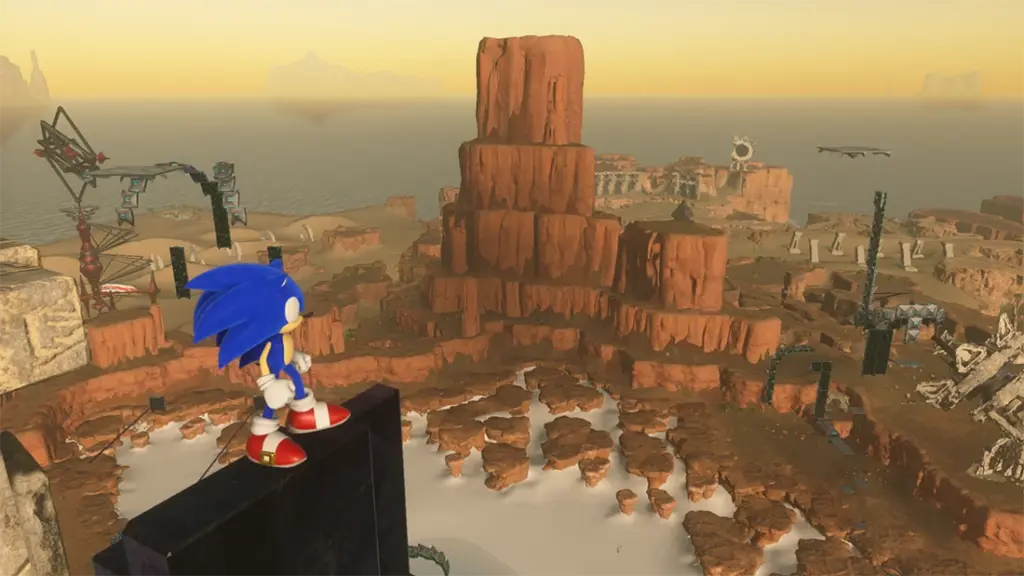
That earlier column also revealed how dramatically Frontiers’ post-launch plans grew after release, including changes to movement, greater camera freedom, the addition of Spin Dash and the expanded final encounter.
The September column therefore does not fundamentally change what we know about the scope of those updates.
What it does give us is perhaps the clearest official description yet of the decision behind their biggest narrative addition.
The Final Horizon was not simply Sonic Team going back and patching a replacement ending into Sonic Frontiers. It was created as another ending, born from a post-launch project that became far more ambitious than originally intended and gave the developers an opportunity to show the story from a different perspective.
As for which ending players should prefer?
Kishimoto leaves that part entirely up to them, ending his response by asking fans which version of the story they liked better.
Considering that people have been arguing about exactly that since 2023, he may regret asking.
Stay tuned to Sonic City for more Sonic Frontiers News and Updates!
Discover more from Sonic City ⋆★ Sonic the Hedgehog News, Media, & Community ★⋆
Subscribe to get the latest posts sent to your email.