More than 25 years after Sonic Adventure 2, we can now look directly at how Sonic Team planned one of the most recognizable opening stages in the series.
Game Informer has published 16 pages from the original City Escape design document, which is also being physically displayed this weekend at SEGA and iam8bit’s 35 Years of Speed: The Sonic Art Exhibit in Los Angeles.
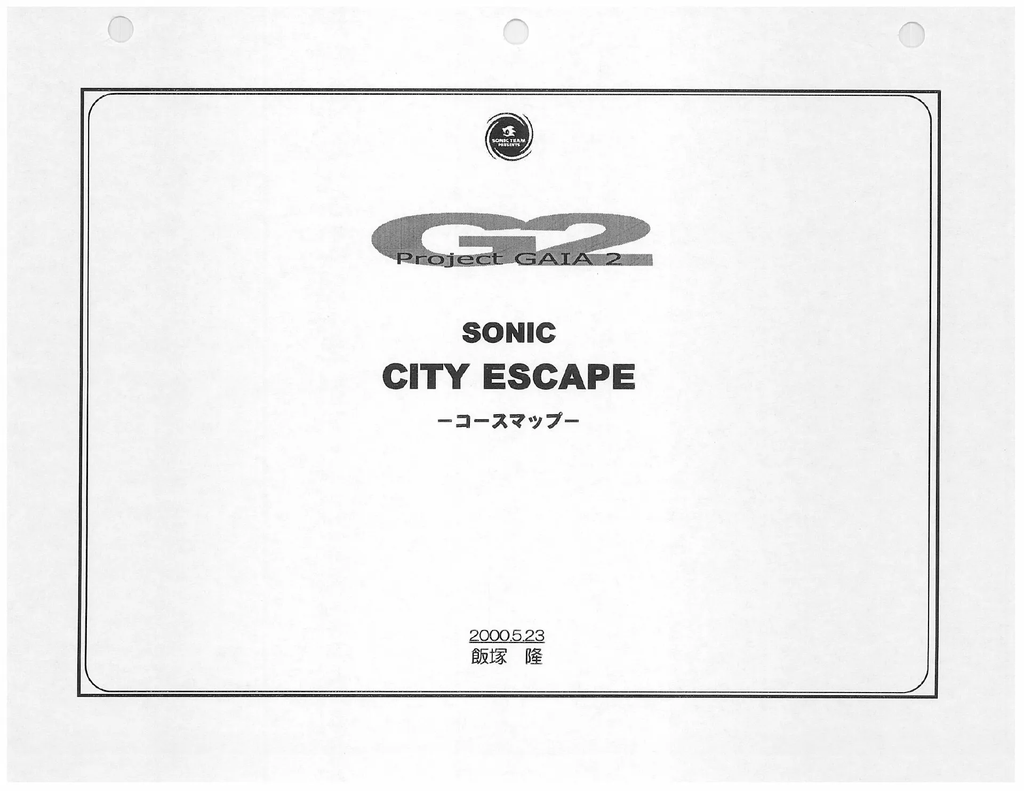
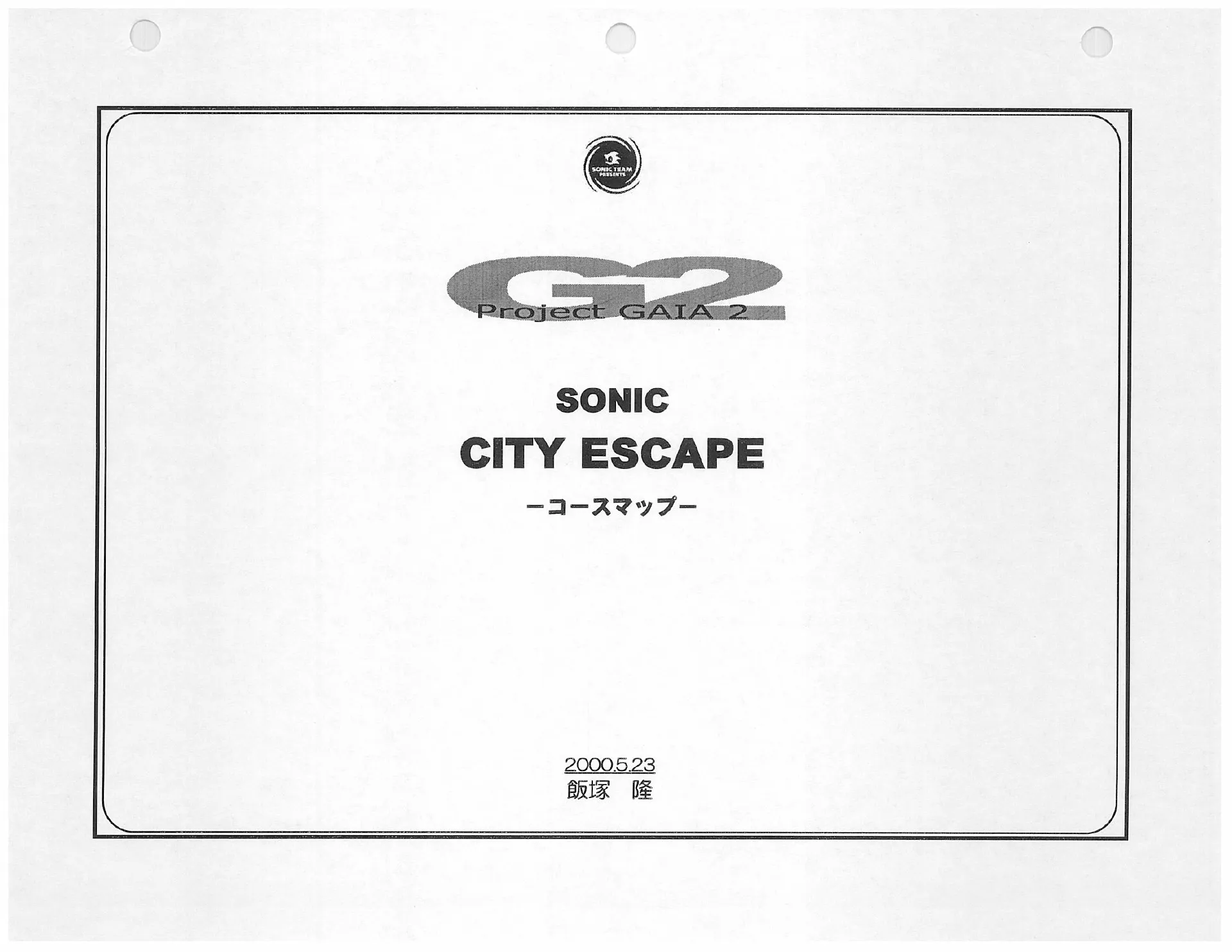
The cover alone is a particularly nice piece of Sonic development history. It carries the internal “Project GAIA2” name, identifies the document as the “SONIC CITY ESCAPE” course map, is dated May 23, 2000, and bears the name of Sonic Adventure 2 director Takashi Iizuka.
That places the document more than a year before the game’s June 2001 release.
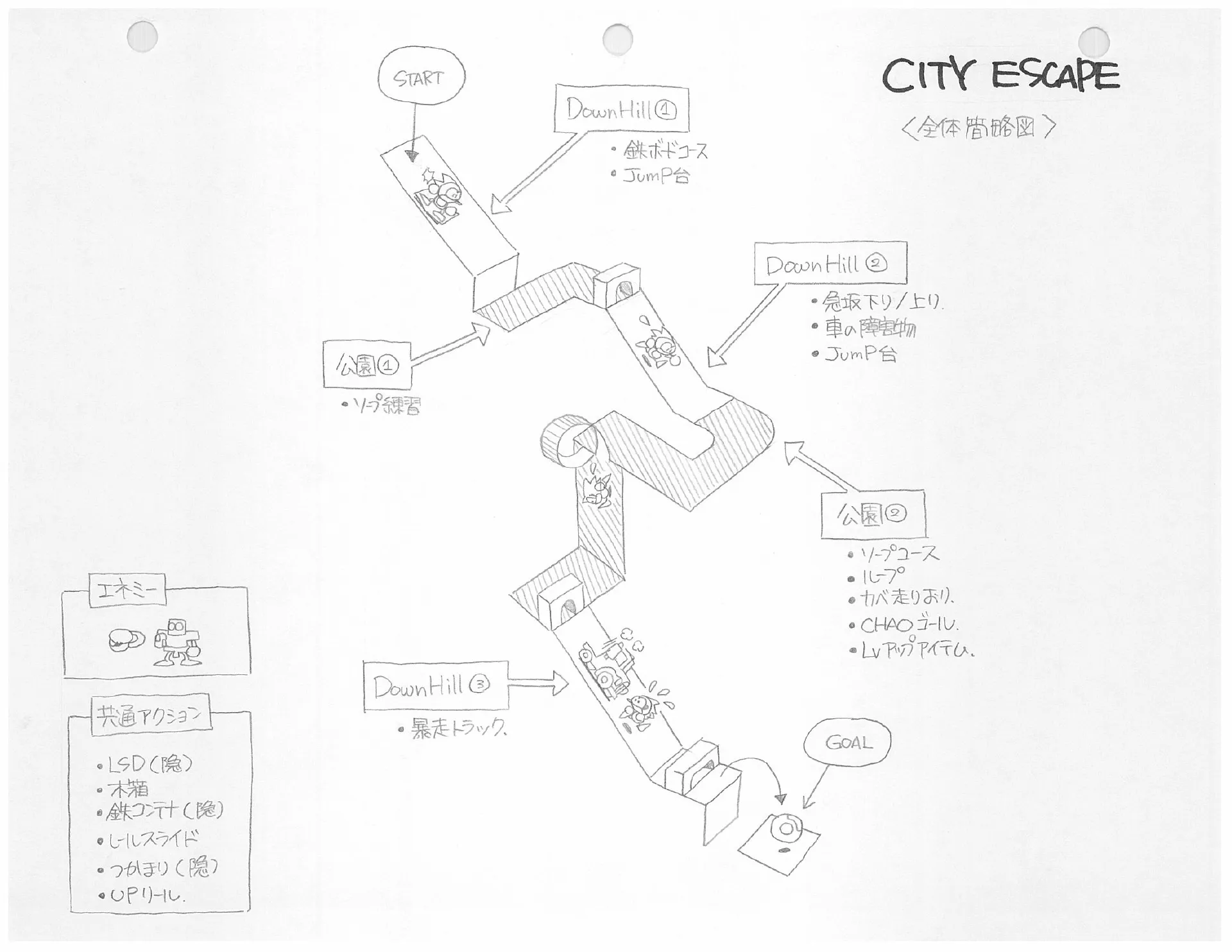
The next page lays out City Escape almost as a flowchart, breaking the stage into a series of distinct sections beginning with Down Hill 1, followed by Park 1, Down Hill 2, Park 2 and finally Down Hill 3 before reaching the goal.
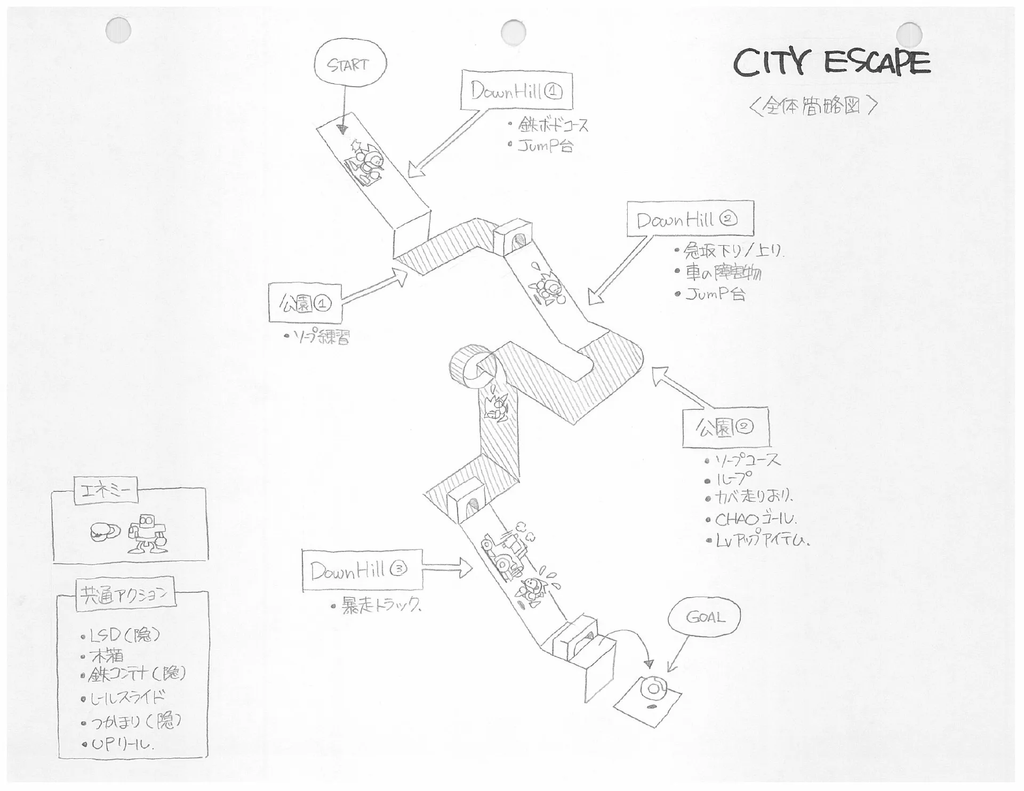
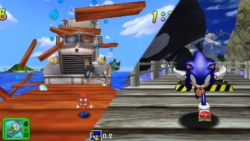
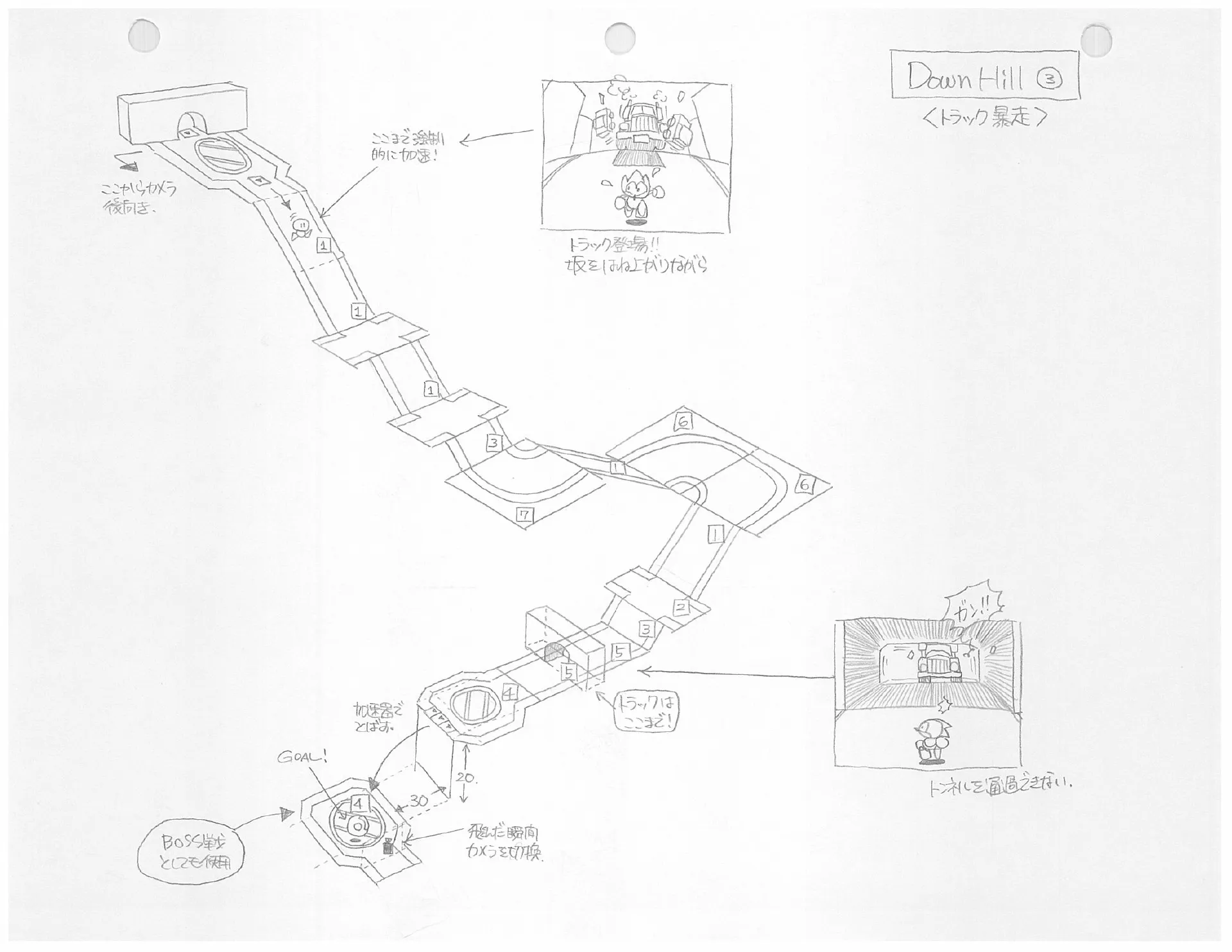
Even at this stage, some of the moments that would come to define City Escape are immediately recognizable. Down Hill 1 is labelled as the board course, with a jump ramp among its planned elements. The final Down Hill 3 section is explicitly built around the runaway truck, while Park 2 includes loops and wall-running ideas between the downhill sections.
The following sheets get much more specific.
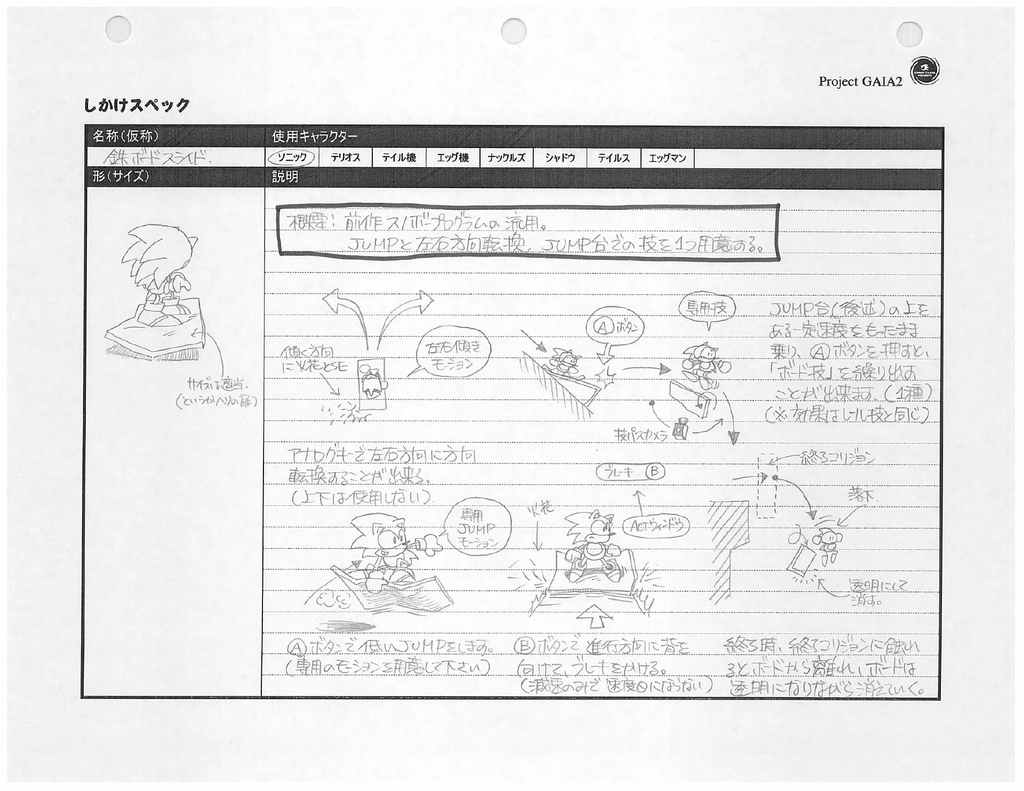
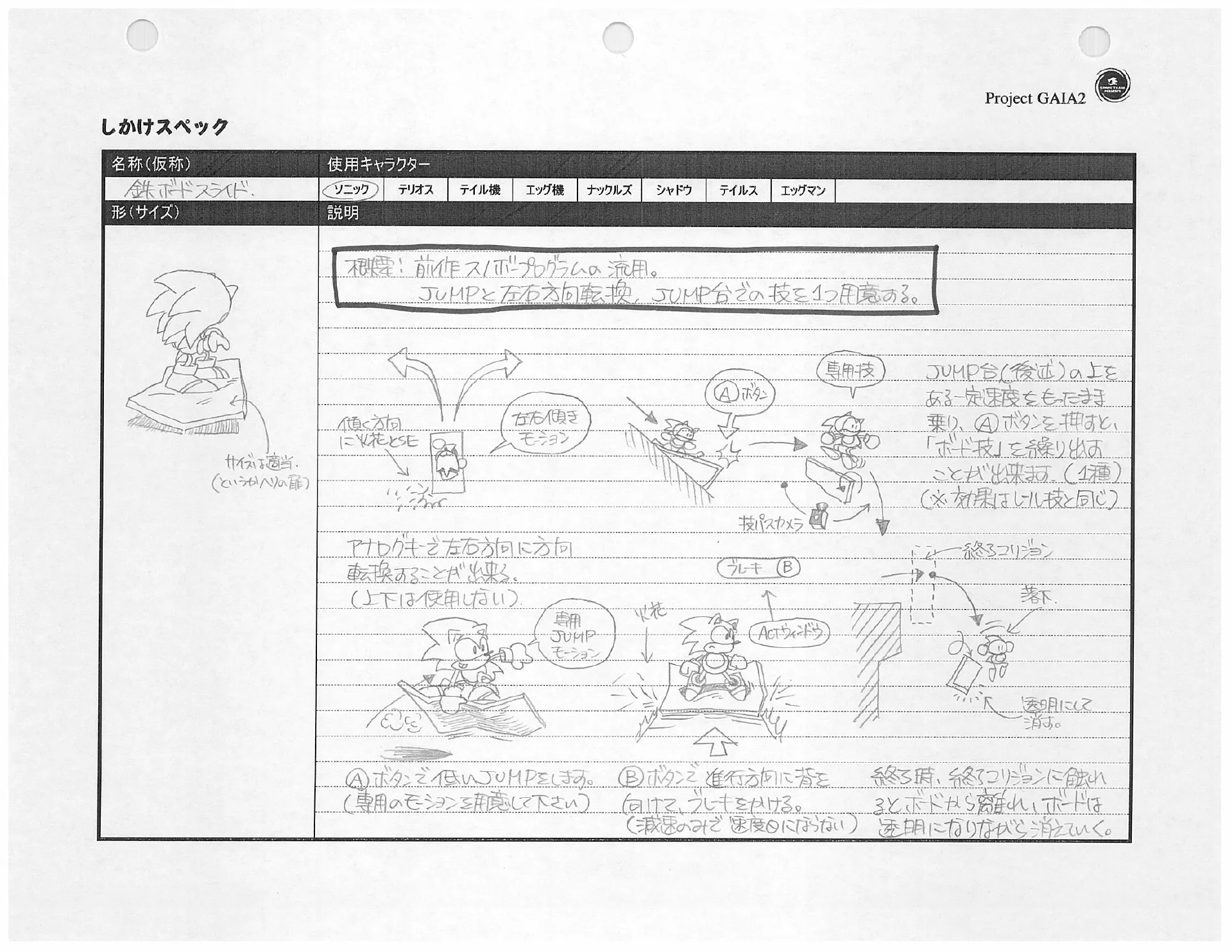
One page is dedicated to the board itself, labelled “鉄ボードスライド”, or roughly “metal board slide.” Sonic is sketched riding the makeshift board used during City Escape’s opening, complete with instructions for jumping, braking and leaving the board.
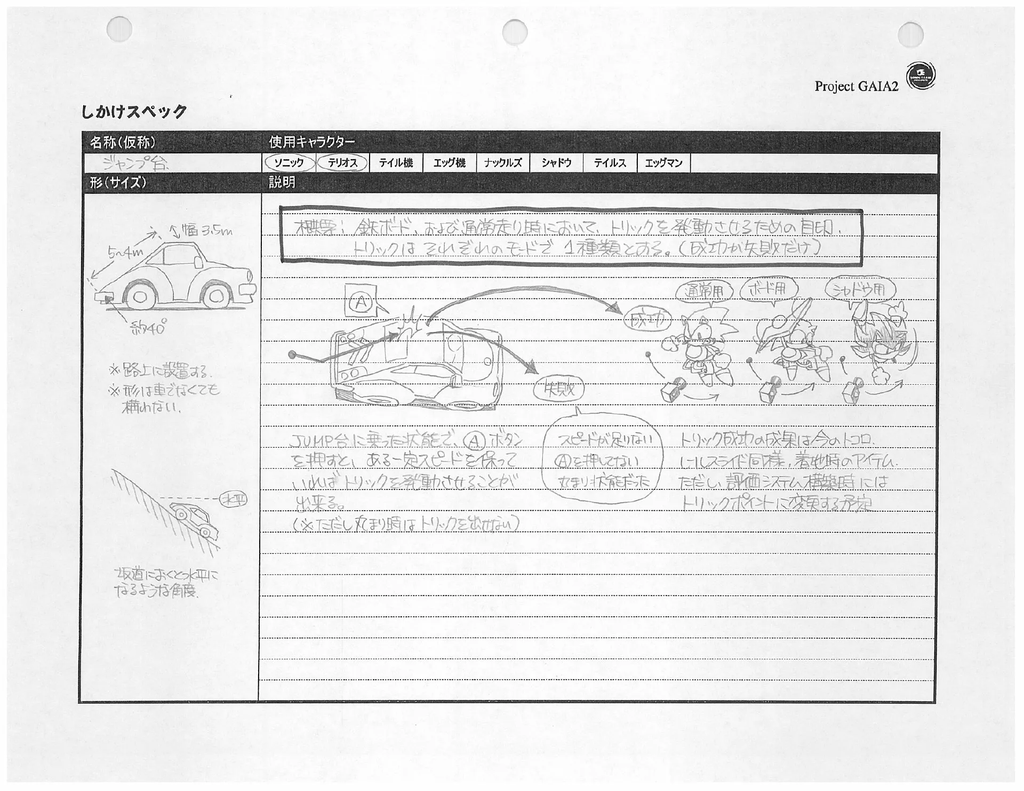
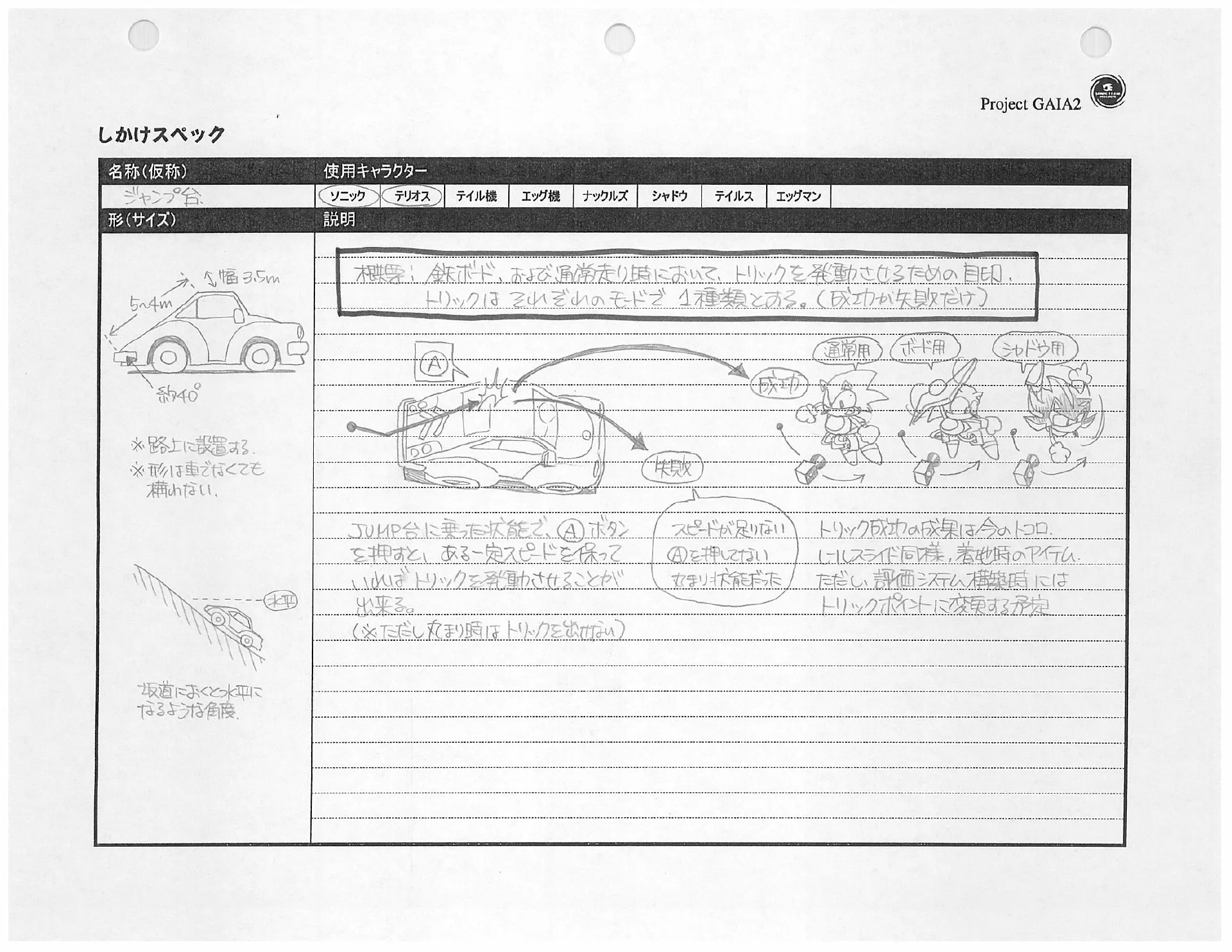
Another sheet covers jump ramps, including sketches showing Sonic performing tricks after launching from them. The document distinguishes their use during normal movement and while riding the board, showing how Sonic Team was already thinking about making the downhill opening more than a passive ride.
There is also a dedicated specification for the runaway truck.
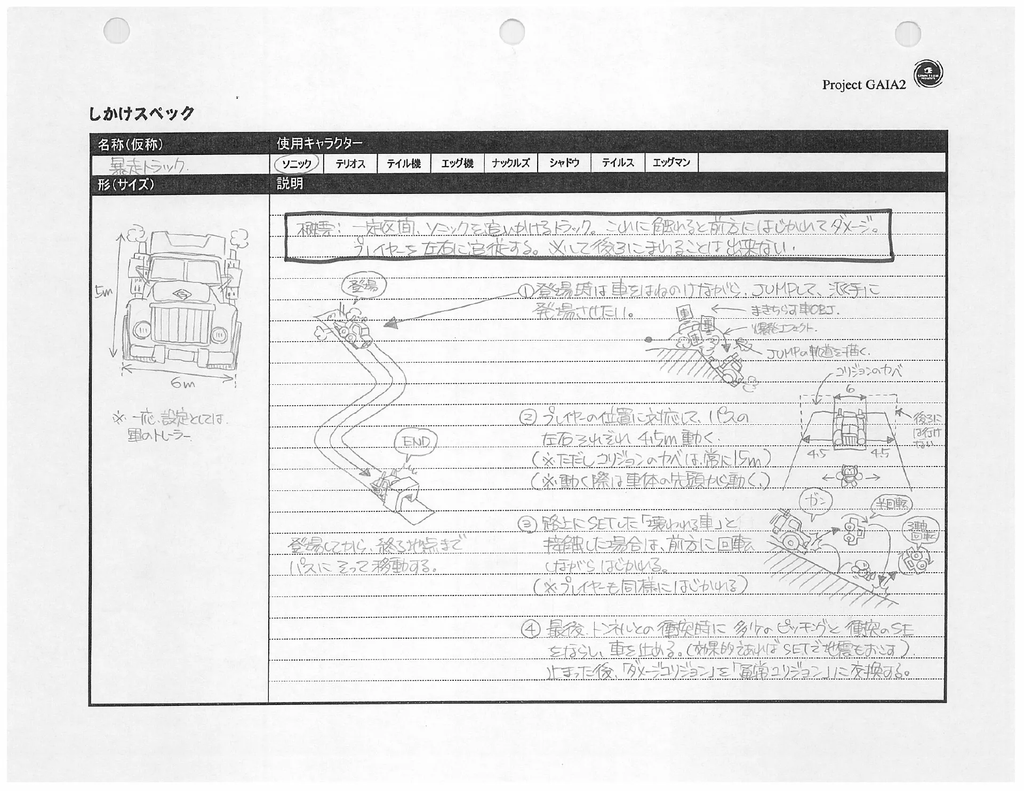
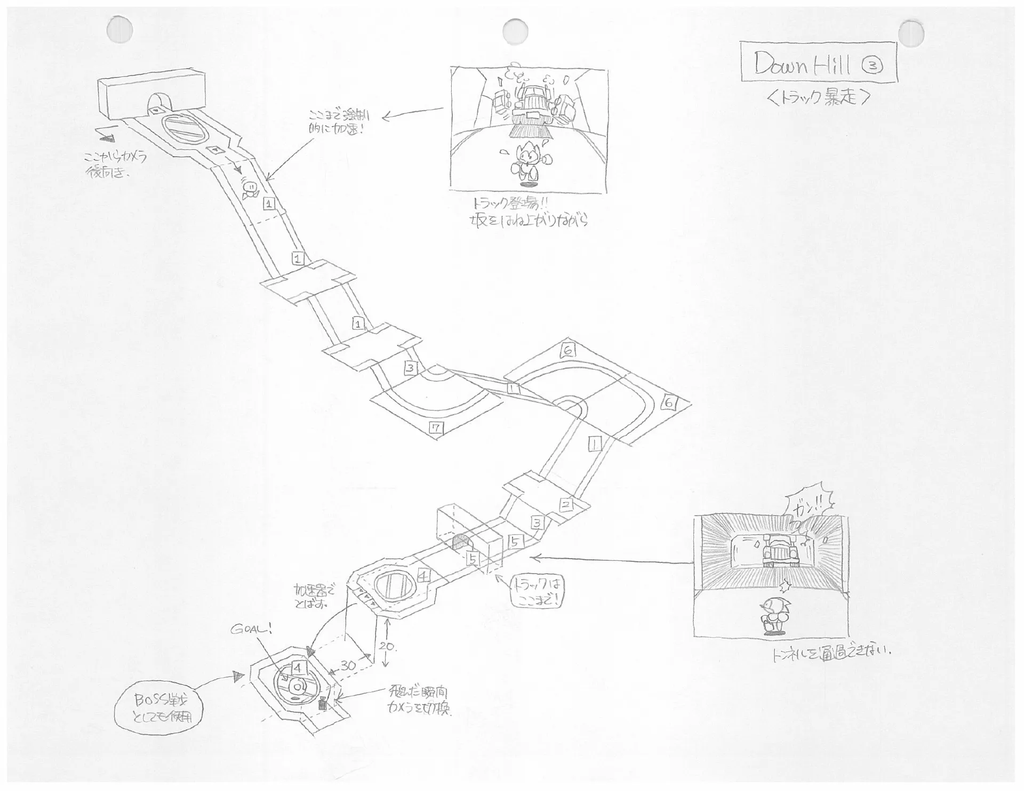
The huge vehicle is sketched at approximately six metres wide and five metres tall, with diagrams showing its movement relative to Sonic. Later course maps then plot the truck sequence itself, including its entrance, the downhill route and the transition toward the stage goal.
The final Down Hill 3 sheet even includes a storyboard-style drawing of the truck bursting into view behind Sonic.
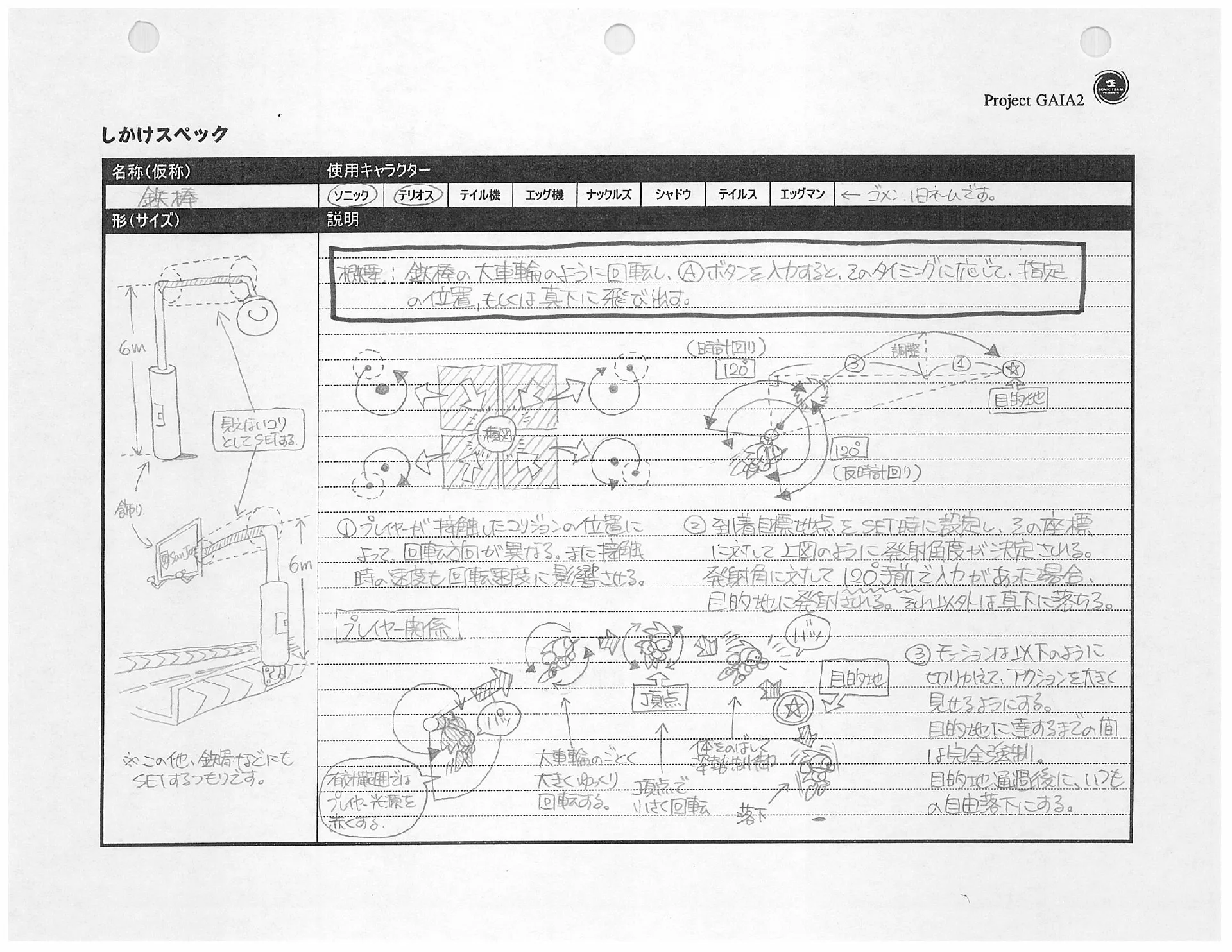
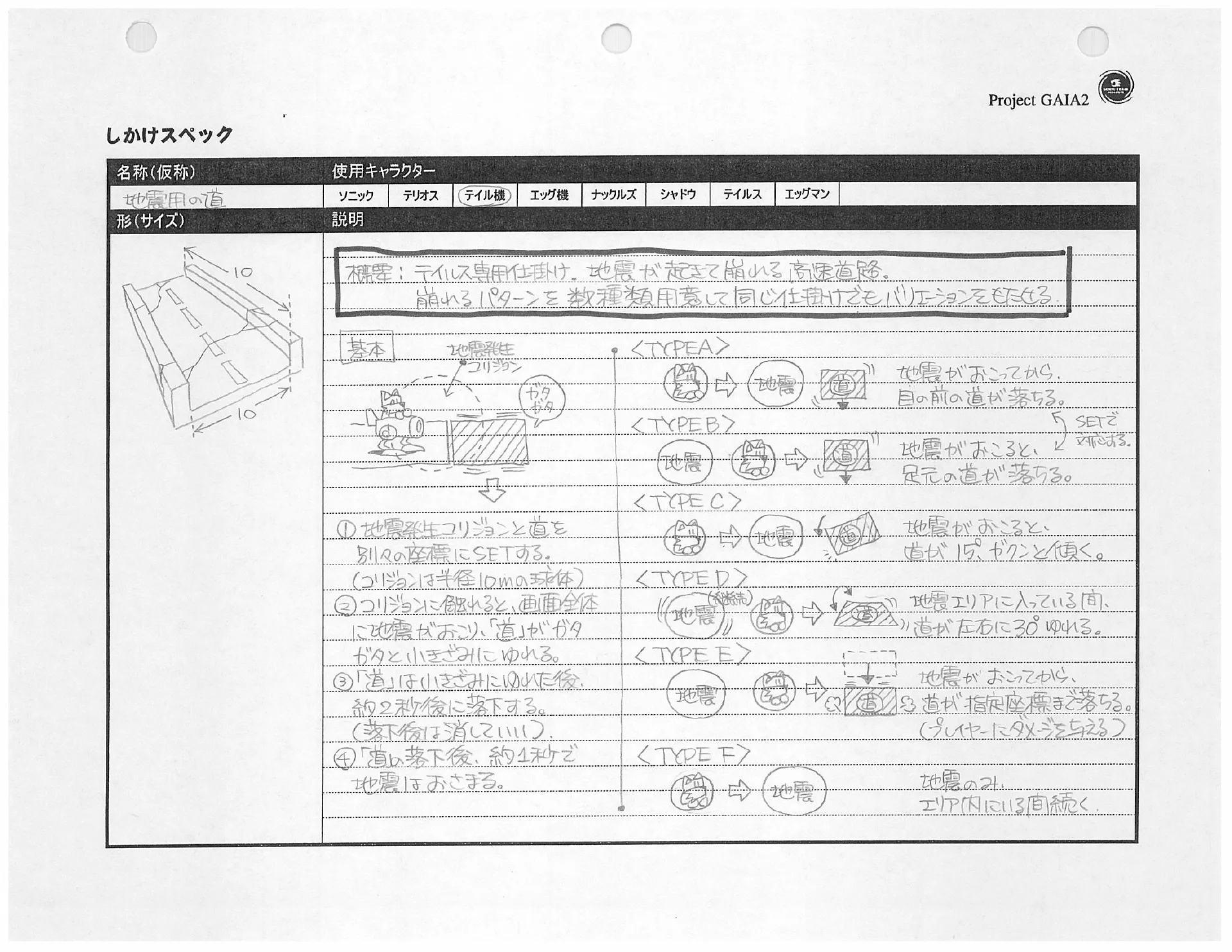
Other gimmick sheets show just how much individual planning went into the stage and its surrounding mechanics. There are specifications for breakable cars, a road that reacts to an earthquake, moving obstacles and the horizontal-bar mechanic, alongside diagrams explaining player movement, collision behaviour and how particular objects should respond.
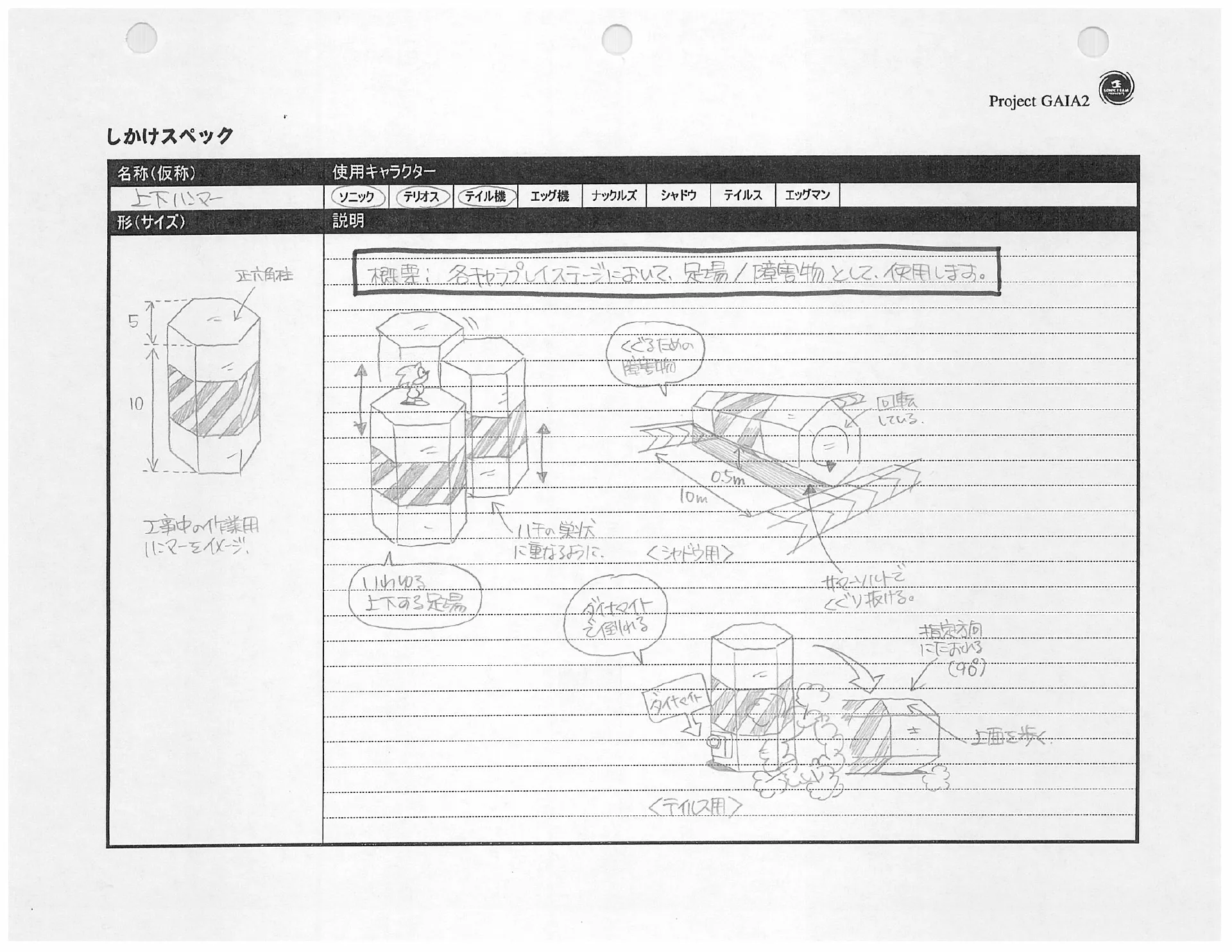
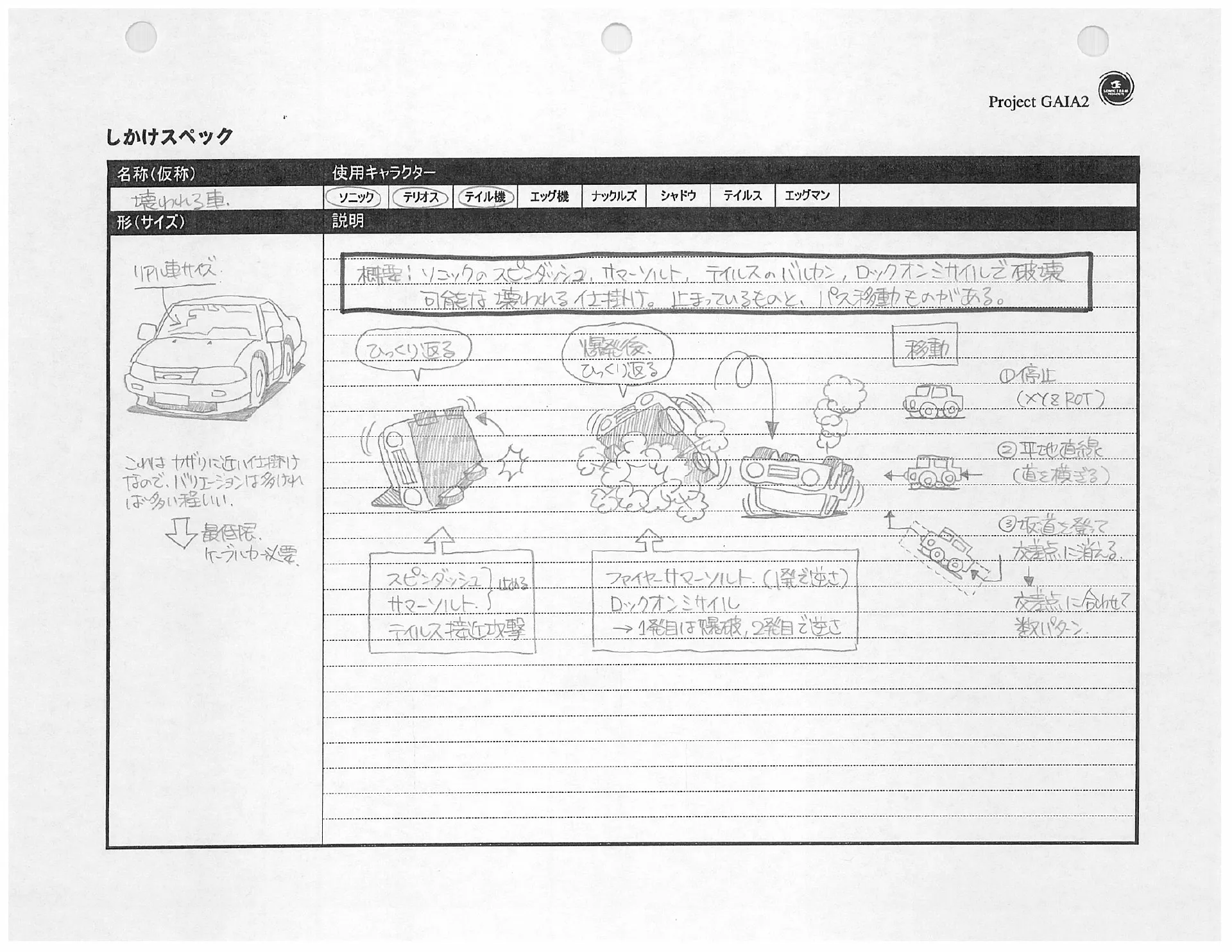
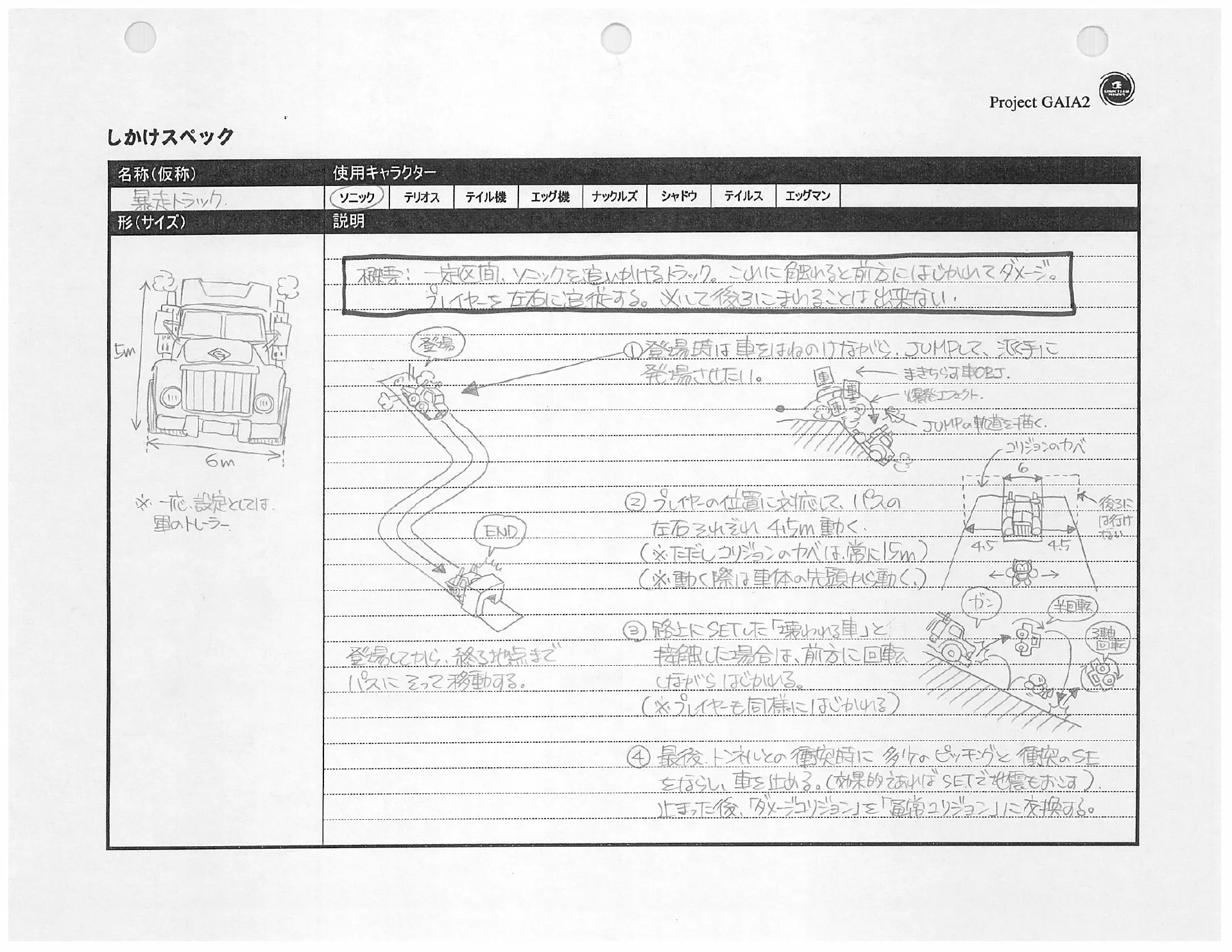
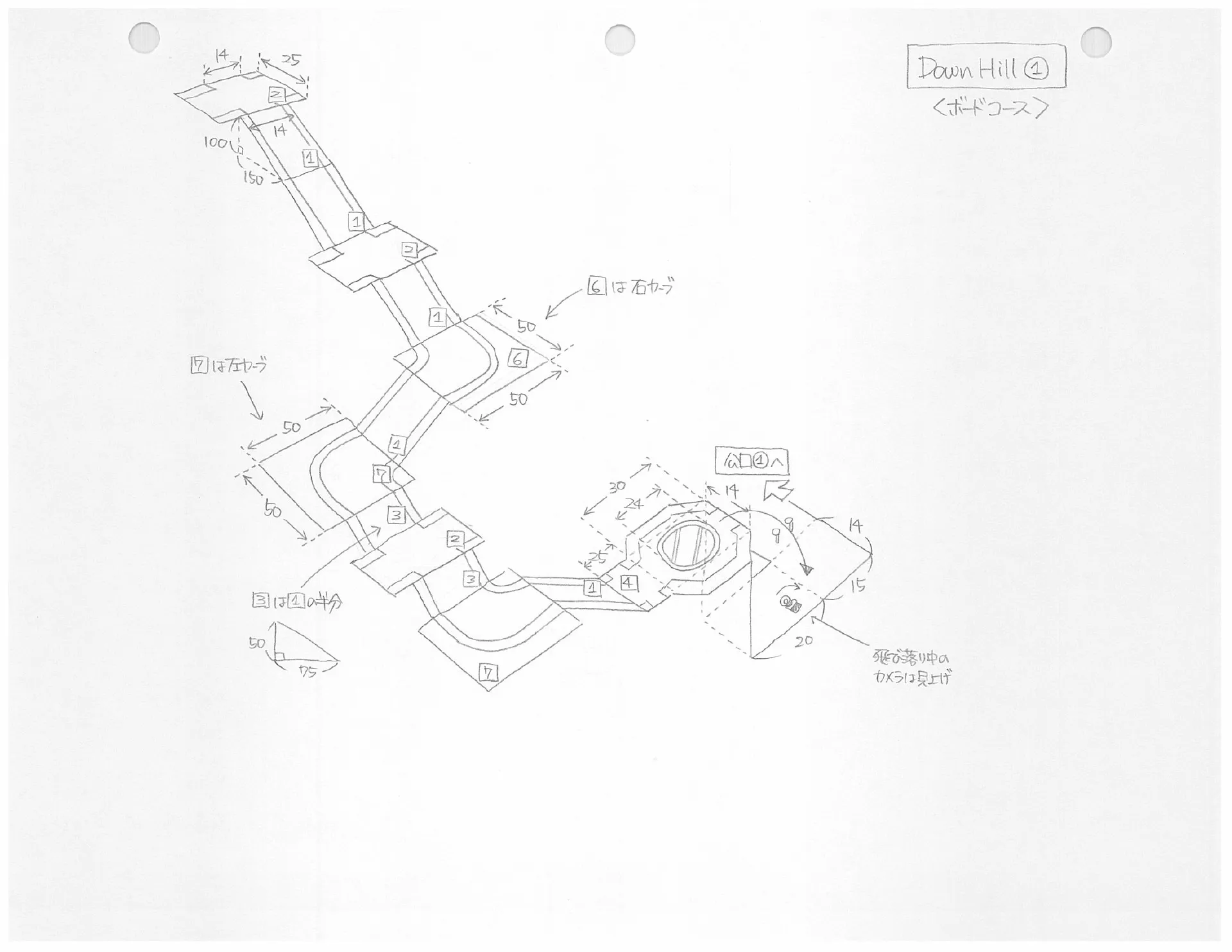
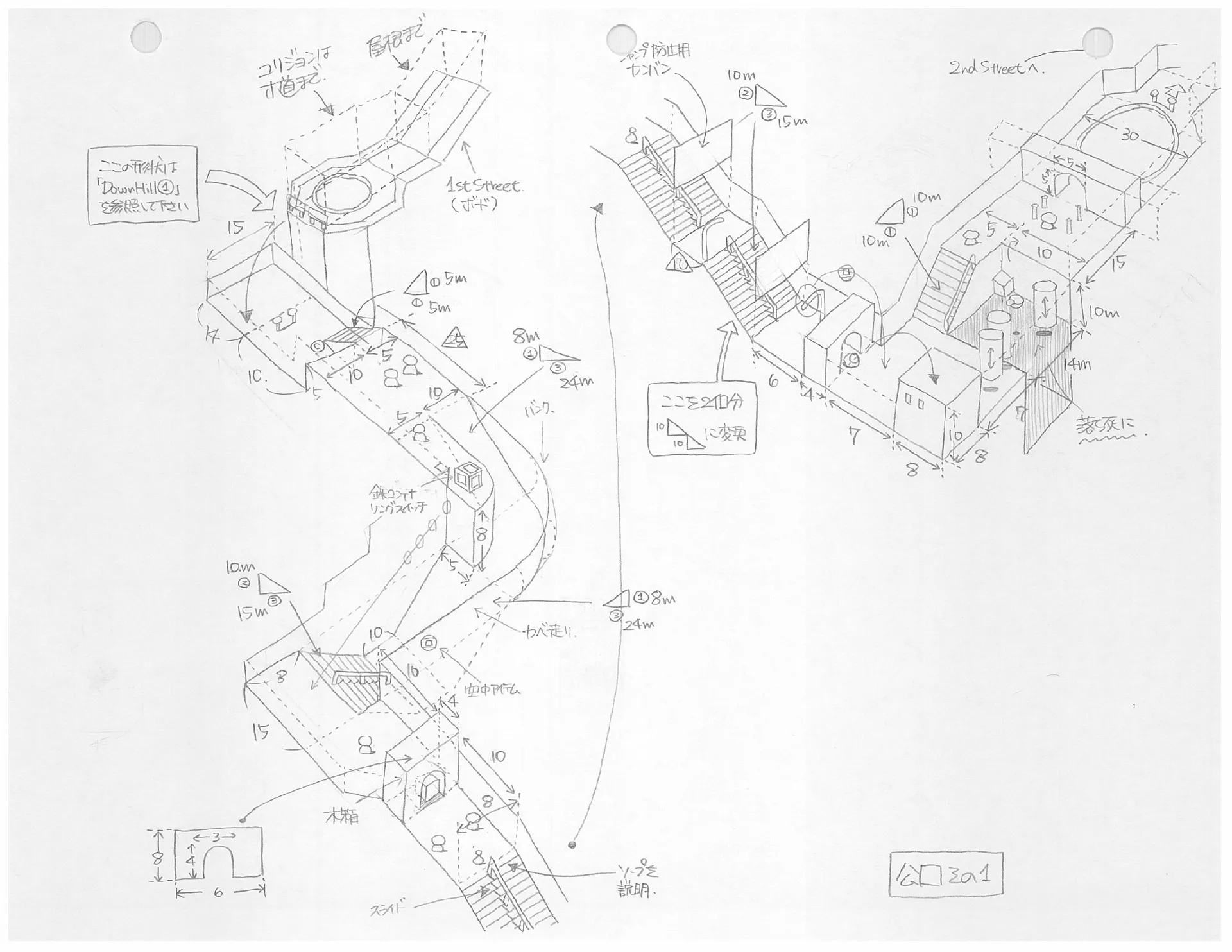
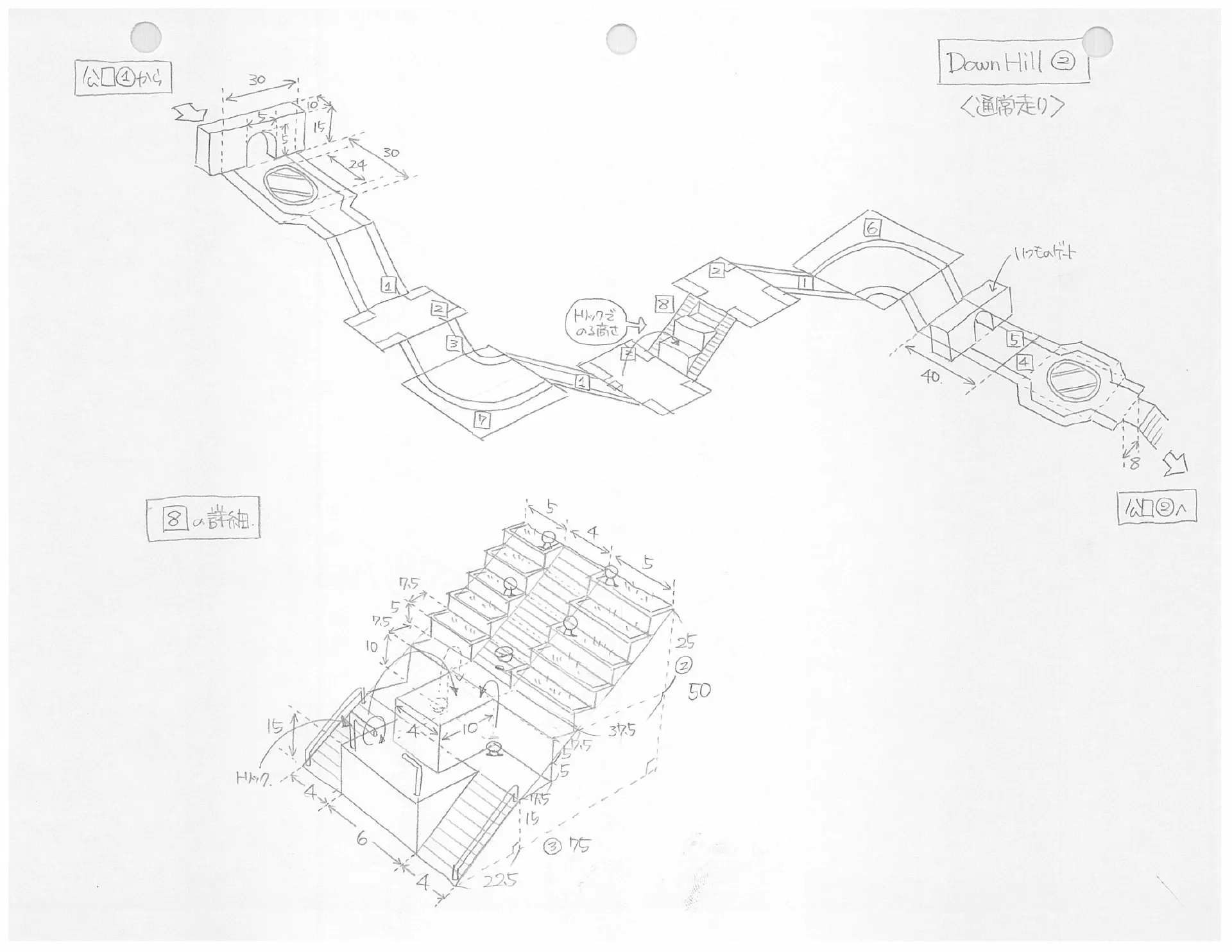
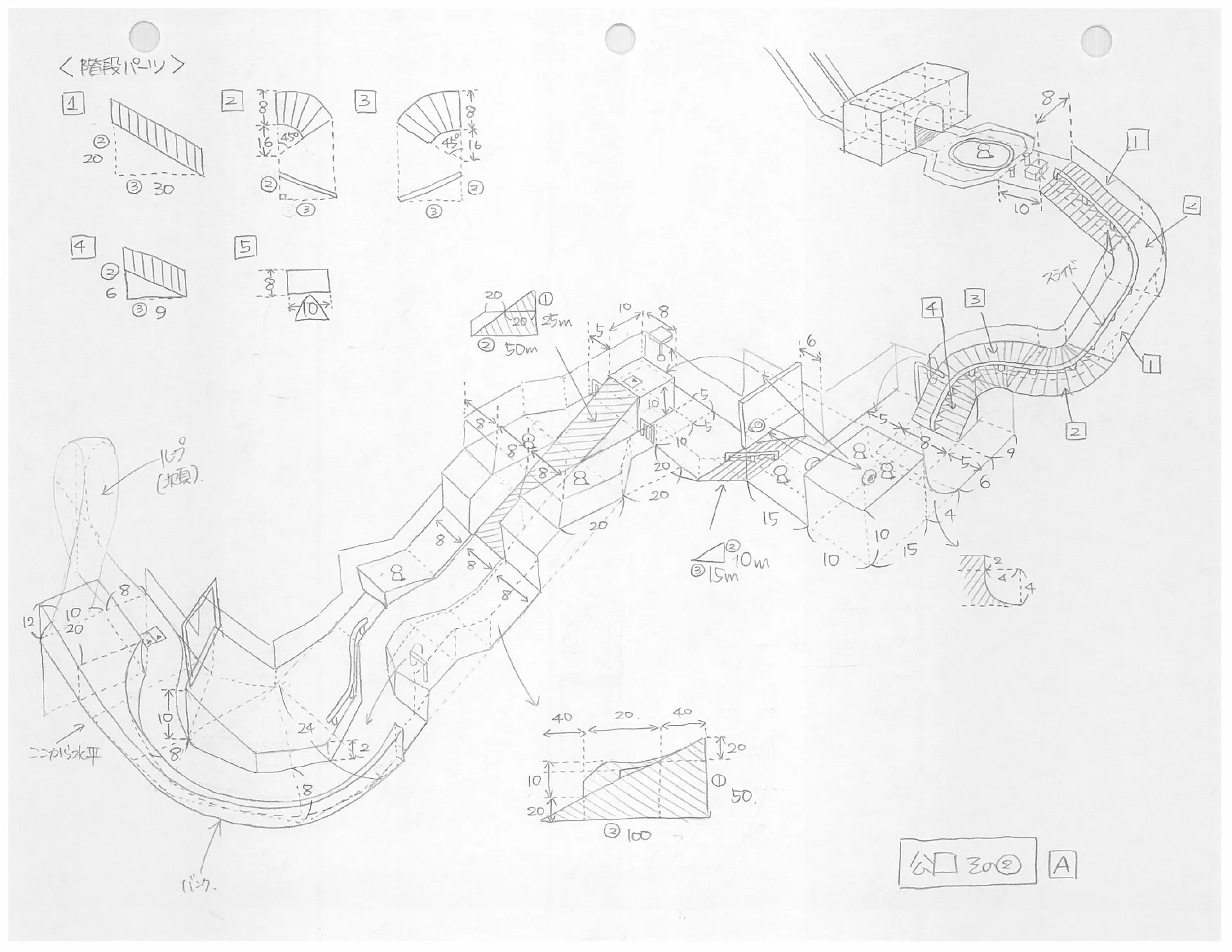
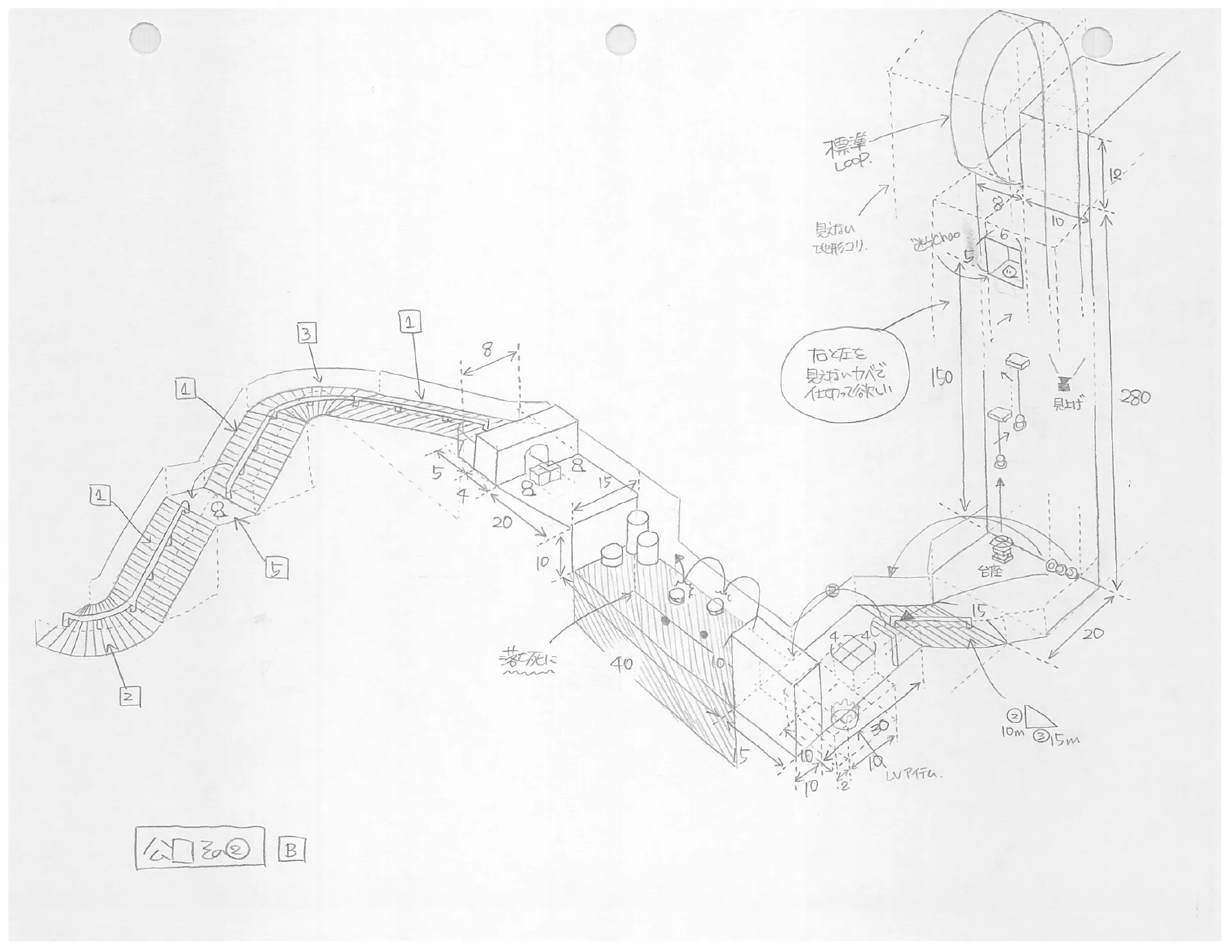
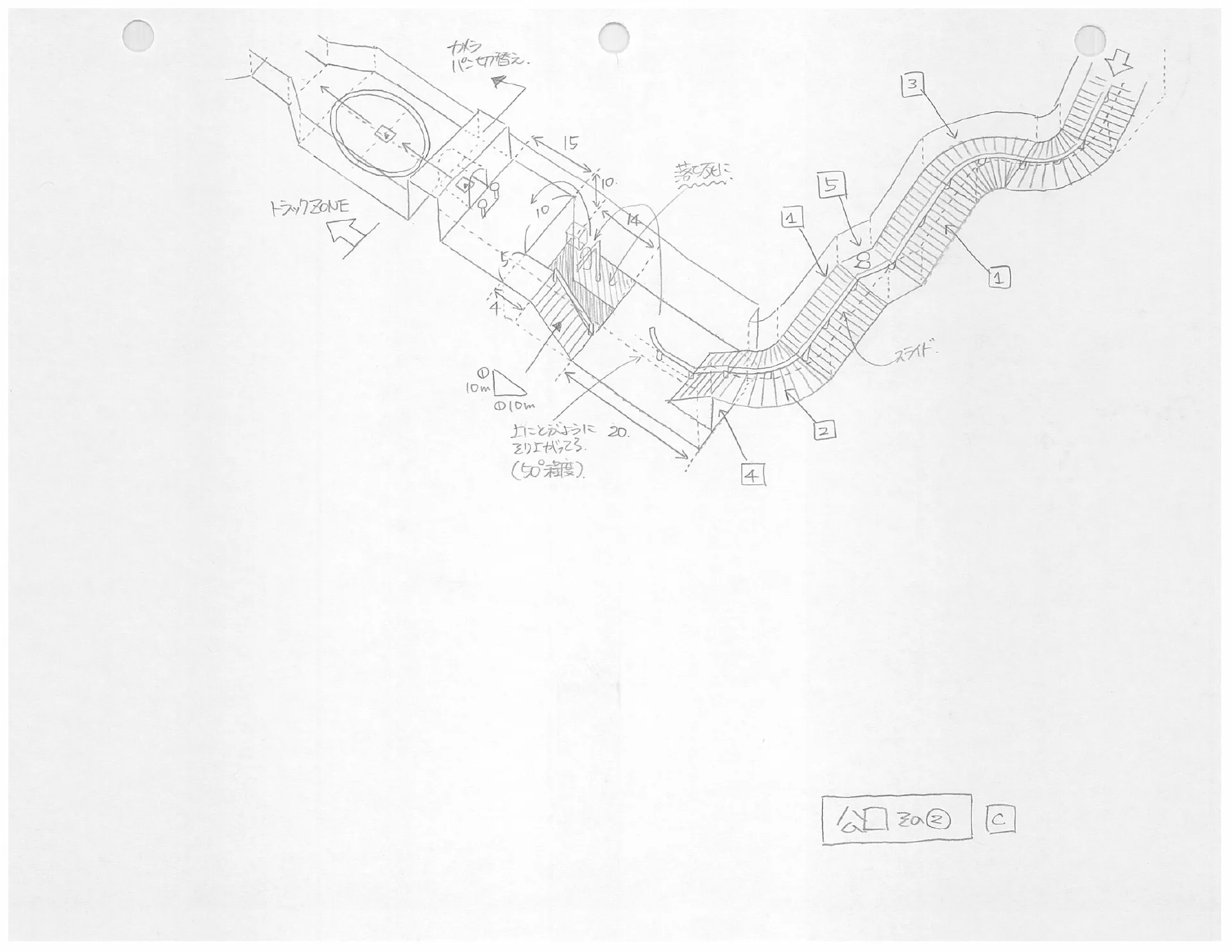
Pages 10 through 15 then map the course section by section with measurements, camera notes, streets, stairways, loops, ramps, obstacles and elevation changes.
Rather than simply drawing a winding road and filling it later, the sheets show City Escape being planned almost piece by piece, with transitions between the snowboard run, city streets, park areas and the final truck chase carefully separated and measured.
The documents are particularly interesting alongside the circumstances in which Sonic Adventure 2 was made.
Sonic Team’s development operation had been dramatically reduced before work on the game, with Iizuka recalling in a 2016 Game Informer interview:
“Our team of 120 got pared down to 11, sent to America, and told to go make Sonic Adventure 2.”
He described the challenge facing that much smaller team in pretty stark terms:
“Part of what we had to resolve was ‘How are we going to make the same game with 11 people when we have less than a tenth of the staff on-board?’ I was really tasked with trying to make the impossible possible.”
The move to the United States also had a direct effect on the game. The team relocated to San Francisco, whose steep streets and urban scenery heavily influenced City Escape’s identity.
Despite those circumstances, Sonic Adventure 2 was completed in around a year and a half. Iizuka later named it among his favorite Sonic projects, telling Game Informer in 2022:
“It was a small development team so we were able to condense all the good elements from the previous game, and deliver a story and game that was satisfying to players everywhere.”
These 16 pages give us an unusually direct look at how that small team translated its ideas into the stage players eventually got in 2001. The downhill board ride, loops, tricks, streets and giant truck were not simply broad concepts. Sonic Team was plotting their dimensions, order, movement and interactions on paper long before Sonic ever jumped from that GUN helicopter.
The complete City Escape document is being displayed at the Los Angeles edition of 35 Years of Speed: The Sonic Art Exhibit at ARK/8 this weekend. As Sonic City previously reported, the exhibition runs September 26 and 27 from 10:00 AM to 7:00 PM PT, with free admission.
For everyone who cannot make it to Los Angeles, however, all 16 pages can now be studied online, right down to the handwritten measurements behind that enormous truck coming up behind Sonic.
Stay tuned to Sonic City for more Sonic Adventure News and Updates!
Discover more from Sonic City ⋆★ Sonic the Hedgehog News, Media, & Community ★⋆
Subscribe to get the latest posts sent to your email.