More than three years after Sonic Frontiers first launched, SEGA is still sitting on some pretty fascinating material from its development.
The October 2026 issue of Nintendo DREAM includes a special feature celebrating Sonic Frontiers: Super Deluxe and Sonic’s 35th anniversary, with SEGA opening up the archives to publish a collection of previously unreleased design materials from the game. The four-page feature covers the development of Sonic’s cyber corruption, Sage, the Koco and the digitized appearances of Sonic’s friends, alongside a 35th anniversary mini-interview with Creative Director Kazuyuki Hoshino and Series Sound Director Tomoya Ohtani. Nintendo DREAM itself specifically promotes the feature as including previously unpublished materials.
And some of the biggest surprises belong to Sage.
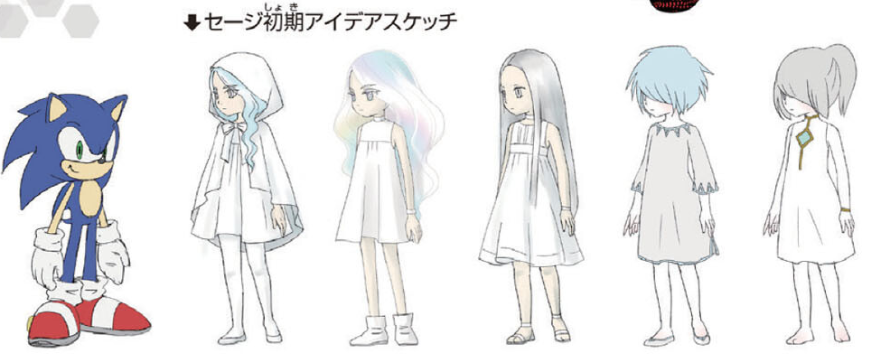
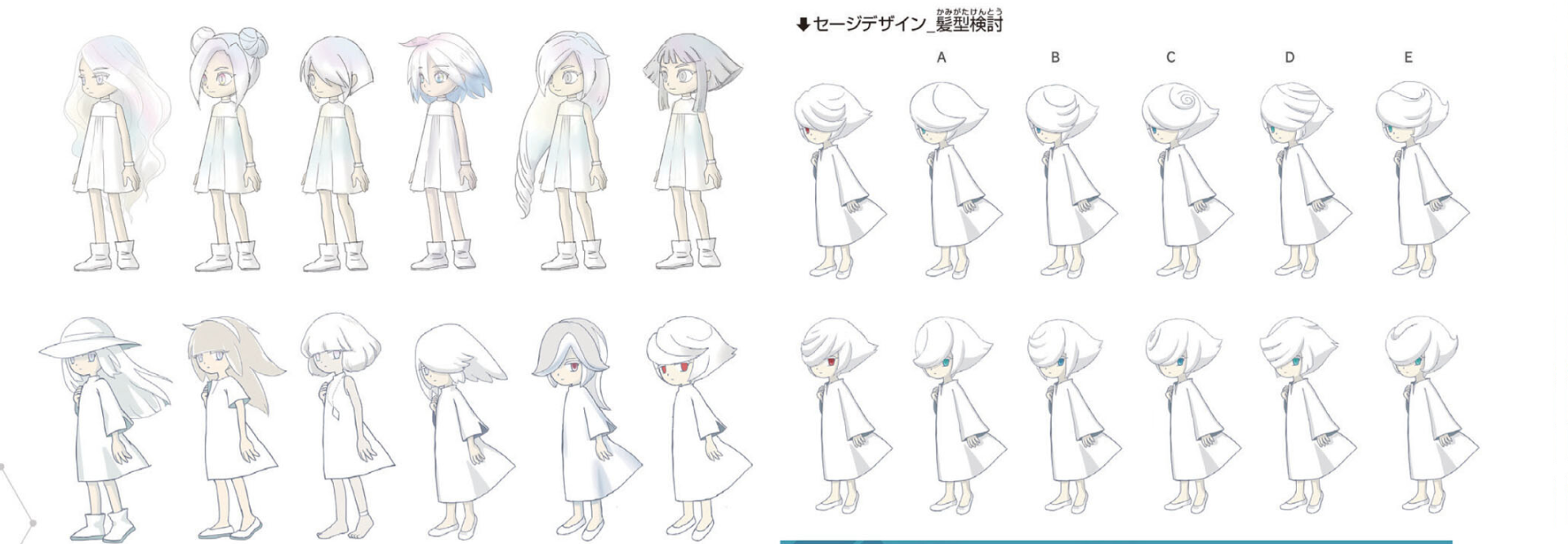
The newly revealed early sketches show that SEGA decided relatively early in development that Frontiers would introduce a new young girl character, but her final appearance was far from settled. According to the accompanying designer commentary, the team began with a human girl as its base and explored the concept of “digital + ghost” while searching for an appropriate direction. Numerous proportions, apparent ages, clothing styles and silhouettes were tested, with the team specifically trying to find something that could stand alongside Sonic without looking out of place while maintaining a simple and mysterious appearance.
The feature also provides some interesting insight into Sage’s unusual place in the story. SEGA describes her as a character who would oppose Sonic without directly fighting him physically while occupying an Eggman “daughter-like” position, something the designers had never really dealt with before. Considerable time was therefore spent figuring out exactly what that should look and feel like. Her overall design was ultimately kept deliberately simple because the team already knew it would be covered by digital pattern effects, while her hairstyle apparently remained a much harder decision, with a large number of different versions explored almost until the end.
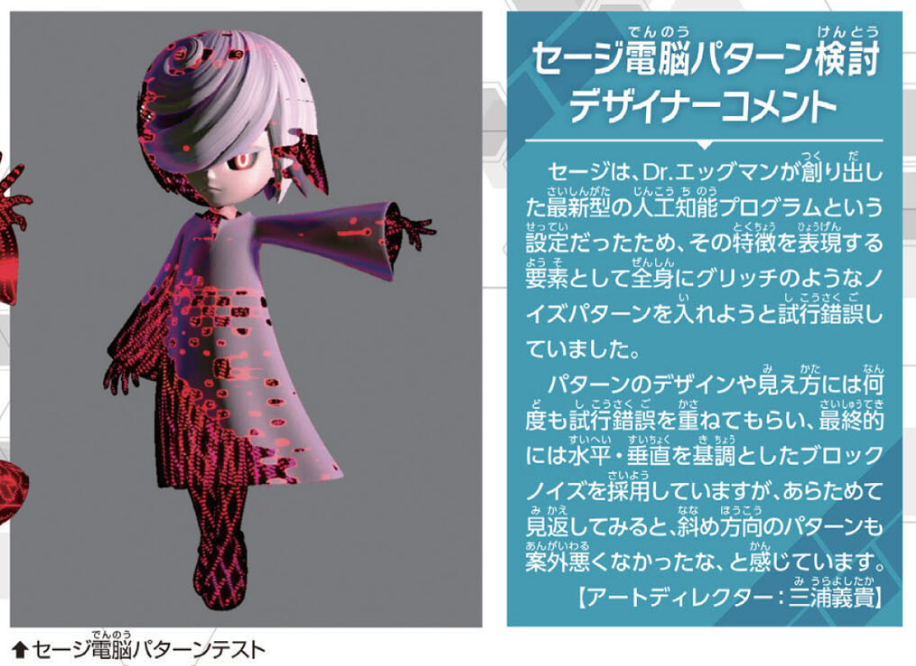
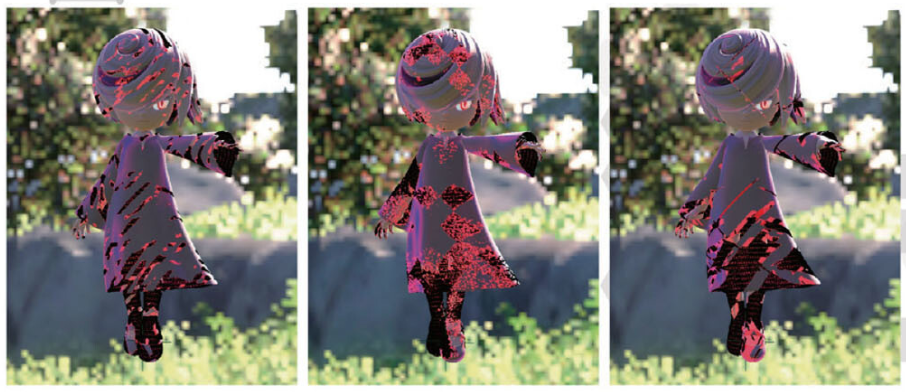
Those effects went through their own experiments. Since Sage was conceived as Dr. Eggman’s latest artificial intelligence program, designers tried numerous glitch-like patterns across her body to communicate that digital nature. The final game settled on block noise largely built around horizontal and vertical lines, but one of the art director’s comments amusingly notes that, looking back at the discarded material, some of the diagonal patterns were not bad either.
Designer Comment
Since Sage was conceived as the latest artificial intelligence program created by Dr. Eggman, we went through a process of trial and error trying to incorporate glitch-like noise patterns across her entire body as an element that would visually express that characteristic.
We repeatedly experimented with the design of the patterns and how they would appear. In the end, we adopted block noise based primarily on horizontal and vertical lines, but looking back at these again now, I feel that the diagonal patterns actually weren’t bad either.
[Art Director: Yoshitaka Miura]
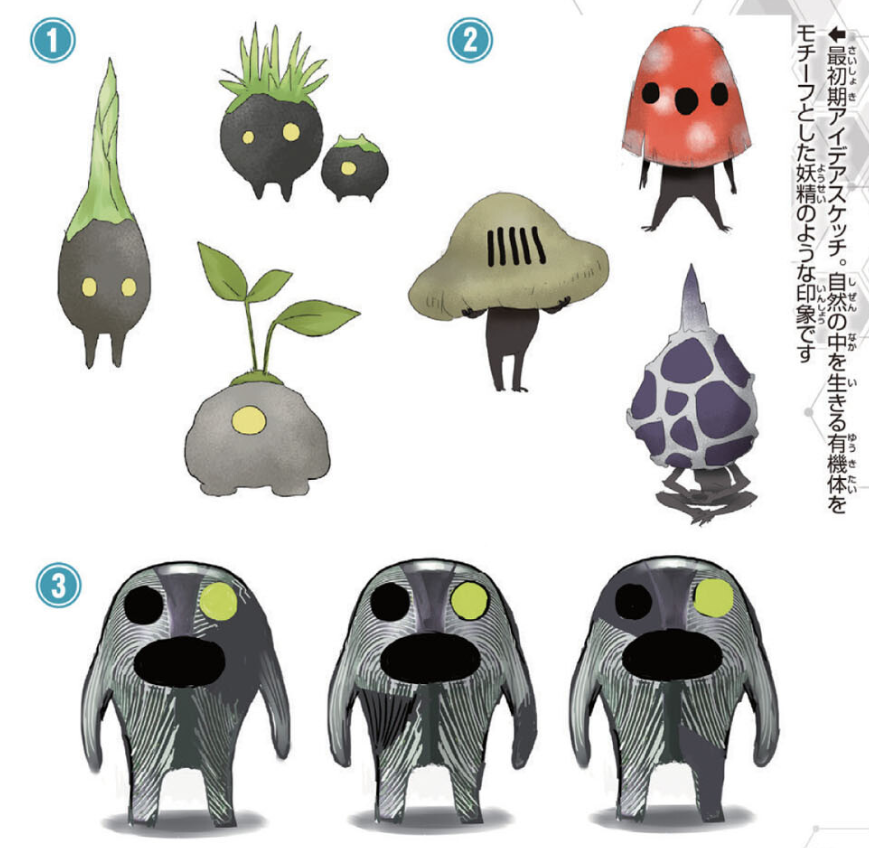
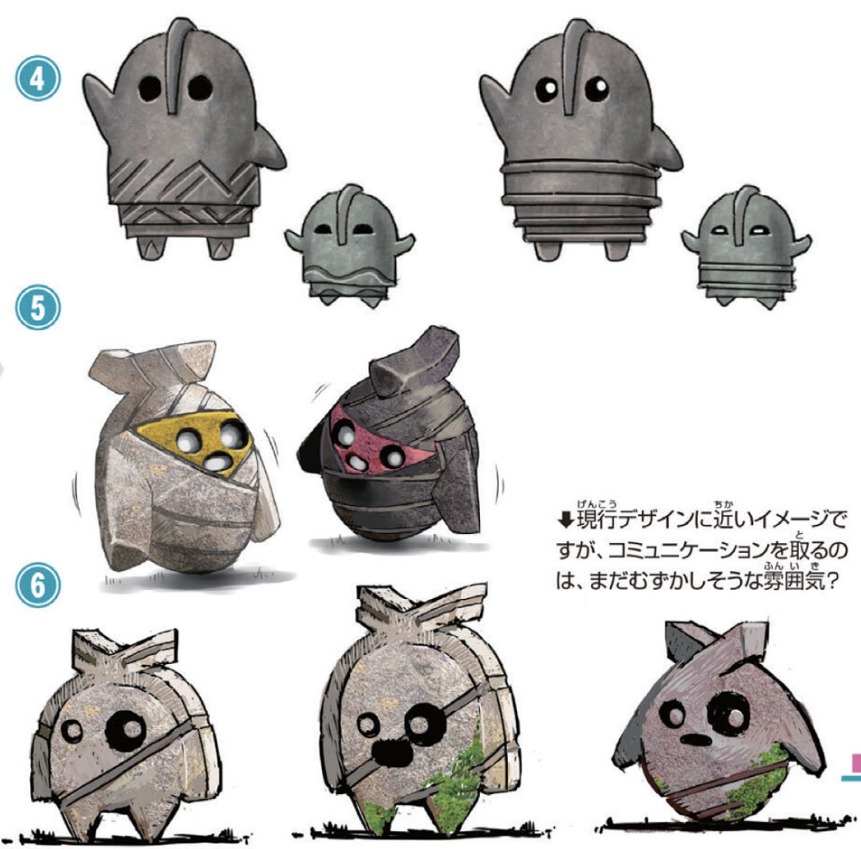
The Koco could have looked considerably stranger too. Their early concepts range from plant-like little creatures with grass and leaves growing from them to mushroom-shaped designs, shadowy figures and much heavier stone constructions. SEGA says the team initially considered ideas resembling mysterious fairies or aliens, but as the setting became more defined, the direction shifted toward ancient mysterious beings that coexisted with the islands’ natural environment. That eventually led toward stone as the central visual motif, with ancient clay figures and pottery among the references used while developing their appearance.
Even the Koco’s faces required refinement. The early artwork includes several much more solemn, mask-like and unusual expressions before the designers gradually moved toward the extremely simple, friendly faces used in the final game. Looking at some of these things, we were apparently only a few design meetings away from Sonic spending Frontiers collecting sentient mushrooms.
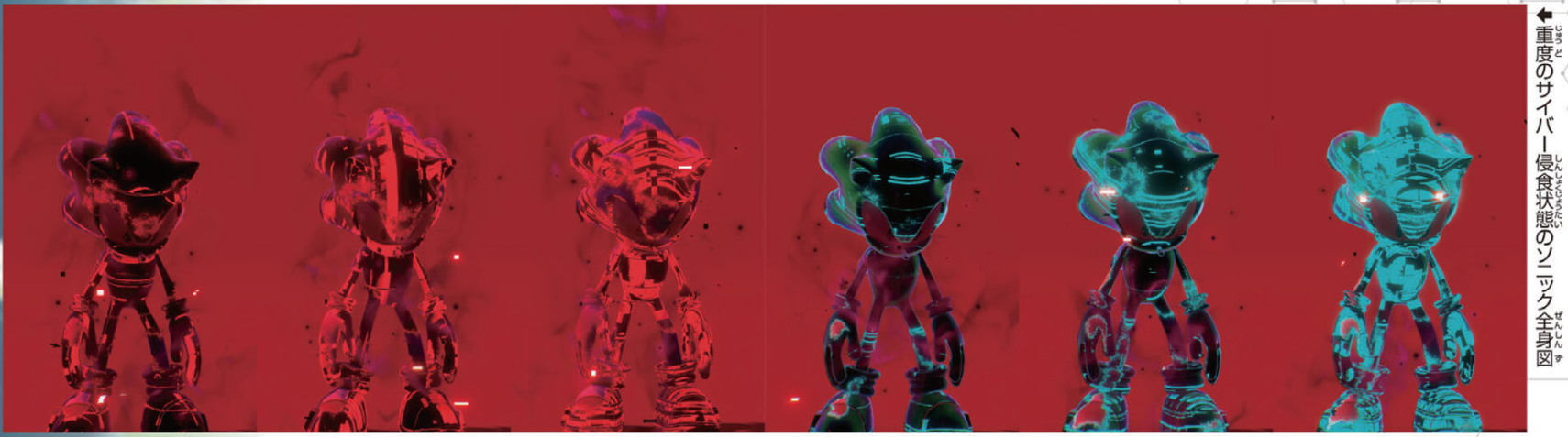
The other major reveal concerns Sonic’s cyber corruption. Nintendo DREAM shows multiple stages of the effect, including close-ups and full-body progression images demonstrating how the digital contamination spreads across Sonic. The accompanying commentary explains that Frontiers deliberately adopted visual techniques that had not been used much in previous Sonic games. One involved animating a texture threshold so that surface patterns appear to change unpredictably rather than simply displaying a static texture, a technique that was then put to work on Sonic’s corruption effects.
Character designer Hitomi Nagao explains that experimenting with the technique produced more visual possibilities than the team initially expected, leading to new discoveries about how the corruption could be presented during development. The accompanying material makes that process much easier to see, showing the red and cyan digital patterns gradually overwhelming more of Sonic’s body before reaching the heavily corrupted appearance used later in the story.
The same spread also examines the digitized bodies of Amy, Tails and Knuckles after they become trapped in Cyberspace. Their look needed to feel digital without simply copying either Sage or Sonic’s corruption, so the team worked with hologram-like visuals and granular noise to give them an intangible quality while making sure the characters did not become difficult to see. The final solution involved carefully controlling that noisy effect through animation, allowing the developers to adjust exactly how unstable and transparent the characters appeared.
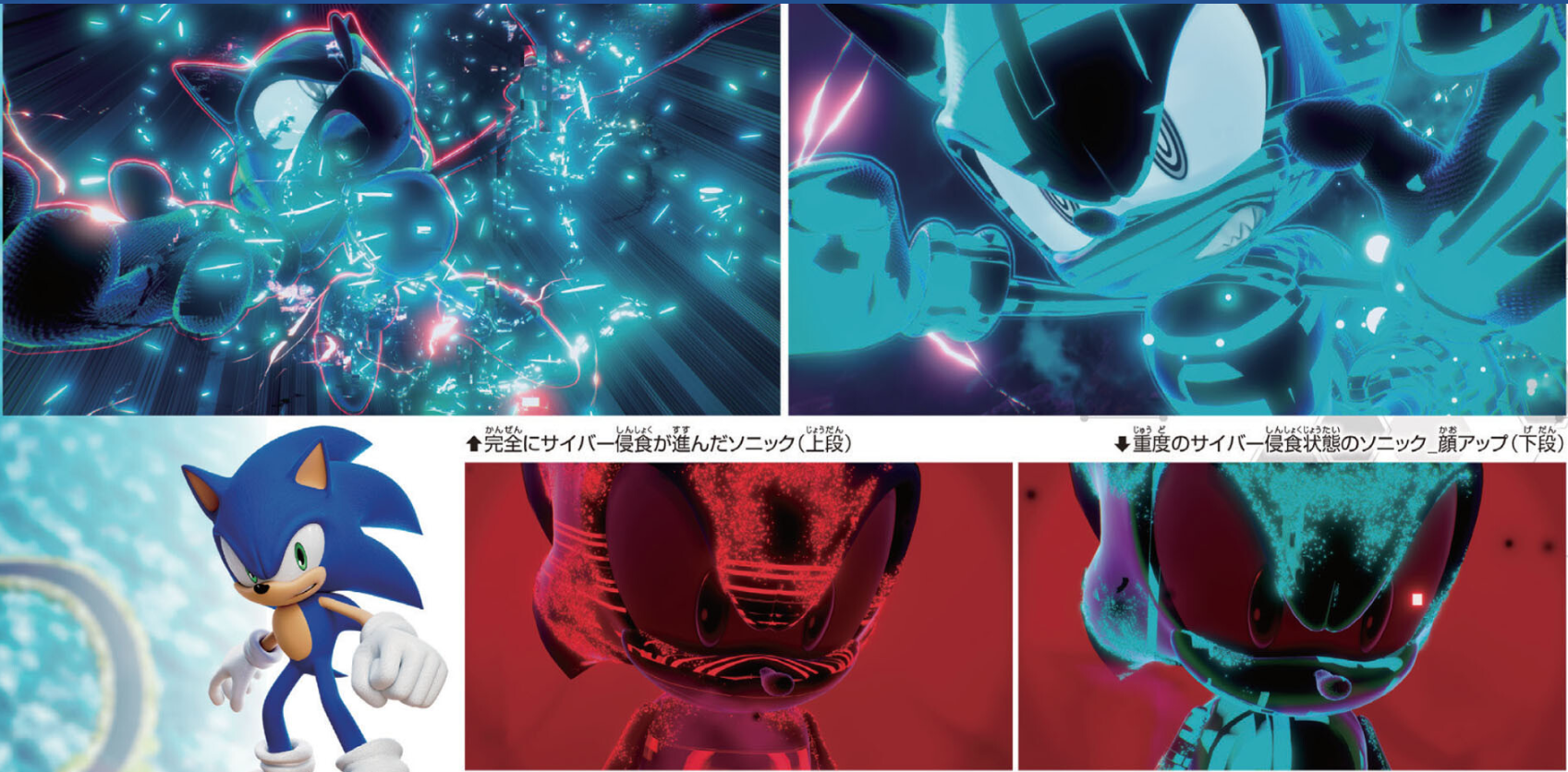
Close-up of Sonic’s face in a severe state of Cyber Corruption (bottom row)
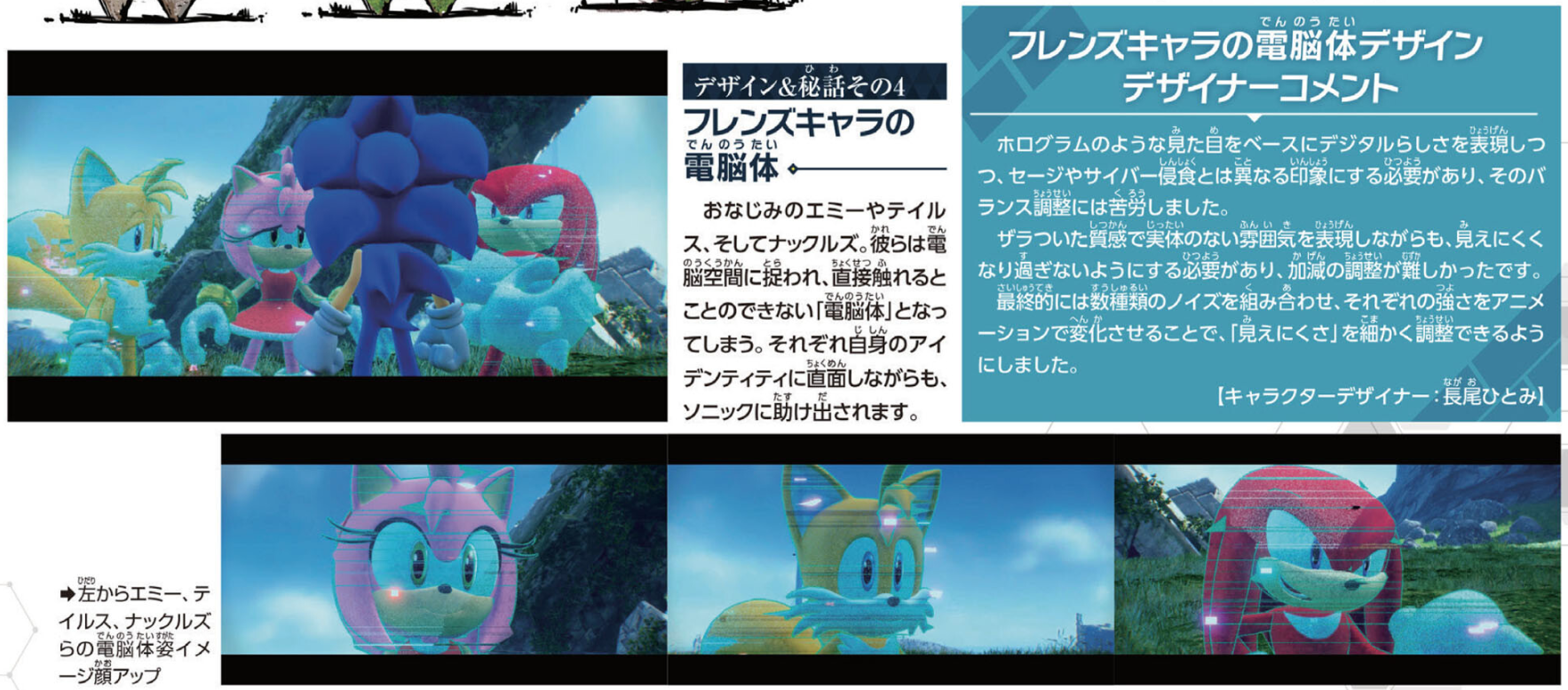
The Cyber Forms of Sonic’s Friends
The familiar Amy, Tails, and Knuckles. After becoming trapped in Cyber Space, they are transformed into “cyber forms” that cannot be physically touched. While each of them confronts their own identity, Sonic works to rescue them.
Cyber Form Designs for Sonic’s Friends
Designer Comment
While using a hologram-like appearance as the basis for expressing a digital feel, we also needed to make them visually distinct from Sage and the effects of Cyber Corruption, so finding the right balance was difficult.
We wanted the rough, grainy texture to convey the sense that they had no physical substance, but at the same time we had to make sure they did not become too difficult to see. Getting that balance right was challenging.
In the end, we combined several different types of noise and varied the intensity of each through animation, allowing us to finely control just how “difficult to see” they appeared.
[Character Designer: Hitomi Nagao]
From left: close-up concept images of the cyber forms of Amy, Tails, and Knuckles
Nintendo DREAM rounds everything out with a short 35th anniversary conversation with Kazuyuki Hoshino and Tomoya Ohtani, looking back on why Sonic has remained popular around the world and how the series has expanded beyond games. Hoshino points toward Sonic’s ability to give people positive energy and particularly highlights Shadow’s enormous popularity, while Ohtani discusses the direct, unapologetically positive messages that have long run through Sonic’s music. Hoshino also describes Sonic as a transmedia property whose reach continues expanding through different forms of entertainment, while Ohtani stresses that games remain the foundation that allows everything else to exist.
That material is interesting on its own, but the real treasure here is seeing just how many directions some of Sonic Frontiers’ most recognizable ideas could have taken. Sage, the Koco and Sonic’s cyber corruption all feel inseparable from the finished game now, which makes seeing the versions that never made it particularly fascinating.
Apparently the Starfall Islands had quite a few ghosts, mushrooms and diagonal glitches left on the cutting-room floor.
Nintendo DREAM October 2026, Volume 389, released in Japan on August 21.
Stay tuned to Sonic City for more Sonic Frontiers News and Updates!
Discover more from Sonic City ⋆★ Sonic the Hedgehog News, Media, & Community ★⋆
Subscribe to get the latest posts sent to your email.