The globally popular character Sonic the Hedgehog has been entrusted to an indie developer for the first time in the franchise’s history.
Announced during Summer Game Fest 2026, which streamed on June 6, 2026 in Japan, SONIC PICO PARK is a collaboration between SEGA’s popular Sonic IP and the indie game PICO PARK.
PICO PARK is an action puzzle game known for its lively cooperative gameplay, where up to eight players work together to clear stages. With simple controls and online support, it became a topic of conversation not only in Japan but around the world, and the series has surpassed 8 million copies sold in total.
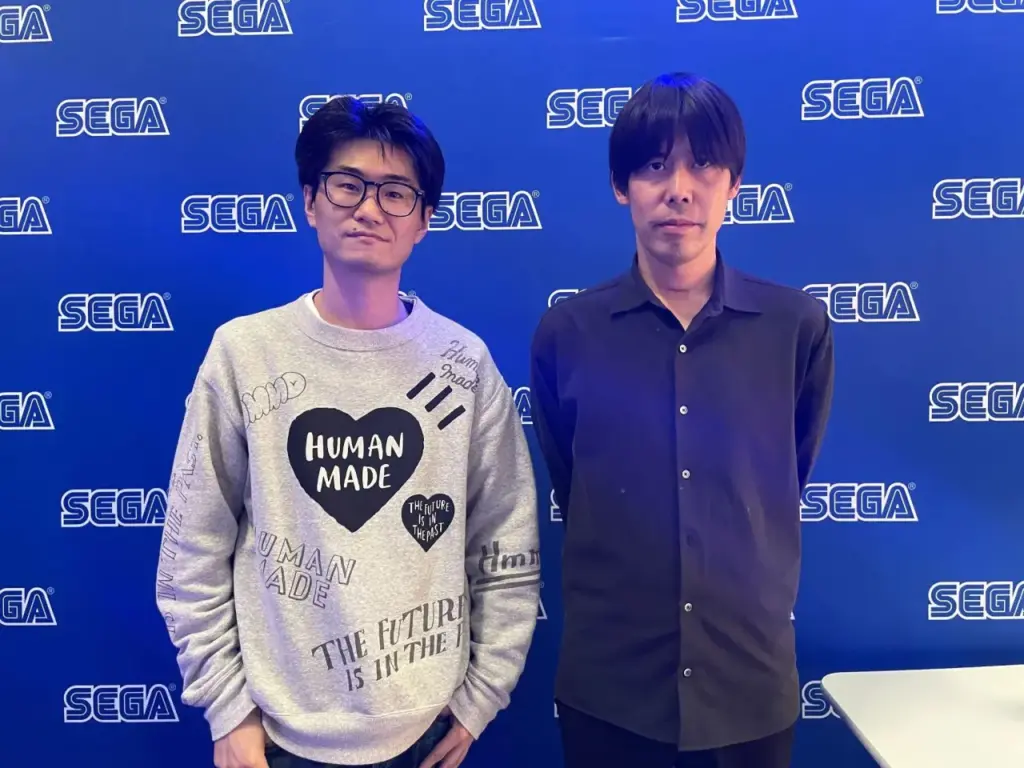
At the media hands-on event SGF Play Days, Denfaminicogamer had the opportunity to interview Shintaro Shimazu of PICO PARK, the producer of this title, and Shunsuke Miyake of TECOPARK, the director of the game and creator of PICO PARK.
The structure of this project is a little special. The credit reads “Licensed by SEGA.” This means a “license-out” arrangement, where SEGA lends one of its flagship IPs to an external partner.
Handing a globally popular IP like Sonic to an indie studio and saying, “You’re free to make it as you like”… according to Shimazu, this is the first time such a decision has been made. He looks back on it as “a pass overflowing with love,” saying it felt like being handed an important baton.
According to them, this title is being shaped into a new game that is “not just a simple reskin.” What did the two creators put into this unprecedented pass they received? We spoke with them in depth, from how the collaboration came about to their stance as creators.
Interviewers: Jitsuzon and Umi Soma
Text: Umi Soma
Editing: Takenaka President
Translation: Sonic City
Bringing the 8 Million-Selling PICO PARK Series to Even More Players. It All Began With the Ambition to “Collaborate With an Interesting IP”
── Congratulations on the collaboration announcement at Summer Game Fest 2026. First, could each of you introduce yourselves to our readers?
Shimazu:
Thank you. My name is Shintaro Shimazu, Representative Director of PICO PARK Inc., and I am serving as producer on SONIC PICO PARK. Thank you for having us today.
Miyake:
Thank you. I’m Miyake from TECOPARK. I’m serving as director on this title, and I’ve been making the PICO PARK series for a long time.
Shimazu:
He’s the creator of PICO PARK.
Miyake:
Why are there two names, “TECOPARK” and “PICO PARK”? I think Shimazu can explain that part.
Shimazu:
The basic idea is that one side handles development, while the other side handles spreading it to more people.
I originally ran a promotional company called groundinglab, and recently we’ve worked on various projects, such as the 20th anniversary exhibition for Like a Dragon and events for Monster Strike. Through that connection, we also started handling promotion for PICO PARK a few years ago.
As we worked together, I came to feel very strongly that PICO PARK is really fun, and that I wanted to deliver it to even more people around the world. On the other hand, Miyake always has a desire to keep creating new things.
As he creates all kinds of things, it would be better for him to have a partner who can handle promotion and the out-of-game side. So the two of us established PICO PARK Inc., and I became responsible for the production side.
From there, we started thinking about “how to expand the IP.” PICO PARK has currently sold 6 million copies for the first game and over 2 million copies for the second. It was a game already known among a fairly casual audience, so we wanted to bring it to even more people, especially core “game fans.”
Miyake:
That’s right.
Shimazu:
There was also another goal. PICO PARK has sold quite well in China, but going forward, we also wanted to sell it more in the United States.
So, as we thought about how to expand our work, we had this ambition, or dream, that maybe we could collaborate with some interesting IP. I asked Miyake, “Would it be okay to do something like that?”
Miyake:
But at first, I thought it would be something on the level of “adding character skins.”
Shimazu:
That’s right. Something like, “Let’s make some skins.”
Why Sonic Was Chosen From Among So Many IPs. The Answer Lay in “Actions Unique to Sonic”
── It seems this title is going to be something completely different from a collaboration where the characters are simply swapped out.
Shimazu:
Exactly. Since I was being given the chance to work together on PICO PARK, an important work that became a major hit, I strongly felt that I had to bring my own value to it. I also had this feeling of wanting to surprise my colleagues.
Through my promotional work with various companies, I had also built a close relationship with SEGA. Personally, I played Sonic a lot on the Mega Drive, and during the era when people were choosing between PlayStation and Saturn for their next-generation console, I was the kind of kid who bought a SEGA Saturn and played Virtua Fighter while my younger brother bought a PlayStation.
So I thought, maybe we could do something interesting with SEGA’s Sonic. I went directly to SEGA President Shuji Utsumi, who I’m close with, and gave him a presentation. He said, “This could be interesting.” Then one day, I told Miyake, “SEGA says they think it’s interesting.”
Miyake:
It was a surprise. We had been thinking normally about the future of the PICO PARK series, and at the time I was planning both a straightforward new entry and something in a completely different direction. So I thought maybe he was bringing me a small-scale collaboration idea, but then it turned out to be something totally unexpected…
I used to work at SEGA myself, after all. It’s an IP I personally have a strong attachment to, so I was surprised, like, “Wait, with that!?”
── Including its enormous popularity in North America, I felt that Sonic was the perfect IP for reaching audiences that PICO PARK had not yet reached. Looking back, could you tell us again why you chose Sonic from among so many IPs?
Miyake:
There is the power of the IP itself, of course, but Sonic is different from a typical 2D action game IP because it has “actions unique to Sonic.” I felt that by using those, we might be able to create new experiential value that goes beyond the framework of PICO PARK. The more I thought about it, the more I felt the two were compatible, and the ideas kept expanding.
Shimazu:
That is exactly why it had to be something truly good, both for us and for SEGA. If it were just a forced “reskin,” there would be absolutely no point in doing it.
As our dreams kept expanding and we discussed things like, “What about this?” and “What about that?”, you thought, “If we incorporate Sonic’s many different actions, this will definitely work,” right? Maybe you should talk about that part.
Miyake:
There would be no point in making this game exactly the same as PICO PARK. But at the same time, I want PICO PARK fans to enjoy it, and of course, since we are borrowing the Sonic IP, I also want Sonic fans to enjoy it. I thought a lot about how to strike that balance and what shape the game should take.
Since I’m someone from the PICO PARK side, I first thought about what makes something feel like PICO PARK. The most important thing I value in PICO PARK is not cooperative play itself, but making players feel that communication between people is fun.
So how do you get people talking? The keyword I’ve been using recently is “an accident you can explain.”
In multiplayer, when a mishap happens, it’s not good if someone just says “sorry” and the mood turns awkward.
When someone becomes a bit of a burden because of some small mistake, another player can call them out and say, “Why did that happen?” and they can answer, “No, that’s not it. I did it for this reason. I wasn’t trying to hold everyone back.” I think it’s really important that there is room for that kind of explanation.
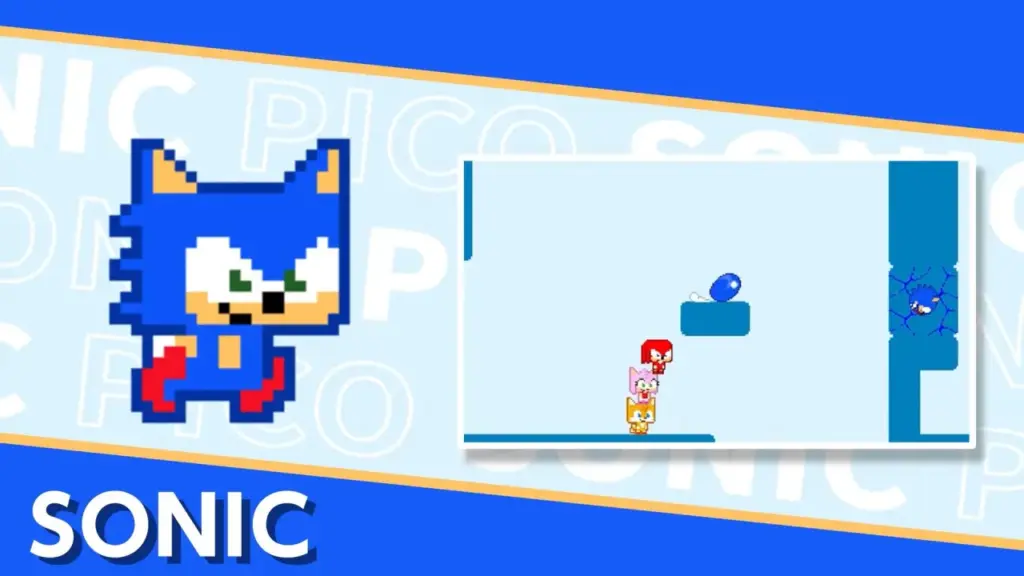
When I thought about combining that with Sonic, the first image that came to mind was “spin.” Tails is doing a Spin Dash, and Sonic is right in front of him. Tails thinks, “It’s Sonic, I should brake,” but he doesn’t make it in time, and then bam. Sonic falls off.
“Tails, what are you doing?”
“No, that’s not it, I was trying to brake!”
When that scene came to mind, I became convinced that by using Sonic’s basic actions, we could create that kind of situation.
“Don’t Worry About Making It Sonic, Make PICO PARK.” A Single Comment From Sonic Series Producer Iizuka Set the Direction
── The more I hear about it, the more compatible the two seem. Not just in terms of action, but also because the characters have that refreshing, upbeat quality. Even if Sonic says something like, “Come on, Tails, seriously…,” it doesn’t feel tense or uncomfortable.
Shimazu:
That applies exactly to gimmicks Sonic fans are familiar with, like loop terrain and springs.
The “accidents you can explain” that Miyake mentioned earlier are like, for example, getting bounced around by springs over and over and being unable to escape, while someone says, “What are you doing?”
Through those kinds of mishaps, we want players to call out to each other and create moments where their emotions are stirred. Miyake has been saying that for a long time, and I think this game expresses that well.
Miyake:
While using those “accidents you can explain” as the foundation, the cooperative elements also create all kinds of different happenings. Even as players argue back and forth during gameplay, in the end they work together, feel that sense of achievement, and finish with a smile, thinking, “Well, a lot happened, but that was fun.” That is the kind of game experience we are aiming for.
Shimazu:
After seeing various reactions following the announcement, there is one thing I absolutely want to communicate. This title is definitely not just a “reskin” of PICO PARK.
We are making a completely new game that fuses the strengths of Sonic with the strengths of PICO PARK. We want people to see it properly as “one new title.”
Miyake:
When I first talked with Shimazu, he understood that I did not simply want to repeat the same thing, and that I always want to do something new.
On that basis, I thought, “If we borrow the Sonic IP, we really can do something new.” I wanted to make something that could never be experienced simply as an extension of the pure PICO PARK series. I wanted to create cooperative play, and the conversations that come out of it, that can only be experienced in SONIC PICO PARK.
── In the actual trailer too, there were a lot of actions that really felt like Sonic, including springs, Sonic spinning, and Tails flying with his tails. Were there any development challenges in fusing and balancing that with PICO PARK?
Miyake:
Yes. Of course, I think that when SEGA first heard “a collaboration between Sonic and PICO PARK,” it must have been difficult for them to immediately share a concrete image of what the game would be like. So we started by making a prototype. Once people see something actually moving, everyone’s understanding becomes much clearer all at once.
Shimazu:
At first, we explained it with a proposal document of just a few pages, but with words alone, there were still parts that were hard to picture. So the two of us talked and decided, “Let’s just make it,” and Miyake quickly created a prototype. When we showed it to SEGA, they immediately understood and said, “Ah, I see!”
But from my perspective, the prototype at the time was actually so Sonic-leaning that I thought, “This is already pretty Sonic.” For better or worse, because Miyake is formerly from SEGA and has that respect, he had made it with Sonic very much in mind.
Then Takashi Iizuka, the producer of the Sonic series, said, “It doesn’t have to be Sonic. Make PICO PARK. You can make what you want to make, Miyake.” I feel like that one comment really helped us align more and more on the direction we should aim for.
── Did you also make the game while communicating closely with SEGA?
Miyake:
Yes. I also spoke directly with Iizuka many times.
Shimazu:
When Iizuka visited Japan, he even came by our office.
Miyake:
That’s right. TECOPARK’s office is in Kiba, and he went out of his way to visit us. Even then, I consulted with him about many things, asking, “Would it be okay to do something like this?”
For me, since we were borrowing the IP, it was necessary to confirm the boundaries of how far we could go. Naturally, there are rules that need to be followed, but Iizuka often gave us the OK fairly easily, saying things like, “Sounds good!”
The Secret to Making It Fun Is “How You Move People’s Emotions.” PICO PARK Is Built Backward From the Emotions It Wants to Bring Out
── During the actual broadcast, this was announced as a new development for Sonic’s 35th anniversary, and there were huge cheers at the venue as well. I imagine the response from overseas has also been strong, but how has it felt for the two of you personally?
Miyake:
First, regarding PICO PARK fans, my impression is that they accepted it more smoothly than we expected.
Shimazu:
That’s right. It was surprising in a good way.
Miyake:
The traditional PICO PARK was not based on any specific characters, and part of its accessibility came from its flat, simple design. I wasn’t entirely sure how people would feel when a character like Sonic was added to that.
But once it was revealed, people received it positively, saying things like, “With new actions added, what kind of fun cooperative play will be possible?” That made me very happy.
On the other hand, I think the existence of this title was something no Sonic fan could have predicted. Even so, it was received with surprising warmth, with comments like “It looks fun” and “It’s cute.” At the same time, of course, there are also people who don’t know PICO PARK itself, and we are aware that some are confused and asking, “What kind of game is this?” I think that is a completely natural reaction.
Shimazu:
As I touched on earlier, PICO PARK was originally a game played by a relatively casual audience.
── Since it has been popular with casual players, wanting to bring it to core game fans is a challenge in a way. Was that also part of the reason you chose Summer Game Fest as the place for its first reveal?
Shimazu:
Yes. I think there were many other options for where to reveal it first. For example, with PICO PARK 2, we had the opportunity to announce it through Nintendo, so we could have chosen a place that was more familiar and comfortable for us.
But this time, we deliberately came here to have game fans say, “What is this?” We wanted to start from there.
── I see.
Shimazu:
Of course, I think there are some people who are skeptical and wondering, “What is this? Is it really going to be fun?”
But something Miyake said after the announcement was really reassuring. He told me, very firmly, “First, we get the people saying ‘What is this?’ to notice it. Then, when they actually play it, if the game is genuinely fun, they will definitely become fans. That’s why I’m going to make something with real substance.”
Hearing that made me feel, as the producer, that we really can make something fun, and I’m excited about where we are now.
Miyake:
I don’t want to sound overconfident, but as someone borrowing these characters, I think we have to take responsibility for that.
Looking back, before PICO PARK became a hit, people said all kinds of things about it, like “It looks cheap” and “It doesn’t look fun.” But once people actually tried it, they judged it as “fun,” and at some point, I stopped hearing comments like “cheap” or “doesn’t look fun.” I think that happened because the value of its fun had been communicated.
So this time too, I think what we need to work hard on is showing people that this really is a fun game, and making them feel that when they actually play it.
Shimazu:
Today is the first day of Play Days*, and influencers have been playing it one after another, right?
I was nervously ego-searching on X, formerly Twitter, wondering, “Is it going to be okay?” As I was looking, I saw several posts saying things like, “When it was announced, I thought it looked boring, but when I played it, it was super fun.” Seeing things like that is a little moving.
*Play Days: A hands-on event for media and influencers held during SGF.
Miyake:
Yes. It really feels like the same scene I saw in the early days of PICO PARK. That moment when “It looks boring” changes into “I tried it and it was fun.”
Shimazu:
I see. So for you, Miyake, this is something you’ve already experienced before.
Miyake:
Yes. It feels like a sensation I experienced a long time ago, and haven’t felt in a very long while.
── Even if people initially think “it looks a little boring,” they find it fun once they play it. Where do you think the secret to that fun lies?
Miyake:
I don’t know if I can call it a secret, but I’m always thinking only about “how to move people’s emotions through the game.” It starts with the emotions first. I create things by thinking, “Because I want to bring out this kind of emotion, this gimmick is necessary.”
To check whether that intention was working, we repeatedly held internal test plays before the day of the announcement. We would confirm whether the emotions were being brought out, thinking things like, “Good, this stage properly creates this kind of conversation,” or “This is getting everyone excited in this kind of lively way.”
For test plays, we had our own staff who don’t usually play many games take part, as well as people from SEGA. We looked at feedback from both the casual side and the core side, and repeated detailed tuning. The current form is the result of that.
It feels like we calculated the movement of emotions, then repeatedly confirmed and adjusted things through actual user testing, until we finally arrived at today.
Everyone gathers together, gets excited, laughs, and finishes smiling. What We Want to Leave Players With Is Pure Memories and Emotions
── You mentioned earlier that influencers have been playing it. Are they basically all playing in groups of four?
Shimazu:
Yes. For this Play Days, SEGA of America has been helping with operations, and they have set things up so that people can basically enjoy it in four-player sessions each time.
By the way, what is the maximum number of players for this title?
Miyake:
From two players up to a maximum of eight. That part is exactly the same as the traditional PICO PARK.
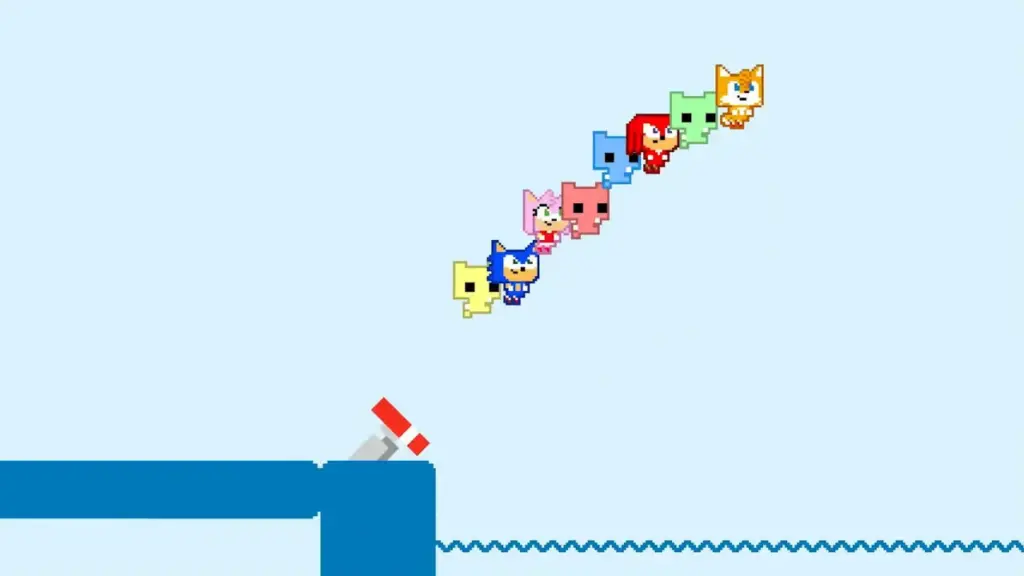
── During the hands-on session, did even players meeting each other for the first time naturally get excited together?
Shimazu:
They got incredibly excited. We were watching nervously, but it really put us at ease.
That said, I’m in the producer position, so I’m not directly making the game myself… but looking at it objectively, even though it’s easy to write “supports two to eight players,” I think it’s kind of “insane” that the game balance doesn’t break whether you play with two people or eight.
That is one of the reasons I wanted to work on PICO PARK together. On top of that, this time we are borrowing the Sonic IP, so the number of gimmicks has increased significantly. Miyake has also added character-specific actions, saying things like “Tails has to be able to fly” and “Knuckles has to be able to glide.”
When that happens, the number of unpredictable elements suddenly increases, like “someone might fly through the air at this timing.” Making that properly balanced and fun no matter whether two or eight people are playing is not an ordinary task.
Earlier, we talked about how people said it looked cheap, but when it comes to the detailed calculations needed to stir emotions and the hard work behind the actual content, I truly trust him as a creator with incredible ability.
── In a previous interview with another outlet, you mentioned that when porting the first PICO PARK to Unity, the standard physics engine made the behavior calculations complex and caused difficulties.
Miyake:
Unity includes a standard physics engine, but I felt that we couldn’t create PICO PARK’s behavior using it. So the physics calculations in PICO PARK are completely custom-made.
── So on top of your own physics system, this time you have also incorporated Sonic actions.
Miyake:
Yes. However, I created the physics system for the first game by myself, but this time, as with the previous title, we are working together with Gemdrops. Gemdrops is handling the system implementation side, and on top of that, I am building the various gimmicks and level design.
── At first glance, it looks very simple, but in reality, there is an incredible amount packed inside. I hope that impressiveness comes across.
Miyake:
Some people might look only at the visuals and call it “cheap,” but we have fully implemented that unique physics system, and on top of that, we also support network synchronization for up to eight players.
The technical difficulty may be hard to imagine, but we are definitely not doing something simple.
Shimazu:
But at the same time, we don’t want players to feel any of those behind-the-scenes struggles at all. We aren’t trying to brag and say, “Our technology is amazing.”
We just want two to eight people to gather normally, get excited together, and play. Then, after they finish, we want only pure memories and emotions to remain, like “Remember that conversation we had?” or “Remember when we kept falling there and laughing?” That is our wish, and it is the feeling we have put into this game.
Miyake:
Whether it’s two people or eight people, I think there are “shared conversations” that emerge no matter how many people are playing. Of course, there are conversations that only happen with a large group, and conversations that only happen with two people. But there is also definitely an axis of “conversations that get people excited regardless of player count,” and I use that as my guide when making the game.
Of course, it’s not as though I have something perfect in my head from the start. That is why we repeatedly conduct user tests and check whether those conversations are being properly brought out. I believe that if we use that as our guide and keep adjusting the game while having all kinds of people play it, we will definitely arrive at the right answer.
That is why I think we were able to make both PICO PARK 1 and PICO PARK 2, and I also think SONIC PICO PARK is turning out well.
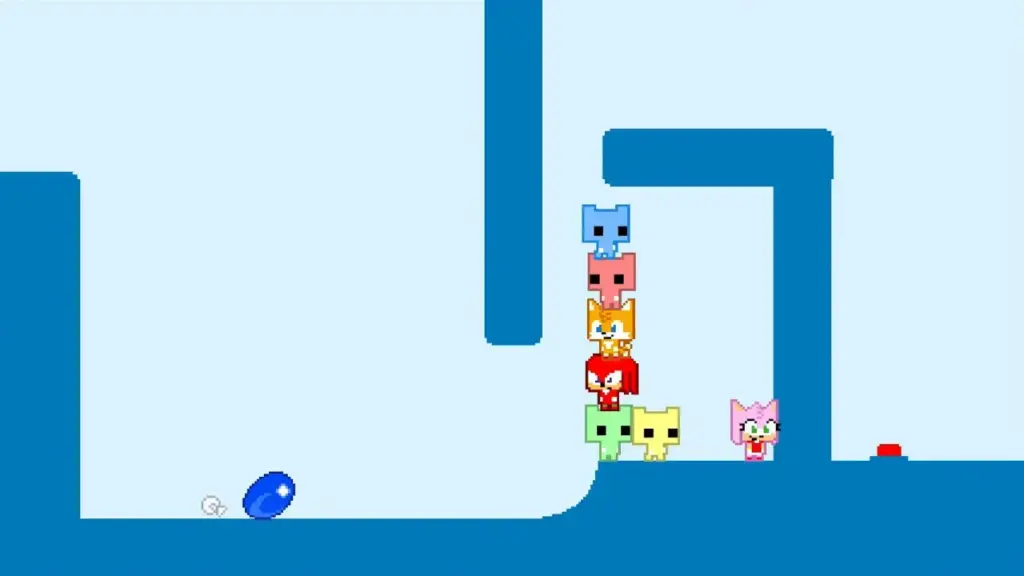
Even When Players Are Apart Online, “Conversation” Definitely Happens. That Is What PICO PARK Values Most
── There’s one more thing I’d like to ask. This title supports online multiplayer, right? How do you check the feedback and reactions of people playing online?
Miyake:
This time as well, we held internal online test plays. During those sessions, we asked the testers to share their screens, and I would join the call and just watch the whole time.
That said, I think there are things people find harder to say when the developer is watching, so I tried to create an atmosphere where they wouldn’t feel that as much as possible. I told them, “Really, you can say whatever you want about me, even if it’s harsh, so please just play freely.”
── Even when players are physically apart online, does the excitement of the conversations during play feel the same as offline?
Miyake:
Of course, I wouldn’t say online play and offline local play are exactly the same experience. But at the very least, I feel confident that the “conversation” we value most in PICO PARK happens both locally and online.
── That is exactly the “accident you can explain” you mentioned earlier.
Miyake:
That back-and-forth of “Hey Sonic, what are you doing?” and “No, that’s not it.”
Shimazu:
In the traditional PICO PARK, the cat characters called “Pico Cats” were separated by colors like red, blue, and yellow.
So, for example, when you’re playing with coworkers or university seniors, someone might say, “Red keeps falling. Red, what are you doing?” and then the other person responds, “Ah, sorry, senpai.” That kind of exchange is what makes it fun, right? The same kind of excitement happens online and during streams too.
By triggering those “accidents you can explain” in various ways, everyone communicates with each other. The accidents or little complaints that happen in the game are not things that genuinely hurt people, they are just funny stories. Being able to say the next day, “You were terrible back there,” is something I think is really precious.
Miyake:
And this time, I definitely think there is an “ease of conversation” that comes from using characters.
For example, if Shimazu were playing as Sonic, I think the psychological barrier is completely different between a younger staff member saying directly, “Shimazu, what are you doing?” and saying, “Sonic, what are you doing?”
── I see. So the character becomes a kind of “cushion” in human relationships.
Miyake:
That’s right. I think they really do act as a good cushion.
Whether the Intended Emotion Is Actually Happening. The Answer Exists Only in the Expressions of the People Playing
── Your focus on wanting players to have conversations and evoke emotions left a strong impression. As a creator, what led you to that way of thinking?
Miyake:
What I kept thinking about was, “What exactly is a new game?” If you make a new character game with different visuals, does that make it a new game? Not necessarily. When you see a new title and think, “It’s a new game, but the content feels similar to that other game,” what exactly does that mean?
To give a specific example, when I played UNDERTALE, I genuinely thought, “This is a new game.” So where does that difference come from? When I kept digging into it, I realized that in the end, it comes down to “more primitive elements of human beings.”
In other words, unless you can properly put into words and explain “the emotions that can only be experienced through that game” or “the experiential value” it offers, maybe you can’t truly call it “new.”
If I’m going to say that I want to make a new game, I wanted to make the true nature of that clear. I thought about it, kept thinking, refined it, and kept digging deeper into the primitive elements of human beings. As a result, I arrived at my current answer: “moving emotions.”
Shimazu:
Watching Miyake’s way of thinking from beside him is really interesting. When it comes to “how to move those emotions,” he says that every element in the game needs to have an absolute meaning.
When people are playing PICO PARK with that look, they probably never imagine that such detailed calculations are happening behind the scenes. They play while thinking, “Why do I keep falling so much? Is it just by chance?”
But he is always designing each element one by one, thinking, “The moment the player does this, they will feel this emotion.” After calculating and building all of that, he argues that “it would be stranger for there to be an element that has no meaning.”
Miyake:
On the other hand, when we do user testing, sometimes conversations and happenings occur that I hadn’t expected. But when I see the players’ real emotions and conversations and think, “Ah, this emotional movement works too,” I actively incorporate that into the specifications.
── So the moment you can confirm that the player’s emotions are actually moving is where the game’s value lies.
Miyake:
That’s right. But that part is very delicate. Rather than asking for impressions after they finish playing, there are things you can only catch by watching what happens while they are actually playing. This morning too, I was watching everyone play very closely from a little distance away.
── So it’s important to see their real reactions during play, like, “Right now, they’re reacting this way,” rather than after they finish.
Miyake:
In each moment, you can tell to some extent things like, “They’re panicking,” or “They’re surprised.” I’m checking whether the emotions I intended are really happening or not.
The reason each stage in this game is made short is because I place importance on “how quickly we can reach the intended emotion over a short distance.” Each stage is designed with the idea that “this is the emotion I want players to feel here.”
That said, in a cooperative game, if you shake up too many different emotions, players can get tired. So by inserting a clear break with “stage clear,” we reset their emotions and let them move forward at a good tempo, like, “Okay, what kind of emotion will come next?” Well, I don’t think players themselves are playing while thinking, “What kind of emotion will come next?”
Shimazu:
When we set up demo stations at events, the surrounding area is noisy, so the event staff suggest, “Let’s have players use headphones.” But Miyake won’t give in. He says, “If they’re wearing headphones, they won’t be able to talk, so that won’t work.” That made me realize again that he always puts the way players communicate with each other first.
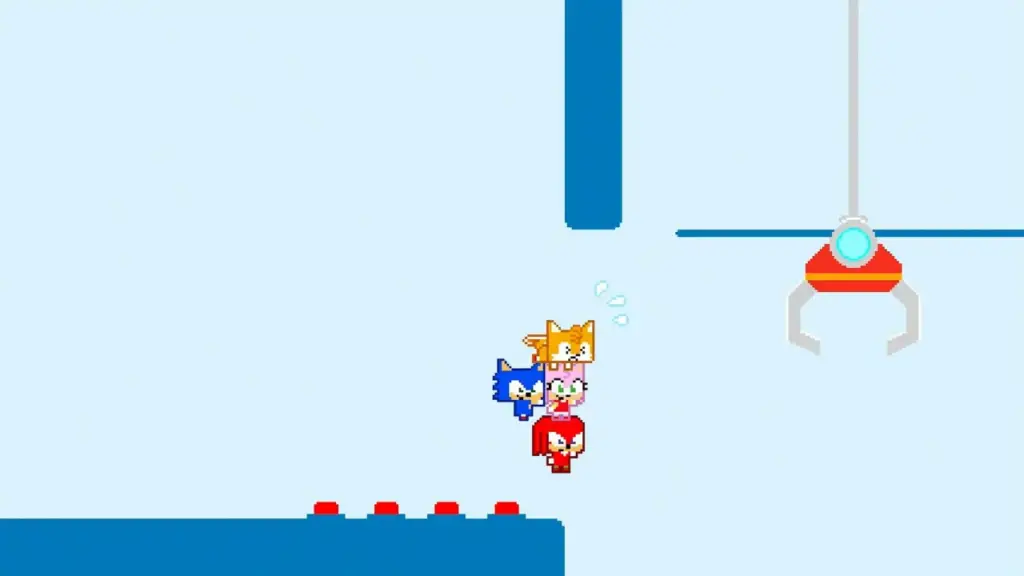
PICO PARK Has No Story. But the Conversations Created by Players Become Another Story
── I can really understand how that kind of game design resonates with casual players, but this time you mentioned that you are deliberately aiming it at “core game fans.” How do you want them to experience this title?
Miyake:
Actually, what I want them to feel is the same as before. When PICO PARK became a hit, I felt that this kind of fun is “universal.”
The fun of conversation and emotion comes from communication between people, so even if languages and cultures are different, people can still laugh together and call each other out in the same way. That is the same for both casual players and core players.
However, I do think the “presentation” and platform needed to reach them are very different. So this time, by borrowing the power of Sonic, I believe that if game fans try it even once, those same emotions will definitely emerge.
── So as long as people try it, the fun will come across.
Miyake:
Of course, I do think we need to prepare dedicated gimmicks and adjust the difficulty so that game fans can properly enjoy it.
Shimazu:
For us, we don’t intend to force the idea of “we want you to experience this thing we made” onto players. The game changes depending on the players, and the emotions drawn out from it and the conversations that arise naturally change too. That is the kind of game it is.
So we have simply prepared a platform, or playground, where we think certain things might happen. Now, with people who identify as game fans gathering there and playing as Sonic and the others, what kind of new emotions will be drawn out? We are really looking forward to seeing that ourselves.
Our stance has always stayed the same. We hope that while everyone plays in a fun and silly way, they make more friends, or spend more warm moments with the people important to them.
Miyake:
I’ve been talking about how we imagine certain emotions, but on the other hand, PICO PARK has no story. Even so, I feel there is a strong narrative element in this title. Precisely because there is no story, the conversations between players that are born inside this game become another story.
Players themselves feeling, “We had that kind of conversation, didn’t we? That became a good memory,” and people watching gameplay streams enjoying things like, “Those streamers had this funny exchange,” are all stories.
That is why it is fun both for the people playing and for the people watching. I prepare the primitive elements that create those opportunities and make certain assumptions, but the stories that are woven on top of that are, I believe, 100 percent original to each player.
SEGA Has Licensed Out Its Global Flagship Sonic IP to an Indie Developer for the First Time. It Feels Like “a Pass Overflowing With Love,” and Like Being Handed an Important Baton
── From what both of you have said, I can really feel how deeply invested you are in this title. Looking at it again, is there anything you can say precisely because of this particular development structure?
Shimazu:
Lastly, there is one more thing I really want to convey this time, and that I am extremely grateful for. In terms of the project structure, this title is actually “Licensed by SEGA.” In other words, SEGA has entrusted the license to us, and allowed us to take the form of a “license-out.”
If you look closely, the credit says “Licensed by,” and in the history of the game industry, this means the day has come when Sonic, a globally recognized flagship IP, has been licensed out to an indie developer for the first time.
It’s almost like sending Sonic off to an outside company, and at such an important timing as the 35th anniversary. For SEGA to say, “You can freely make an interesting game using your own logic and rules,” must have required tremendous courage and resolve on their part.
Behind SEGA’s decision, I feel there was a pure desire to build trust with creators while making this important IP, which is also their starting point, even more interesting and even bigger. It really was “a pass overflowing with love,” and I strongly feel like we have been handed an important baton.
Miyake said things like, “We have to do this properly,” and “There is a sense of tension,” but the true nature of that feeling is the weight of knowing, “They entrusted this to us for the first time.” It is incredibly exciting, while also making us stand up straighter. Right now, I’m feeling both of those intense emotions at the same time.
── That is a dramatic story behind the scenes.
Shimazu:
Especially because this time, it’s SEGA. This is the company Miyake originally came from.
Miyake:
This time, we are also using SEGA’s space at the hands-on venue, and when I arrived, there were a lot of conversations like, “Long time no see.”
Shimazu:
People from SEGA were calling out, “Miyake!” and saying, “What are you doing here?”
Miyake:
I thought, “Wait, I’m pretty sure I left SEGA…” (laughs). But for me, this really is a true way to “give back.” I’m happy that I can properly give something back to the place that helped raise me.
Shimazu:
We’re still at the stage of hoping it becomes a way to give back, though.
Miyake:
That’s true. I feel I need to really focus from here and keep making it properly so that it becomes the best possible way to give back.
── From another perspective, in the context of indie games, this really is a dream. It’s amazing that an indie developer is being trusted with the Sonic license this freely.
Shimazu:
This really doesn’t happen often! Game fans will understand… this excitement. SEGA didn’t just bring us in as a subcontractor. They lent us their important flagship IP and said, “Make something interesting with this.” That’s why I’m truly happy from the bottom of my heart.
Miyake:
Recently, the definition of the word “indie” has become broader, but to me, “indie spirit” is still about having the attitude to do something new, something different from what has come before.
In that sense, I feel that SEGA making this decision means they passed their own “spirit of challenging something new” to us. So, as someone who has been working in the indie context, I want to respond to that pass and surprise everyone.
Shimazu:
And this is Sonic, of all things.
Miyake:
That is exactly why I feel it isn’t quite right to simply call this a “license-out” or sum it up in one word as a “collaboration.” I’m approaching it with the feeling that we have been entrusted with something much greater than that.
── I see. This is a story that does not fit neatly into the word “collaboration.” I can really understand now that this is a title packed with many passionate feelings.
Shimazu:
Ah, sorry. There were so many things I wanted to talk about that this ended up getting long.
Miyake:
But you know, even though we’ve been talking about all these things, when you actually play it, it’s a silly, lighthearted, new game.
Shimazu:
Exactly. In terms of the game’s feel, we are not trying to make it something heavy or grand. But we would be happy if the people who play it can get just the right sense that these kinds of feelings are packed into it behind the scenes.
Miyake:
It’s not a heated game where you play while your eyes are burning and you’re shouting at the top of your lungs. So please feel at ease and enjoy it casually.
── After hearing both of your passionate thoughts, I’m looking forward to playing it even more. Thank you very much for your time today!
Shimazu and Miyake:
Thank you!
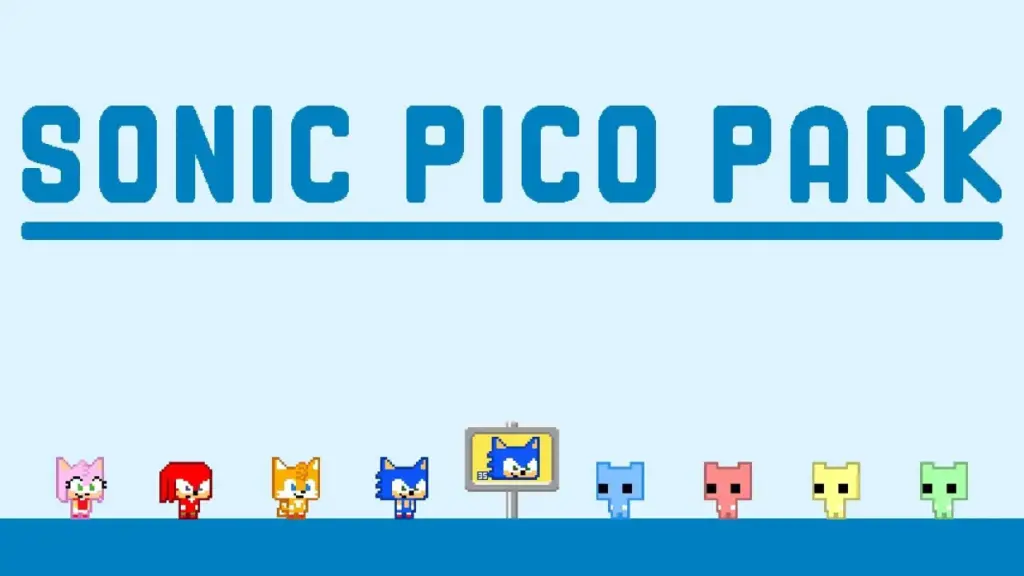
“Accidents you can explain,” “designing emotions,” and “a balance that doesn’t break whether there are two players or eight is insane” ── the many stories shared in this interview were filled with an energy that could never fit into the single word “collaboration.”
PICO PARK was created with communication valued above all else. Miyake’s perspective, that “the conversations created by players become the story of this game,” reflects his pride as a creator.
At the same time, both of them fully understand the weight of the fact that SEGA has entrusted Sonic to an indie developer for the first time. That is likely why their seriousness came through in every part of the conversation.
This will surely reach both casual players and game fans alike… It was an interview filled with passion, and one that left a clear, tangible sense that this is true. SONIC PICO PARK is currently in development for Steam.
Source: Denfaminico Gamer
Discover more from Sonic City ⋆★ Sonic the Hedgehog News, Media, & Community ★⋆
Subscribe to get the latest posts sent to your email.
![Read more about the article Translation: Sonic Rumble Group Interview. We Learned More About the Sonic Series’ New Venture into the Battle Royale Genre [TGS2024]](https://media.sonic-city.net/2024/09/image-29-300x214.png)