Fleetway’s Sonic the Comic remains one of the most distinctive parts of Sonic the Hedgehog history, and a new Time Extension interview has revisited the UK comic’s wild creative run with two of the people who helped shape it.
Writer Nigel Kitching and artist Richard Elson spoke with Time Extension about the comic’s origins, its unusual freedom as a licensed Sonic publication, and the stories that made it so memorable for a generation of UK fans.
Sonic the Comic launched in the UK on May 29, 1993 and ran until December 2002, ending with issue 223. Published by Fleetway Editions, the magazine mixed Sonic stories with strips based on other SEGA games such as Streets of Rage, Shinobi, Golden Axe, Wonder Boy, and Eternal Champions, alongside news, reviews, tips, and fan features.
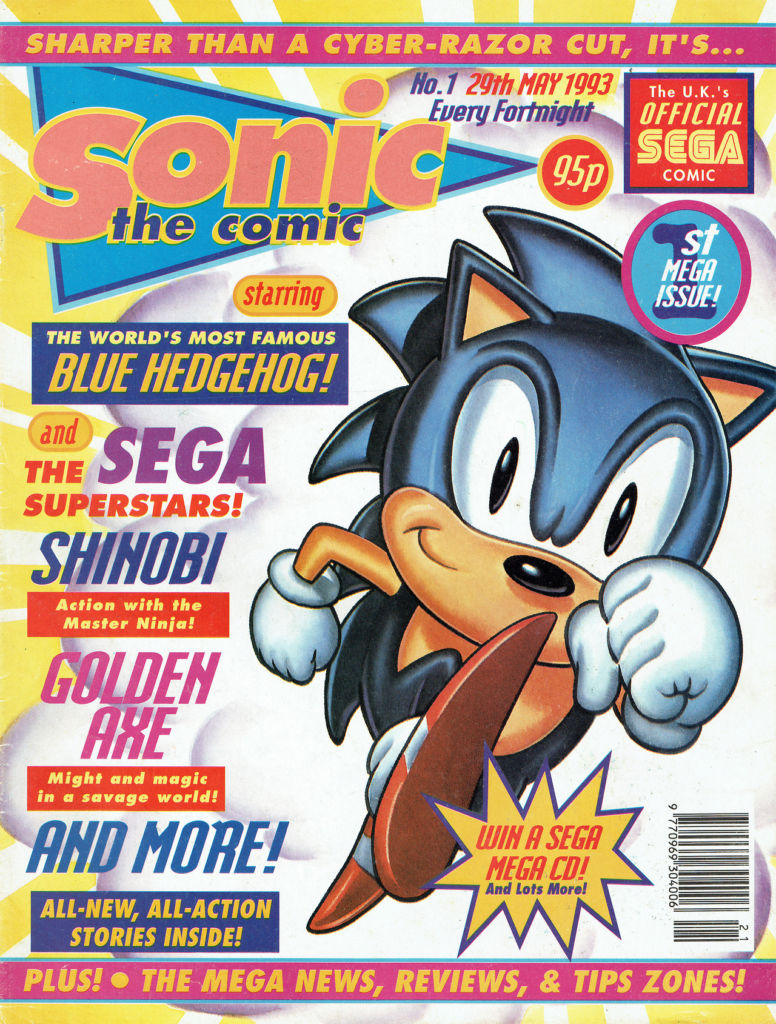
According to Kitching, the first issue had to be produced quickly, with launch editor Richard Burton needing to find creators on a tight schedule. Kitching had already worked on licensed comics, including Tom and Jerry and The Red Dwarf Smegazine, while Elson had experience on the UK Teenage Mutant Hero Turtles comic and had previously drawn Sonic for a UK annual.
Neither creator entered the project as a major Sonic fan. Kitching owned a Mega Drive but said Sonic was not really for him after struggling with the early game, while Elson described himself as more of a Nintendo fan. Once hired, however, the team kept up with the games and began building a Sonic continuity that would soon move far beyond simple adaptations.
One of the most interesting parts of the interview is how loose the early licensing structure appears to have been compared to modern brand management. SEGA’s UK licensing was handled through Copyright Promotions, but both Kitching and Elson said the comic eventually gained far more room to tell its own stories.
Elson recalled that after a meeting with SEGA, Copyright Promotions gave the team more latitude to make the comic more compelling. Kitching said the lack of a strict official bible became a blessing, allowing him to create his own version of Sonic’s world and backstories for characters such as Knuckles.
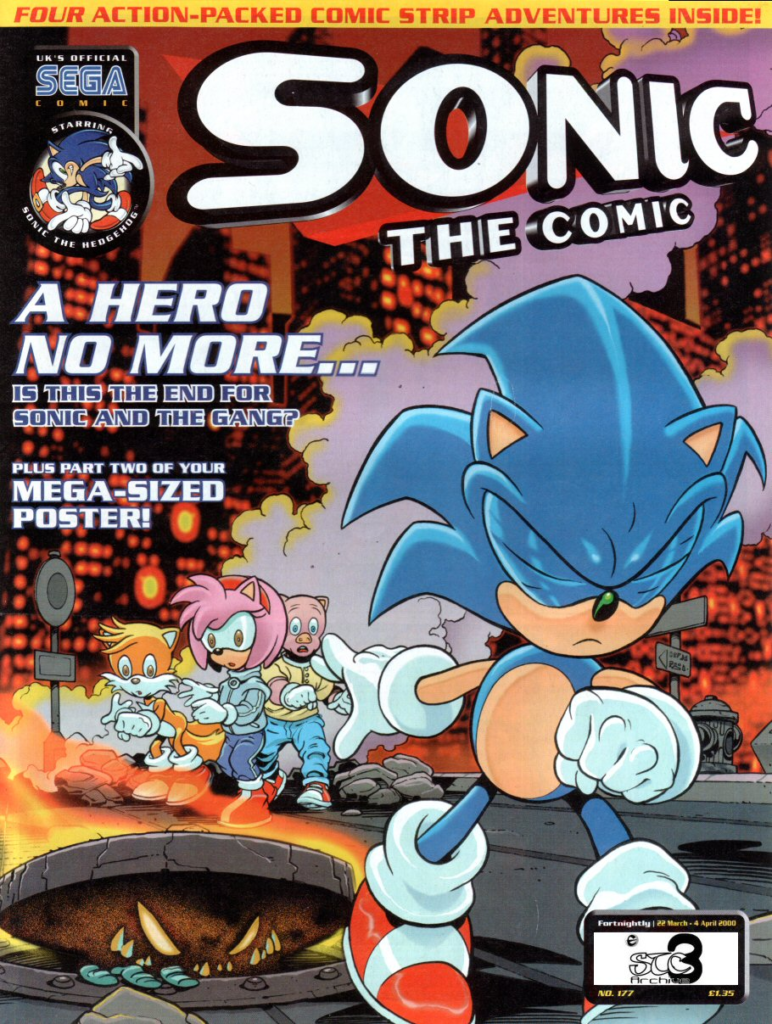
That freedom helped Sonic the Comic develop one of the boldest interpretations of Sonic ever seen in official media. Fleetway’s Sonic was cockier, sharper, and more openly sarcastic than many other versions, while still ultimately heroic beneath the attitude. The comic also introduced original characters such as Johnny Lightfoot, Porker Lewis, Captain Plunder, Megatox, Doctor Zachary, and Lord Sidewinder.
Its most famous reinvention may be Super Sonic. Rather than simply presenting him as Sonic’s powered-up form, the comic turned Super Sonic into a dangerous, unstable alter ego who could emerge under extreme stress. Kitching compared the idea to the Hulk, saying he wanted Super Sonic to feel terrifying and genuinely dangerous.
Elson also revealed that Super Sonic’s spiral eyes were inspired by political cartoonist Ralph Steadman, whose work often used that visual device to make characters look unhinged.
Kitching summed up the comic’s creative freedom directly, saying, “You’d never be allowed this kind of freedom with a licensed character nowadays.” He also admitted that not every choice has aged well, particularly a Knuckles story with a lynching scene that was later altered by moving the rope from Knuckles’ neck to his waist. Looking back, Kitching said he felt including that scene in a children’s comic was a mistake.
The interview also revisits the comic’s later years, when budget cuts slowly reduced original material and pushed the magazine toward reprints. Before Sonic the Comic became reprint-only from issue 185 onward, Kitching and Elson helped deliver one of the series’ most memorable final arcs, a loose adaptation of Sonic Adventure centered on Chaos.
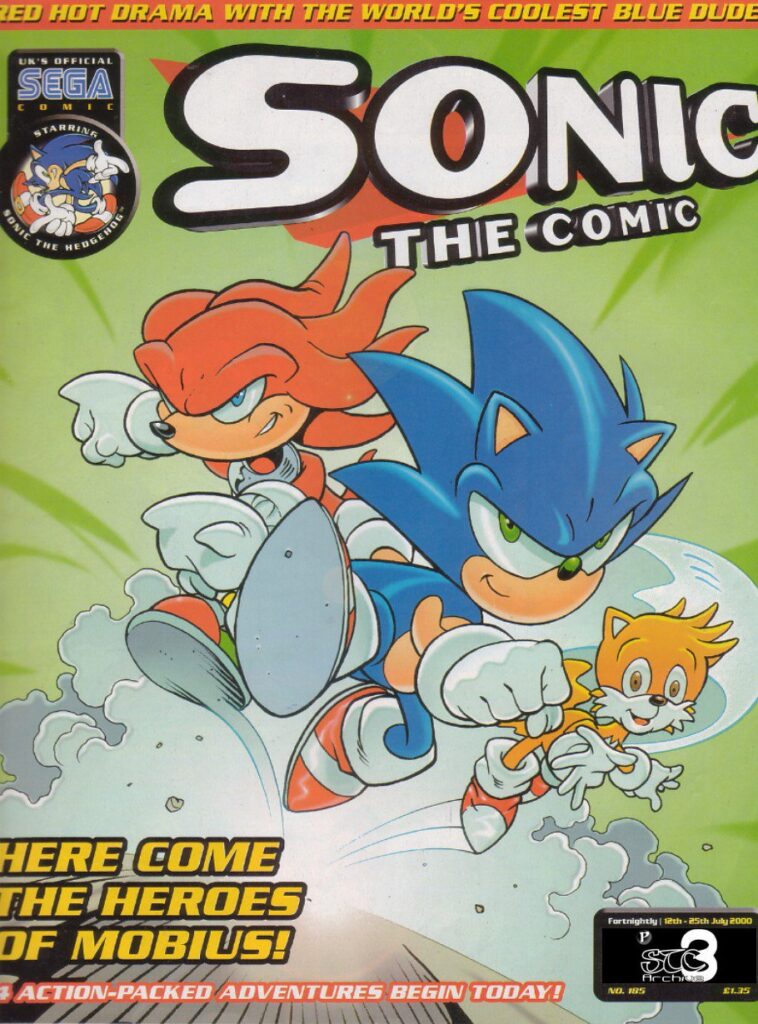
That story saw Grimer release Chaos after Robotnik gave up his fight against Sonic, leading to a destructive attack on Metropolis City. It also featured the death of longtime original character Johnny Lightfoot, a moment Kitching said was meant to make a point about the dangers of being a hero.
Elson described Sonic the Comic as “probably the most enjoyable job I ever had,” calling the final Chaos story one of his favorite pieces of work from the series. He also said he still believes the comic could have continued for years if it had not shifted fully into reprints.
For Kitching, the comic’s end felt inevitable, but he still looks back fondly on the experience, the editors, and the artists he worked with, including Elson, Nigel Dobbyn, Mick McMahon, and Lew Stringer.
More than two decades after its final issue, Sonic the Comic still stands apart from other Sonic adaptations. It was strange, sharp, sometimes darker than expected, and unmistakably British, but that is exactly why so many readers still remember it. For fans who grew up with Fleetway’s Sonic, it was not just a companion to the games. It was a major part of Sonic’s identity in the UK.
Stay tuned to Sonic City for more Sonic Comic News and Updates!
Discover more from Sonic City ⋆★ Sonic the Hedgehog News, Media, & Community ★⋆
Subscribe to get the latest posts sent to your email.