
Treasure Tails
Development Staff
Developer(s)
Sega Technical Institute
Director(s)
Roger Hector
Designer(s)
- Craig Stitt
- Hoyt Ng
Programmer(s)
- Ken Rose (lead)
- Earl Stratton
Artist(s)
Craig Stitt
Video Game Overview
Series
Status
Canceled
Intended release
Christmas 1993
Cancellation date
April 16, 1993
Genre(s)
- Puzzle
- Adventure
- Platformer
Perspective
Isometric
Mode(s)
Single-player
Number of players
1
Platform(s)
Sega Mega Drive / Sega Genesis
Development period
December 1992 – April 1993
Surviving prototype
April 7, 1993
Prototype release date
October 31, 2026
Prototype preservation
- Hidden Palace
- DevStash
Original prototype media
Floppy disk
Treasure Tails is a canceled single-player puzzle-adventure game in the Sonic the Hedgehog series, developed by Sega Technical Institute for the Sega Mega Drive. Starring Miles “Tails” Prower as its main playable character, the game was designed as an isometric adventure combining platforming, puzzles, and exploration within a maze-like environment. Development began in December 1992 following a request from Sega of America management for a short, relatively simple Tails-focused game intended for Christmas 1993.
The project was directed by Roger Hector, with Ken Rose serving as lead programmer alongside Earl Stratton. Craig Stitt was the project’s sole artist and also contributed to its design alongside Hoyt Ng. An internal design document indicates that Treasure Tails was intended to tie into the Adventures of Sonic the Hedgehog episode “Tails’ Tale“. However, the game’s development proved more demanding than initially anticipated. An assessment of the required animation work estimated that completing the artwork alone could take approximately four years. Consequently, the project was canceled on April 16, 1993, and its development team was reassigned to Sonic the Hedgehog Spinball.
The existence of Treasure Tails became publicly known on August 17, 2020, when Stitt shared screenshots recovered from a VHS video résumé he had assembled in 1995. The images, posted to the private SEGA Retro Gamers Facebook group, provided an early glimpse of the previously undocumented project.[1]Azul 35 and Ryan Scarlett (August 17, 2020). “Treasure Tails, a lost Sonic game, is discovered“. Tails’ Channel. Accessed July 27, 2023.
On October 31, 2026, CartridgeCulture publicly released a surviving prototype dated April 7, 1993, recovered from Ken Rose’s original floppy disks alongside the game’s source code. The playable development build offered a more substantial look at the canceled title, although it lacked certain environmental graphics, including the temple artwork depicted in Stitt’s earlier mockups.
On this page
- Gameplay
- Development
- Concept and origins
- Design and production
- Cancellation
- Discovery and preservation
- Rediscovery in 2020
- Prototype discovery and release in 2026
- Surviving source code and development materials
- Prototype
- April 7, 1993 build
- Prototype contents and differences
- Download
- Production credits
- Technical information
- Technical specifications
- Surviving build
- Source code
- Gallery
- Development mockups
- Prototype screenshots
- Extracted graphics
- Videos
- Development footage
- Prototype gameplay
- See also
- External links
- References
Gameplay[edit]
Treasure Tails was designed as a single-player, isometric puzzle-adventure game with platforming elements. Players would control Miles “Tails” Prower while navigating a maze-like world, with gameplay intended to emphasize exploration, environmental navigation, and puzzle-solving.
Unlike the traditional side-scrolling gameplay of the main Sonic the Hedgehog series, Treasure Tails would have presented its environments from an isometric perspective. The specific controls, objectives, puzzle mechanics, and level progression remain largely undocumented.
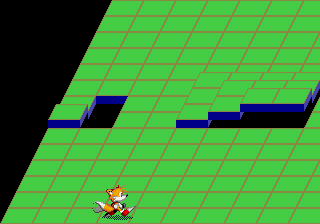
Although a surviving prototype dated April 7, 1993, was publicly released on October 31, 2026, the game was canceled before completion. The prototype lacks certain environmental graphics depicted in Craig Stitt‘s original mockups, including temple artwork, reflecting the project’s unfinished state.
Development[edit]
Concept and origins
Development of Treasure Tails began at Sega Technical Institute (STI) in December 1992, following a request from Sega of America management to create a short, relatively simple game starring Miles “Tails” Prower for the Christmas 1993 release period. Conceived as a spin-off of the Sonic the Hedgehog series, the project was intended to give Tails his own adventure rather than have him serve as Sonic’s companion.
According to Craig Stitt, the idea for a standalone Tails game was proposed by STI game designer Bill Dunn in February 1993. However, Dunn subsequently denied any involvement with the proposal. Stitt acknowledged that his recollection of the project’s origins might have been inaccurate, as more than 25 years had passed since its development. Al Nilsen, Sega of America’s former Director of Global Marketing, also stated that he had no recollection of the proposed game.[2]. Treasure Tails, a lost Sonic game, is discovered. Tails' Channel.
Design and production
The game was developed under the direction of Roger Hector, with Ken Rose serving as lead programmer alongside Earl Stratton. Stitt was the project’s sole artist and contributed to its design alongside Hoyt Ng. His responsibilities included producing the game’s artwork and helping establish its visual presentation and environments.[3]August 11, 2025 correspondence between Ashley Rojas (CartridgeCulture) and Craig Stitt.
Rather than following the traditional side-scrolling formula of the main Sonic games, Treasure Tails was designed as an isometric puzzle-adventure set in a maze-like world. The project combined platforming and puzzle-solving elements, with its environments and character animations requiring a different approach from STI’s previous Sonic projects.
An internal design document preserved with the game’s development materials indicates that Treasure Tails was also intended to tie into “Tails’ Tale“, an episode of the animated television series Adventures of Sonic the Hedgehog. This connection formed part of the project’s original planning, although the extent to which the episode’s story would have been incorporated into the game is undocumented.
Cancellation
Despite its relatively modest intended scope, Treasure Tails proved considerably more demanding to produce than initially anticipated. The game’s isometric presentation required a substantial amount of character and environmental artwork, particularly animation frames needed to accommodate its perspective.
An assessment of the animation requirements estimated that producing the necessary artwork would take approximately four years. This workload was incompatible with Sega of America’s plans to complete the game in time for Christmas 1993, making the project impractical within its intended development schedule.
As a result, Treasure Tails was canceled on April 16, 1993, approximately four months after development began. The development team was subsequently reassigned to Sonic the Hedgehog Spinball, another Sonic spin-off being produced at Sega Technical Institute.
The cancellation left Treasure Tails in a partially developed state. Although working game code, artwork, and design materials had been produced, several planned visual elements remained unfinished or unimplemented. Among these were temple environments depicted in Stitt’s early mockups, which were absent from the surviving April 1993 prototype.
The project never received a commercial release.
Discovery and preservation[edit]
Rediscovery in 2020
The existence of Treasure Tails became publicly known on August 17, 2020, when former Sega Technical Institute artist Craig Stitt shared screenshots of the canceled game in the private SEGA Retro Gamers Facebook group. The images originated from a VHS video résumé Stitt had assembled in 1995 while preparing to leave Sega. After revisiting the recording more than two decades later, he rediscovered footage of several static mockups created for the project’s original presentation.
Stitt explained that he had largely forgotten about Treasure Tails until reviewing the VHS recording. Although he remembered producing the mockups and described the game as an isometric platforming and puzzle-adventure title starring Miles “Tails” Prower, he could not recall how far development had progressed or whether the proposal had influenced later games featuring Tails.
His initial account attributed the project’s pitch to Sega Technical Institute designer Bill Dunn in February 1993. However, Stitt subsequently corrected this statement after speaking with Dunn, who denied involvement. Former Sega of America marketing director Al Nilsen also stated that he did not remember the proposal, suggesting that it might never have been presented to Sega of America’s management.
The screenshots and Stitt’s recollections were reported by Tails’ Channel on August 17, 2020, introducing the previously undocumented game to a wider audience. At the time, the surviving images offered only a limited impression of its intended appearance, and the extent of the project’s development remained uncertain.[2]. Treasure Tails, a lost Sonic game, is discovered. Tails' Channel.
Prototype discovery and release in 2026
Further evidence of Treasure Tails emerged through the preservation efforts of Hidden Palace and DevStash, which worked with former Sega Technical Institute programmer Ken Rose to recover development materials from the studio’s early years.
In December 2025, DevStash founder Ashley Rojas, also known as CartridgeCulture, interviewed Rose about his career in video game development. Following the interview, Rose searched through his original floppy disks for surviving material from his time at Sega Technical Institute. The resulting collection contained game builds, source code, and development documents dating from 1990 to 1994, including previously unreleased material from several canceled projects.
Among these files was a surviving April 1993 build of Treasure Tails, recovered from Rose’s disks. As the game’s lead programmer, Rose had retained development materials that provided evidence of the project’s progression beyond the static presentation images made public in 2020.
On October 31, 2026, Hidden Palace and DevStash announced the recovered materials in an article titled “Happy Halloween 2026! A Journey Through STI’s Early Years”. As part of the release, CartridgeCulture published the surviving Treasure Tails prototype through Hidden Palace, alongside a separate archive of the game’s partial source code and associated development documents.
The prototype was identified as an April 7, 1993 build, predating the project’s cancellation on April 16, 1993. Its preservation established that the game had progressed into development beyond the pitch materials previously known to the public.[4]Happy Halloween 2026! A Journey Through STI's Early Years. Hidden Palace. [5]Treasure Tails (prototype). Hidden Palace.
Surviving source code and development materials
The preserved material includes the April 1993 prototype, partial source code, and a small collection of design documents. These files provide information about the game’s development, production staff, and intended relationship with other Sonic the Hedgehog media.
One of the recovered design documents indicates that Treasure Tails was intended to tie into “Tails’ Tale“, an episode of the animated television series Adventures of Sonic the Hedgehog. The episode follows Tails on an adventure through an ancient temple, where he eventually confronts the villain Comomatz. This connection had not been established by the screenshots released in 2020.
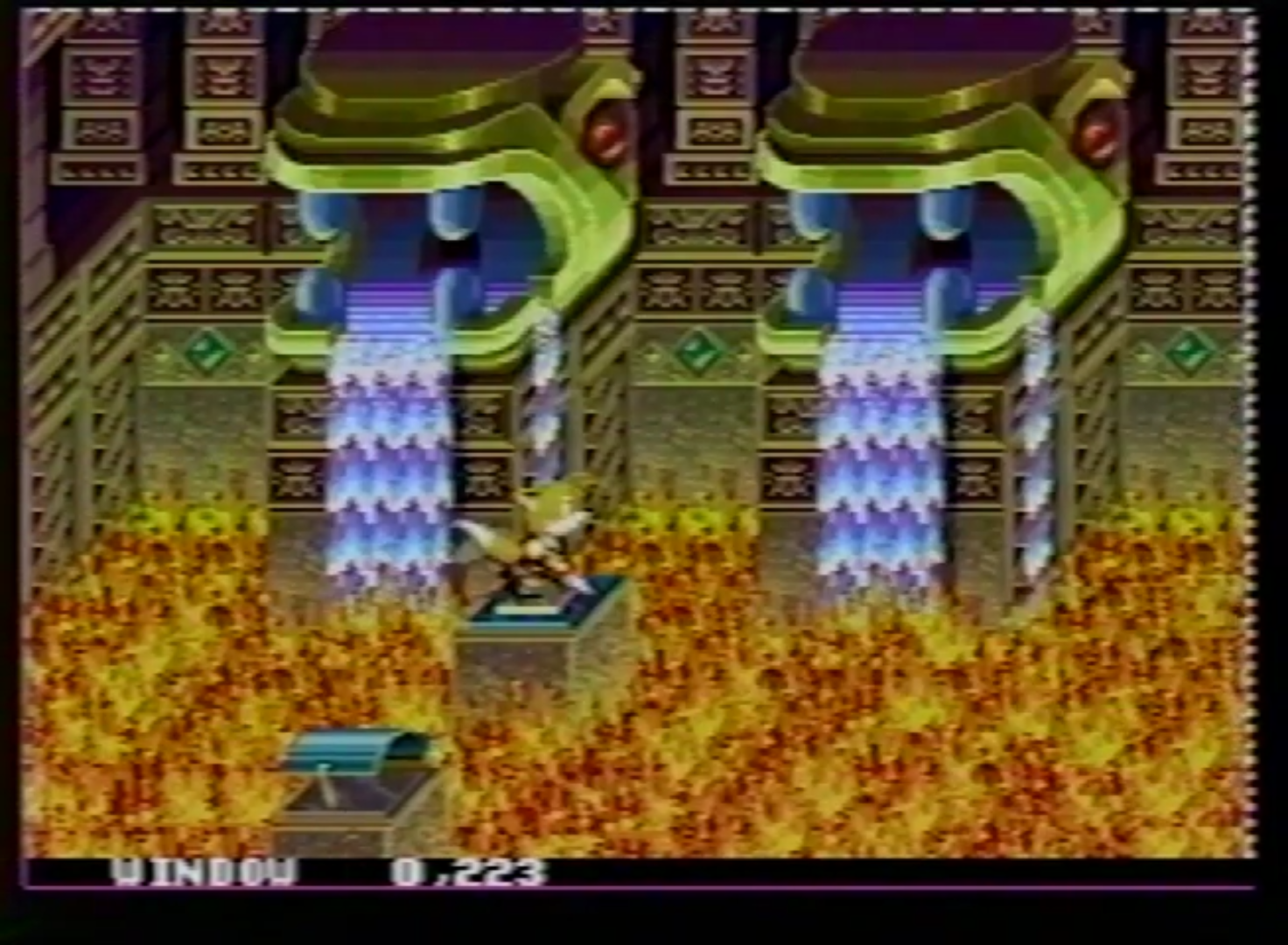
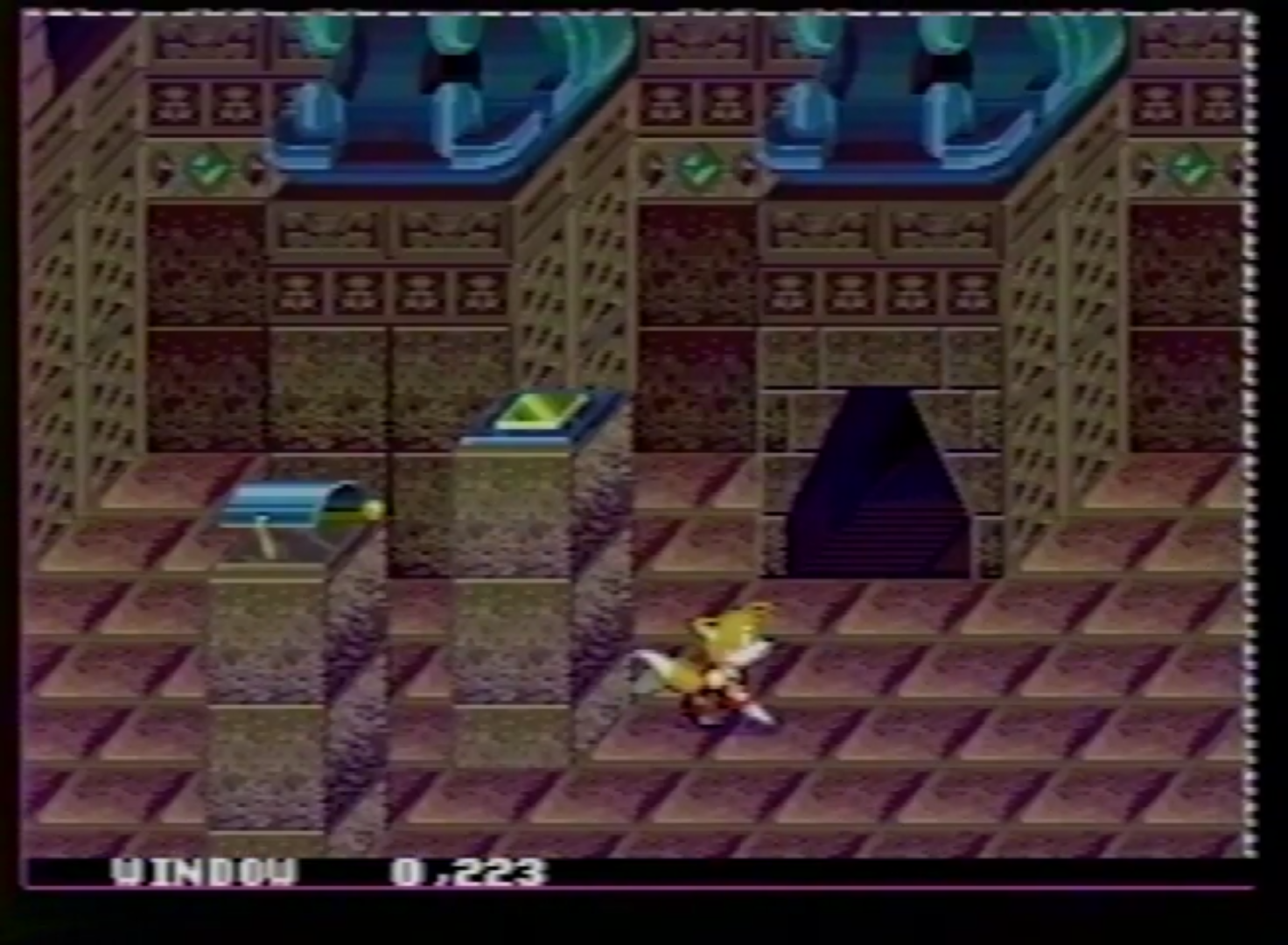
The prototype also differs from the visual mockups preserved in Stitt’s 1995 video résumé. Most notably, the surviving build does not contain the temple graphics depicted in the earlier presentation images. Stitt had originally described the game’s appearance in his résumé as consisting of mockups created using a Digitizer. Although the artwork was produced, it remains uncertain whether these graphics were ever implemented before the prototype was compiled and development was canceled.
The accompanying partial source code provides an additional record of the project’s technical development. Its preservation, together with the prototype and design documents, allows the surviving game materials to be examined independently of the recollections and presentation screenshots that had previously constituted the principal evidence of Treasure Tails‘ existence.[6]Assets/Treasure Tails/Source Code. Hidden Palace.
Prototype[edit]
April 7, 1993 build
A surviving prototype of Treasure Tails, dated April 7, 1993, was publicly documented and released by CartridgeCulture through Hidden Palace on October 31, 2026. Developed for the Sega Mega Drive, the build was recovered from the original floppy disks of Ken Rose, who served as the game’s lead programmer at Sega Technical Institute. It represents a partially completed version of the canceled title, compiled nine days before development was discontinued on April 16, 1993.[7]Treasure Tails (prototype). Hidden Palace.
The prototype provides evidence of the game’s development beyond the presentation mockups previously made public by artist Craig Stitt in August 2020. While those images illustrated the intended appearance of the game, the recovered build preserves an actual development version of the project.
The prototype was among several previously unreleased Sega Technical Institute projects recovered from Rose’s floppy disks and documented in the Hidden Palace and DevStash preservation project announced on October 31, 2026.
Prototype contents and differences
The surviving build represents an unfinished stage of Treasure Tails‘ development. The project was conceived as an isometric puzzle-adventure in which Miles “Tails” Prower would explore a maze-like environment. However, the prototype does not contain all the graphical elements shown in the original presentation materials.
Most notably, the temple graphics depicted in Stitt’s 1995 video résumé are absent from the recovered build. Stitt had described the earlier images as mockups produced using Digitizer, rather than screenshots taken directly from a running game. Although the artwork was created, it remains uncertain whether it was ever implemented before the prototype was compiled and development was canceled.
The recovered material also includes partial source code and several design documents. One document indicates that Treasure Tails was intended to tie into “Tails’ Tale“, an episode of Adventures of Sonic the Hedgehog. These materials provide additional insight into the game’s planned direction, although they do not establish which intended features had been fully implemented in the prototype.[8]Happy Halloween 2026! A Journey Through STI's Early Years. Hidden Palace.
Download
The archive was listed as released by CartridgeCulture on October 31, 2026, with the original media identified as a floppy disk.
Production credits[edit]
The following staff members have been identified as contributors to Treasure Tails through surviving development materials, interviews, and correspondence with former Sega Technical Institute employees. As the game was canceled before release, these credits are based on retrospective documentation rather than an official in-game credits sequence.[9]August 11, 2025 correspondence between Ashley Rojas (CartridgeCulture) and Craig Stitt.[10]. Happy Halloween 2026! A Journey Through STI's Early Years. Hidden Palace.
| Role | Staff |
|---|---|
| Director | Roger Hector |
| Lead artist | Craig Stitt |
| Designers | Craig Stitt, Hoyt Ng |
| Lead programmer | Ken Rose |
| Programmer | Earl Stratton |
Stitt was the project’s sole artist, while Rose served as its primary programmer. The surviving records do not establish a complete production staff list, and no additional personnel have been confirmed for the project.
Technical information[edit]
Treasure Tails was developed by Sega Technical Institute for the Sega Mega Drive between December 1992 and April 1993. The game was designed as a single-player, isometric puzzle-adventure, departing from the traditional side-scrolling presentation of the main Sonic the Hedgehog series.
Technical specifications
| Specification | Details |
|---|---|
| Platform | Sega Mega Drive / Sega Genesis |
| Developer | Sega Technical Institute |
| Genre | Puzzle, adventure, platformer |
| Players | 1 |
| Perspective | Isometric |
| Development period | December 1992 – April 1993 |
| Development status | Canceled, partially completed |
| Surviving prototype | April 7, 1993 |
| Original storage medium | Floppy disk |
| Source code | Partially preserved |
Surviving build
The only publicly documented prototype is an April 7, 1993 build recovered from floppy disks preserved by lead programmer Ken Rose. The build was released by CartridgeCulture through Hidden Palace on October 31, 2026, under the filename TreasureTails MD US 1993-04-07 prototype.7z.[7]Treasure Tails (prototype). Hidden Palace.
The prototype represents an unfinished stage of development. It lacks the temple graphics depicted in Craig Stitt‘s earlier presentation mockups, which were created using a Digitizer. Whether these graphics were ever implemented in another build is unknown.
Source code
Partial source code for Treasure Tails was recovered alongside the prototype and a collection of design documents. These files originated from Rose’s floppy disks and were preserved as part of a wider recovery of early Sega Technical Institute development materials.[6]Assets/Treasure Tails/Source Code. Hidden Palace.
Additional references to Treasure Tails were identified in the source code for Segapede, another canceled Sega Technical Institute project. The recovered Segapede files contain header information relating to several earlier projects, including Treasure Tails, Dark Empires, Jester, and B-Bomb.[8]Happy Halloween 2026! A Journey Through STI's Early Years. Hidden Palace.
Detailed specifications such as the game’s ROM size, memory configuration, graphics engine, audio system, and programming languages have not been established by the available documentation.
Gallery[edit]
Development mockups
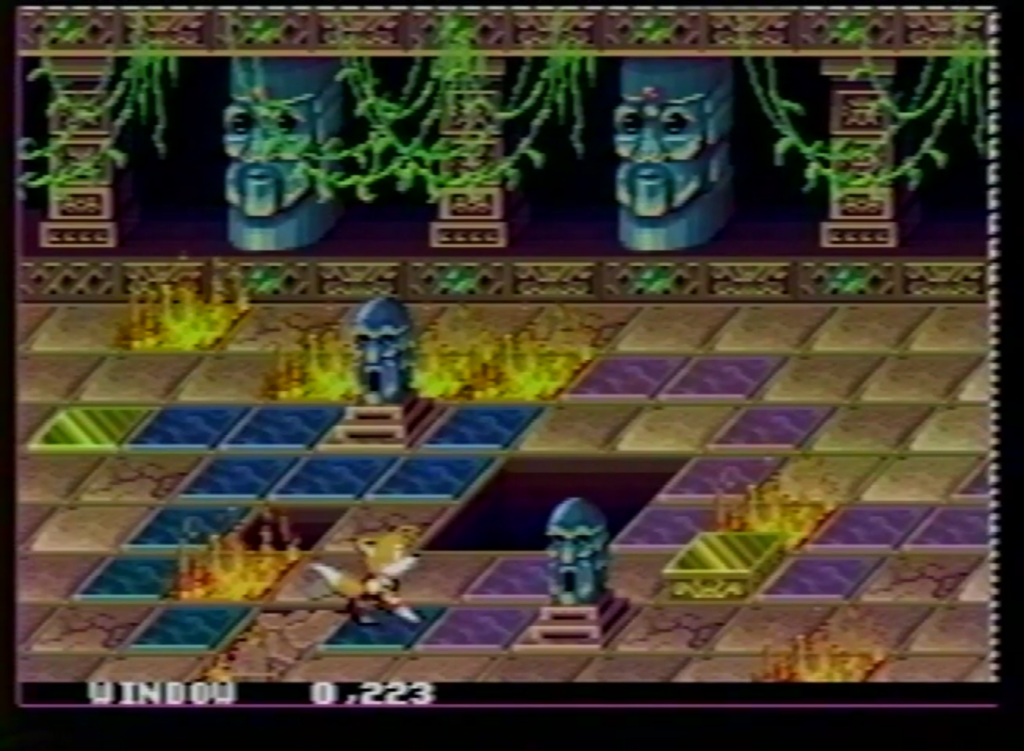
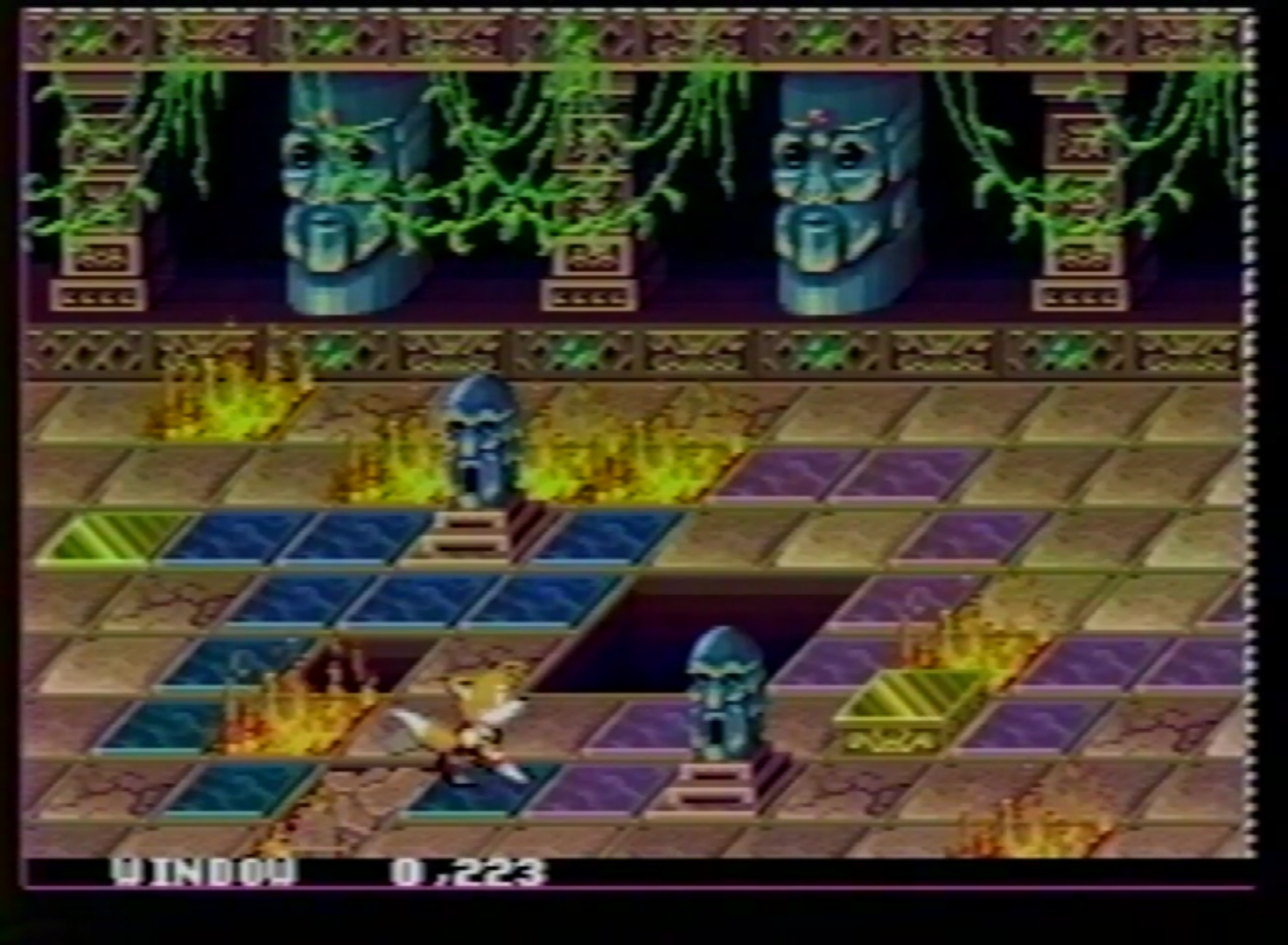
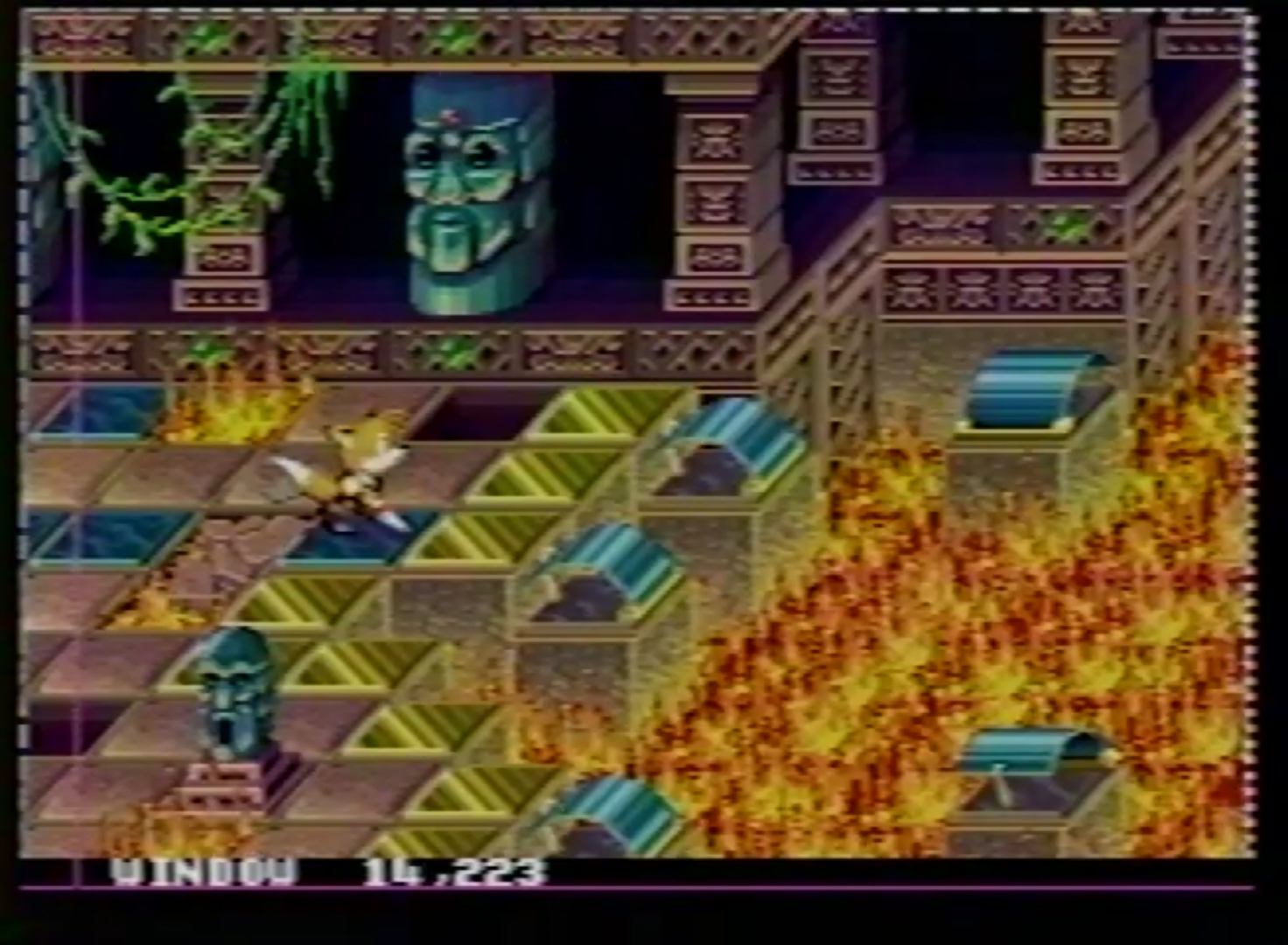
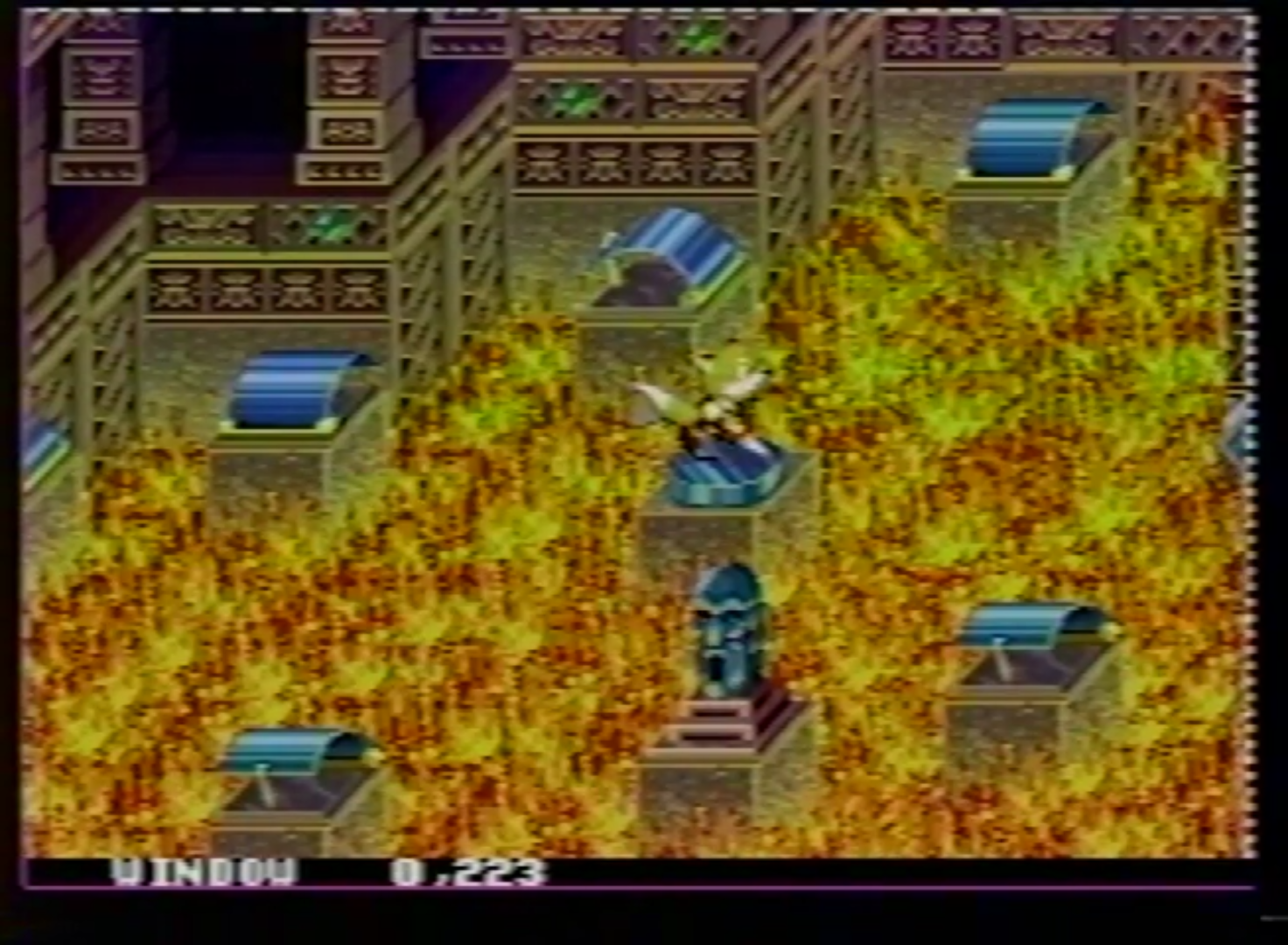
The following mockups were created by Craig Stitt during the development of Treasure Tails in 1993. They were preserved in a VHS video résumé assembled by Stitt in 1995 and publicly shared on August 17, 2020. These are static presentation images, not screenshots from the surviving prototype.[11]. Introducing the Craig Stitt papers. Video Game History Foundation.
Prototype screenshots
Extracted graphics



Videos[edit]
Development footage
SEGA Genesis: Treasure Tails
Craig Stitt: Video Resume (1995)
The original VHS recording was also preserved and digitized by the Video Game History Foundation as part of its Craig Stitt art and design papers, made publicly available in June 2025.
Prototype gameplay
Treasure Tails (April 1993 prototype)
The prototype predates the game’s cancellation on April 16, 1993, and does not contain the temple graphics shown in Stitt’s earlier presentation mockups.
See also[edit]
- Tails Adventure — A standalone adventure game starring Miles “Tails” Prower, released for the Sega Game Gear in 1995.
- Tails’ Skypatrol — Another Tails-focused spin-off, released for the Sega Game Gear in 1995.
- Sonic the Hedgehog Spinball — A 1993 spin-off developed by Sega Technical Institute, to which members of the Treasure Tails development team were reassigned following its cancellation.
- Segapede — Another canceled Sega Technical Institute project, with surviving source code containing references to Treasure Tails.
- Dark Empires — An unreleased Sega Technical Institute project whose development materials were recovered alongside other early STI files.
External links[edit]
- Treasure Tails (prototype) at Hidden Palace — Archive entry for the April 1993 prototype recovered from Ken Rose‘s floppy disks.
- Treasure Tails source code at Hidden Palace — Partial source code and development documents recovered alongside the prototype.
- Happy Halloween 2026! A Journey Through STI’s Early Years at Hidden Palace — October 31, 2026 preservation announcement detailing the recovery of Treasure Tails and other canceled Sega Technical Institute projects.
- Craig Stitt video résumé (1995) at the Video Game History Foundation Digital Archive — Original VHS portfolio containing the Treasure Tails presentation mockups.
- Treasure Tails at Games That Weren’t — August 2020 coverage of the game’s rediscovery, including Craig Stitt‘s original recollections and corrections.
- Treasure Tails, a lost Sonic game, is discovered at Tails’ Channel — August 17, 2020 report documenting the original pitch mockups and comments from former Sega staff.
References[edit]
- ↑ Azul 35 and Ryan Scarlett (August 17, 2020). “Treasure Tails, a lost Sonic game, is discovered“. Tails’ Channel. Accessed July 27, 2023.
- ↑ a b . Treasure Tails, a lost Sonic game, is discovered. Tails' Channel.
- ↑ August 11, 2025 correspondence between Ashley Rojas (CartridgeCulture) and Craig Stitt.
- ↑ Happy Halloween 2026! A Journey Through STI's Early Years. Hidden Palace.
- ↑ Treasure Tails (prototype). Hidden Palace.
- ↑ a b Assets/Treasure Tails/Source Code. Hidden Palace.
- ↑ a b Treasure Tails (prototype). Hidden Palace.
- ↑ a b Happy Halloween 2026! A Journey Through STI's Early Years. Hidden Palace.
- ↑ August 11, 2025 correspondence between Ashley Rojas (CartridgeCulture) and Craig Stitt.
- ↑ . Happy Halloween 2026! A Journey Through STI's Early Years. Hidden Palace.
- ↑ . Introducing the Craig Stitt papers. Video Game History Foundation.
Related Sonic Wiki Articles





Related Sonic News
Lost Treasure Tails Mega Drive Prototype Released Alongside Rare Sega Technical Institute Games
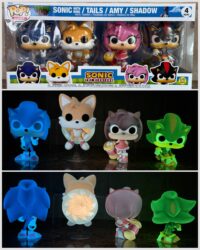
Sonic Funko Pop! Glow-in-the-Dark 4-Pack Shown in New Collector Photos

Sonic, Tails and Shadow Get Trick or Treat Sprites in Fortnite

Sonic 35th Anniversary Mystery Pins Bring Silver, Metal Sonic and More to NYCC