Sonic 3D Blast
Series
Sonic the Hedgehog
Developer
- Travellers Tales
- Sonic Team
Publisher
Sega
Additional distributors
- Expert Software (PC)
- Explosiv and Empire Interactive (Europe)
Director
Takao Miyoshi
Producers
- Kats Sato
- Yoji Ishii
- Yutaka Sugano
Designers
- Takao Miyoshi
- Kats Sato
- Kenji Ono
- Takashi Iizuka
- Hirokazu Yasuhara
Artist
James Cunliffe
Composers
- Mega Drive and Genesis
- Jun Senoue
- Tatsuyuki Maeda
- Masaru Setsumaru
- Seirou Okamoto
Richard Jacques
Platforms
- Sega Mega Drive and Genesis
- Sega Saturn
- Windows PC
- Wii Virtual Console
- Steam and other digital PC services
Release dates
- Sega Mega Drive and Genesis
- North America November 8 1996
- Europe November 14 1996
- Sega Saturn
- North America November 20 1996
- Europe February 1997
- Japan October 14 1999
- Windows PC
- Europe September 30 1997
- North America September 25 1997
- Wii Virtual Console
- Japan October 16 2007
- Europe November 2 2007
- North America November 19 2007
- Steam and digital PC
- International June 1 2010
Genres
- Platformer
- Action adventure
Modes
Single player
Ratings
- ESRB K-A
- Sega All Ages
- PEGI 3
- ELSPA 3 plus
- ACB G
Media
- 32 megabit ROM cartridge
- CD ROM
- Digital download
Input methods
- Control pad
- Sega 3D Control Pad
- Joystick
- Keyboard
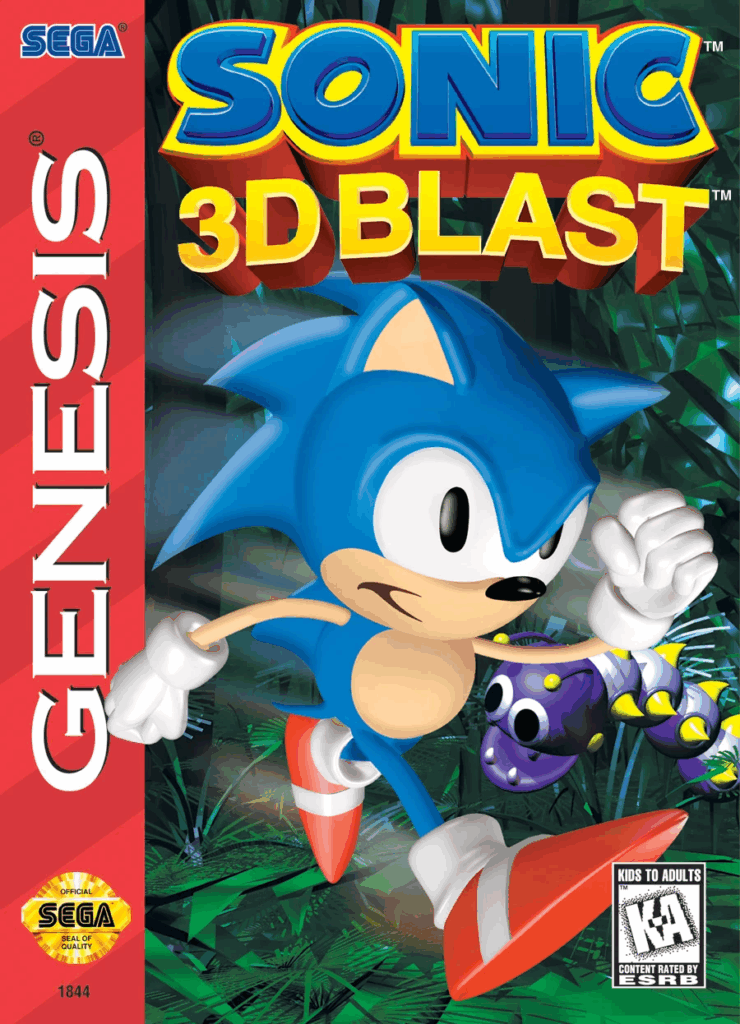
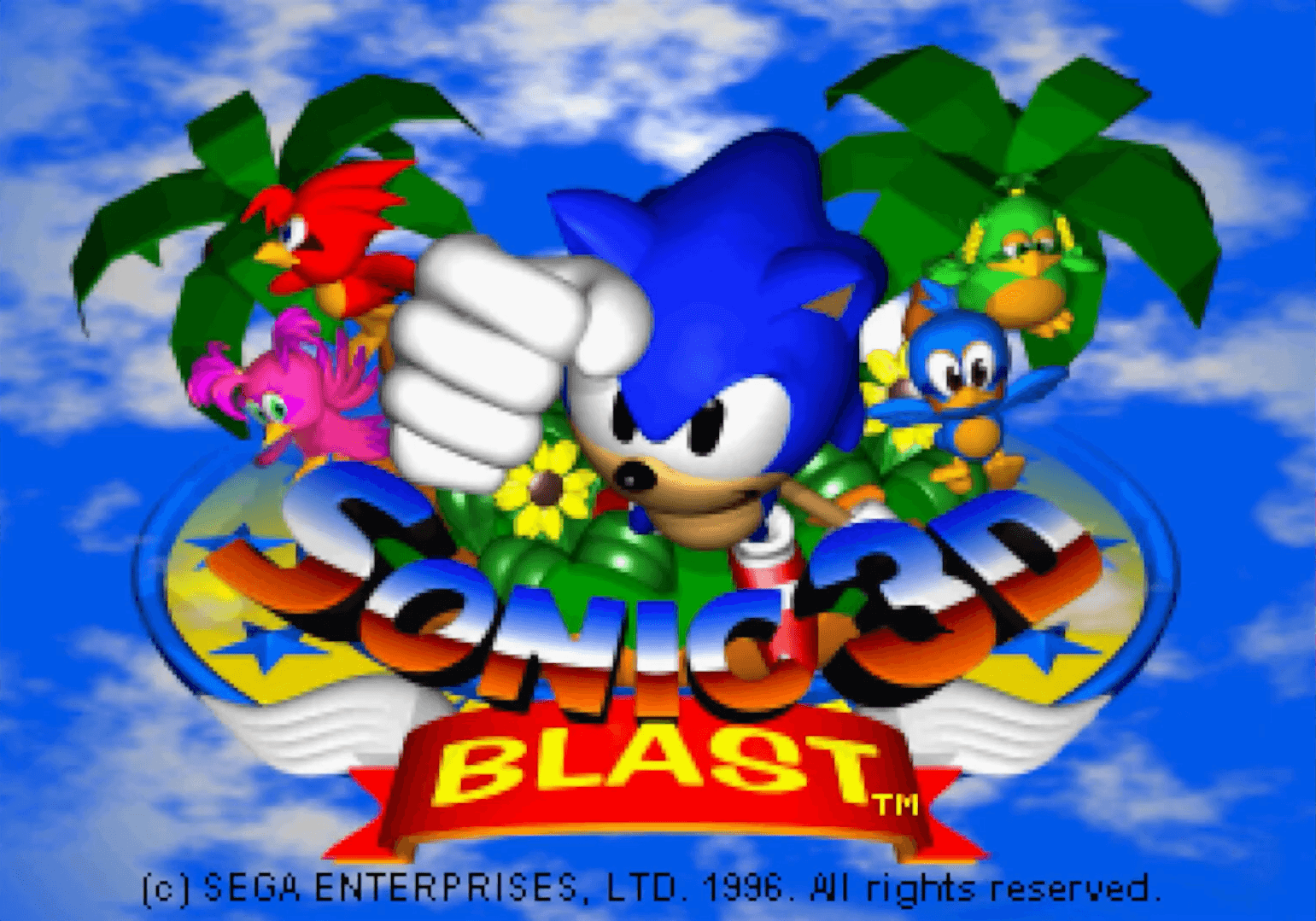
Sonic 3D: Flickies’ Island (Japanese: ソニック3D フリッキーアイランド, Sonikku 3D Furikkī Airando), released in North America as Sonic 3D Blast (ソニック3Dブラスト, Sonikku 3D Burasuto) and on PC as Sonic 3D Blast: Flickies’ Island, is a 1996 isometric platform game in the Sonic the Hedgehog series, developed by Traveller's Tales in collaboration with Sonic Team and published by Sega for the Mega Drive/Genesis, Saturn and Windows PCs.[note 1]Outside North America the game is marketed as Sonic 3D: Flickies’ Island. The Japanese titles are ソニック3Dブラスト (Sonikku Surī Dī Burasuto) and ソニック3D フリッキーアイランド (Sonikku Surī Dī Furikkī Airando). The original PC release uses the combined name Sonic 3D Blast: Flickies’ Island.[1]“History”. The History of Sonic the Hedgehog. Les Editions Pix’n Love. 6 September 2013. ISBN 978-1-926778-96-9.[2]Thomas, Lucas M. (December 4, 2007). “Sonic 3D Blast Review (Genesis)”. IGN. Archived from the original on November 10, 2013. Retrieved July 19, 2013.[note 2]The Japanese Mega Drive version of the game did not appear until its inclusion in Sonic Mega Collection, whereas the Saturn version was released there in 1999 as Sonic 3D: Flickies’ Island. It was conceived as a swan song for Sonic on the Mega Drive and became the final Sonic title released for the system, as well as one of the few series entries on the Saturn.[3]Horowitz, Ken (June 19, 2007). “Interview: Mike Wallis”. Sega-16. Archived from the original on September 4, 2009. Retrieved April 7, 2015.[4]Horowitz, Ken (2016). “Changing of the Guard”. Playing at the Next Level: A History of American Sega Games. McFarland & Company. p. 156. ISBN 9780786499946.
Set on the mysterious Flicky Island, the game follows Sonic the Hedgehog as he attempts to rescue the dimension-hopping bird race known as Flickies after they are captured and turned into Badniks by Dr. Eggman in his search for the seven Chaos Emeralds.[5]Sonic 3D: Flickies’ Island (Sega Saturn) Japanese instruction booklet, pgs. 4-5.[6]“Sonic 3D Blast: Robotnik’s Back, but so Is Sonic!” (PDF). Electronic Gaming Monthly. No. 88. Ziff Davis. November 1996. pp. 254–5. Played from a 2D isometric perspective, Sonic 3D: Flickies’ Island retains core elements of earlier Sonic titles such as Ring collection, Spin Dash and high-speed platforming, but replaces side-scrolling stages with pre-rendered 3D environments where Sonic must defeat Badniks, gather chains of Flickies and escort them to Dimension Rings in order to progress.[7]“Birdies! Love the Birdies!! Review”. Game Revolution. Game Revolution. June 6, 2004. Archived from the original on June 23, 2018. Retrieved April 7, 2015.[8]“Sonic 3D Blast, Wrecking Crew, Super Air Zonk”. GameZone. May 4, 2012. Retrieved April 7, 2015. The game’s mechanics and focus on herding Flickies pay homage to Sega’s 1984 arcade title ”Flicky”.[9]“Cover Story: Sonic 3D” (PDF). Mean Machines Sega (45). July 1996. Retrieved February 5, 2018.
Development of Sonic 3D: Flickies’ Island began in 1995 after Sega approached Traveller’s Tales, impressed by their work on Puggsy, Mickey Mania and Toy Story.[1]“History”. The History of Sonic the Hedgehog. Les Editions Pix’n Love. 6 September 2013. ISBN 978-1-926778-96-9.[10]“Sonic 3D”. Previews. Mean Machines Sega. No. 52. Peterborough: Emap International Limited. February 1997. pp. 84, 85. ISSN 0967-9014. With Yuji Naka and Sonic Team focused on NiGHTS into Dreams, most of the programming was outsourced to Traveller’s Tales under lead programmer Jon Burton, based on a concept first explored during the development of Sonic the Hedgehog 3.[11]Wright, Steven T. (May 2, 2018). “Why the founder of Traveller’s Tales released a director’s cut of an old Sonic game 25 years later”. Eurogamer. Retrieved February 7, 2018.[12]Langshaw, Mark (February 8, 2014). “Sonic the Hedgehog 3 retrospective: Sega mascot’s finest outing”. Digital Spy. Retrieved January 22, 2015. The team drew inspiration from the pre-rendered look of Donkey Kong Country, the isometric experiments of Sonic Labyrinth and Super Mario RPG, and the Flicky chain mechanic of Flicky itself.[9]“Cover Story: Sonic 3D” (PDF). Mean Machines Sega (45). July 1996. Retrieved February 5, 2018.[13]“Cover Story: Sonic 3D” (PDF). Mean Machines Sega (45). pp. 22-26. July 1996. Retrieved February 5, 2018.
A Sega Saturn version, developed alongside the Mega Drive release, was green-lit as Sega’s contingency plan should the ambitious 3D project Sonic X-treme be delayed or cancelled. When Sonic X-treme was ultimately scrapped, the enhanced Saturn port of Sonic 3D: Flickies’ Island launched instead for the 1996 holiday season, featuring redrawn graphics, weather effects, full-motion video sequences, and new fully polygonal Special Stages designed by Sonic Team, as well as a Red Book CD soundtrack by Richard Jacques including the vocal ending theme “You're My Hero“.[1]“History”. The History of Sonic the Hedgehog. Les Editions Pix’n Love. 6 September 2013. ISBN 978-1-926778-96-9.[14]Houghton, David (24 April 2008). The greatest Sonic game we never got to play. GamesRadar. Retrieved on 16 August 2023.[15]“Sonic Boom!”. Sega Saturn Magazine (15): 58–63. January 1997.
Upon release, Sonic 3D: Flickies’ Island received a mixed critical response: reviewers praised its graphics and music across both Mega Drive and Saturn versions, but were divided over its slower pace, Flicky-collecting structure and isometric controls compared to earlier Sonic games.[2]Thomas, Lucas M. (December 4, 2007). “Sonic 3D Blast Review (Genesis)”. IGN. Archived from the original on November 10, 2013. Retrieved July 19, 2013.[16]Gerstmann, Jeff (December 12, 1996). “Sonic 3D Blast Review for Saturn”. GameSpot. CNET Networks. Archived from the original on December 22, 2003. Retrieved February 25, 2022. Commercially, however, it was successful: the Mega Drive version alone has been reported as selling over 700,000 copies, with later accounts suggesting sales in excess of one million, and the Saturn version ranking among that console’s best-selling titles worldwide.[3]Horowitz, Ken (June 19, 2007). “Interview: Mike Wallis”. Sega-16. Archived from the original on September 4, 2009. Retrieved April 7, 2015.[17]“Who Won the Videogame Wars of 1996?”. Next Generation. No. 28. Imagine Media. April 1997. p. 17. The game has since been reissued in numerous Sonic and Sega compilations and on digital services such as the Virtual Console and Steam, and in 2017 Burton released an unofficial director's cut ROM hack for the Mega Drive version, featuring refined controls, new features and, unlike the original game, the ability to transform into Super Sonic.[18]Minotti, Mike . The RetroBeat: Sonic 3D Blast sprints to a new legacy with an unofficial Director’s Cut. Venture Beat. Retrieved on 22 November 2017.[19]Wales, Matt . Sonic 3D’s original developer is creating an unofficial Director’s Cut. Eurogamer. Retrieved on 14 October 2017.
On this page
- Story
- Characters
- Main and Supporting Cast
- Playable Characters
- Non-Playable Characters
- Badniks
- Gameplay
- Scoring
- Flicky chains
- Enemies
- Dr. Eggman bosses
- End-level time bonus
- Special Stage
- Other bonuses
- Controls
- Music and sound
- Sound test
- Mega Drive version
- Saturn version
- Development
- Background and conception
- Gameplay and art
- Sega Saturn and PC versions
- Release
- Original release
- Regional titles and versions
- Re-releases and ports
- Sales
- Reception
- Contemporary
- Retrospective
- Legacy
- Cheats
- Mega Drive / Genesis version
- Level Select
- Level Skip
- Sega Saturn version
- Level Select (Japanese Saturn version)
- Level Skip
- Easy Emeralds / Quick Emerald Gain (Saturn)
- Trivia
- Notes
- References
- External Links
- Related Sonic News Articles
- Related Sonic Wiki Articles
- Related Sonic News
Story[edit]
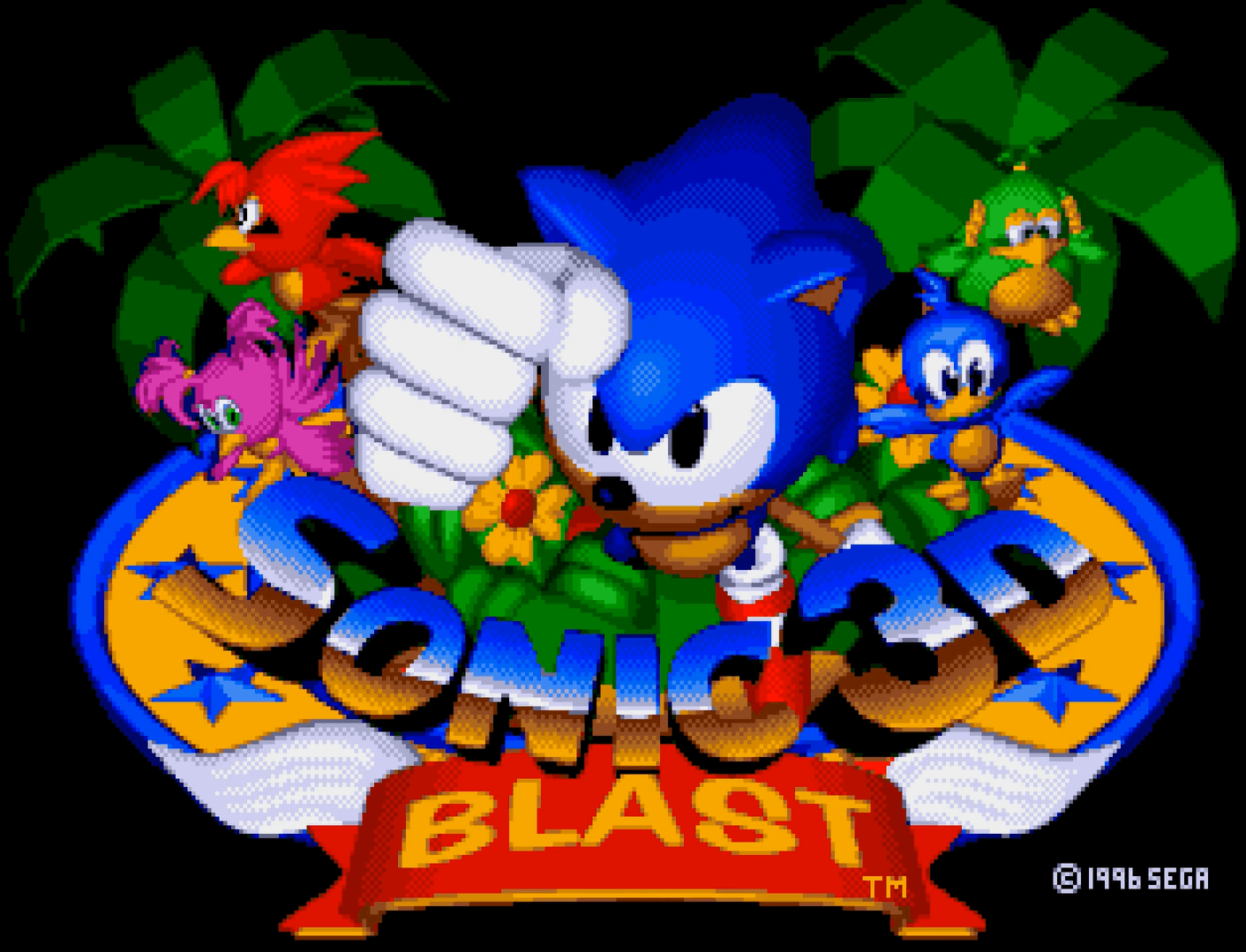
According to legend, the remote atoll known as Flicky Island is home to the seven Chaos Emeralds and the mysterious bird race called Flickies, who are said to be the key to finding the gems.[5]Sonic 3D: Flickies’ Island (Sega Saturn) Japanese instruction booklet, pgs. 4-5. During one of his surveys, Dr. Eggman observes a giant golden Dimension Ring hanging over the island. A flock of Flickies suddenly emerges from the ring, perches on a nearby tree, then flies back through the gate and vanishes. Realizing that the Flickies travel through a subspace dimension using these rings, Eggman decides to exploit their ability and finally seize the Chaos Emeralds for himself.[5]Sonic 3D: Flickies’ Island (Sega Saturn) Japanese instruction booklet, pgs. 4-5.
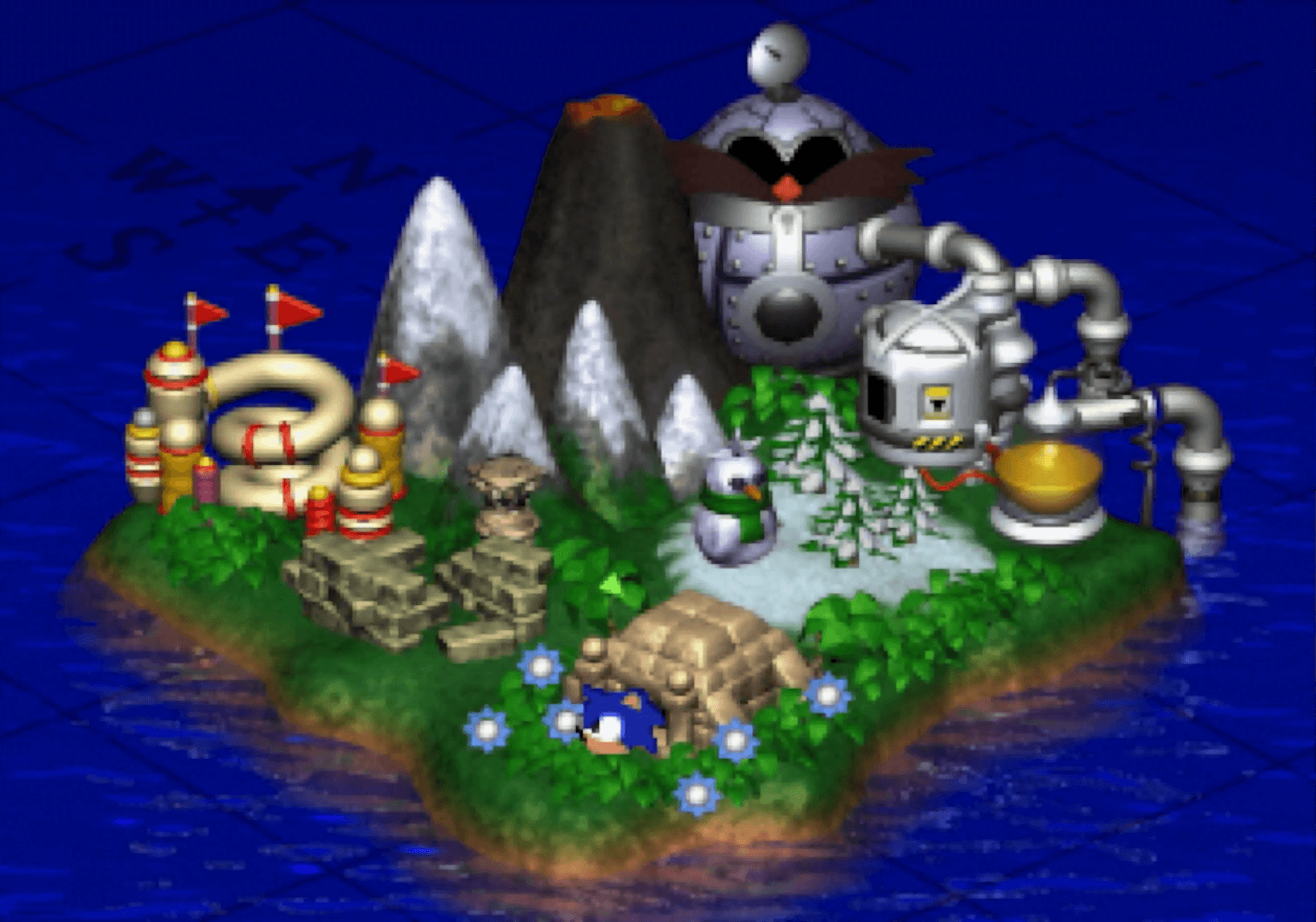
Eggman invades Flicky Island, constructs a “Dimension Ring Generator,” and begins capturing the Flickies, imprisoning them inside mechanized Badniks to use as living power sources in his search for the Emeralds.[5]Sonic 3D: Flickies’ Island (Sega Saturn) Japanese instruction booklet, pgs. 4-5. Around the same time, Sonic the Hedgehog, Tails and Knuckles arrive on the island for a visit, only to discover it overrun by Eggman’s robots instead of the peaceful birds they expected to find.[5]Sonic 3D: Flickies’ Island (Sega Saturn) Japanese instruction booklet, pgs. 4-5.
While exploring the Green Grove area, Sonic destroys a Badnik and sees a Flicky burst out and try to escape. From this he deduces that Eggman is behind the invasion and vows to rescue the Flickies, return them to their home dimension via the Dimension Rings, and secure the Chaos Emeralds before Eggman can claim them.[6]“Sonic 3D Blast: Robotnik’s Back, but so Is Sonic!” (PDF). Electronic Gaming Monthly. No. 88. Ziff Davis. November 1996. pp. 254–5.
Sonic travels across the different Zones of Flicky Island, freeing Flickies from Badniks and using the Dimension Rings to advance, while occasionally encountering Tails and Knuckles, who act as helpers and can send him to Special Stages where he collects Chaos Emeralds.[20]Sonic 3D: Flickies’ Island (Sega Saturn) Japanese instruction booklet, pg. 20.[21]Sonic 3D: Flickies’ Island (Sega Saturn) Japanese instruction booklet, pg. 21. Eventually Sonic infiltrates Eggman’s stronghold, the Panic Puppet, and confronts him in a series of battles inside the factory complex.[5]Sonic 3D: Flickies’ Island (Sega Saturn) Japanese instruction booklet, pgs. 4-5.
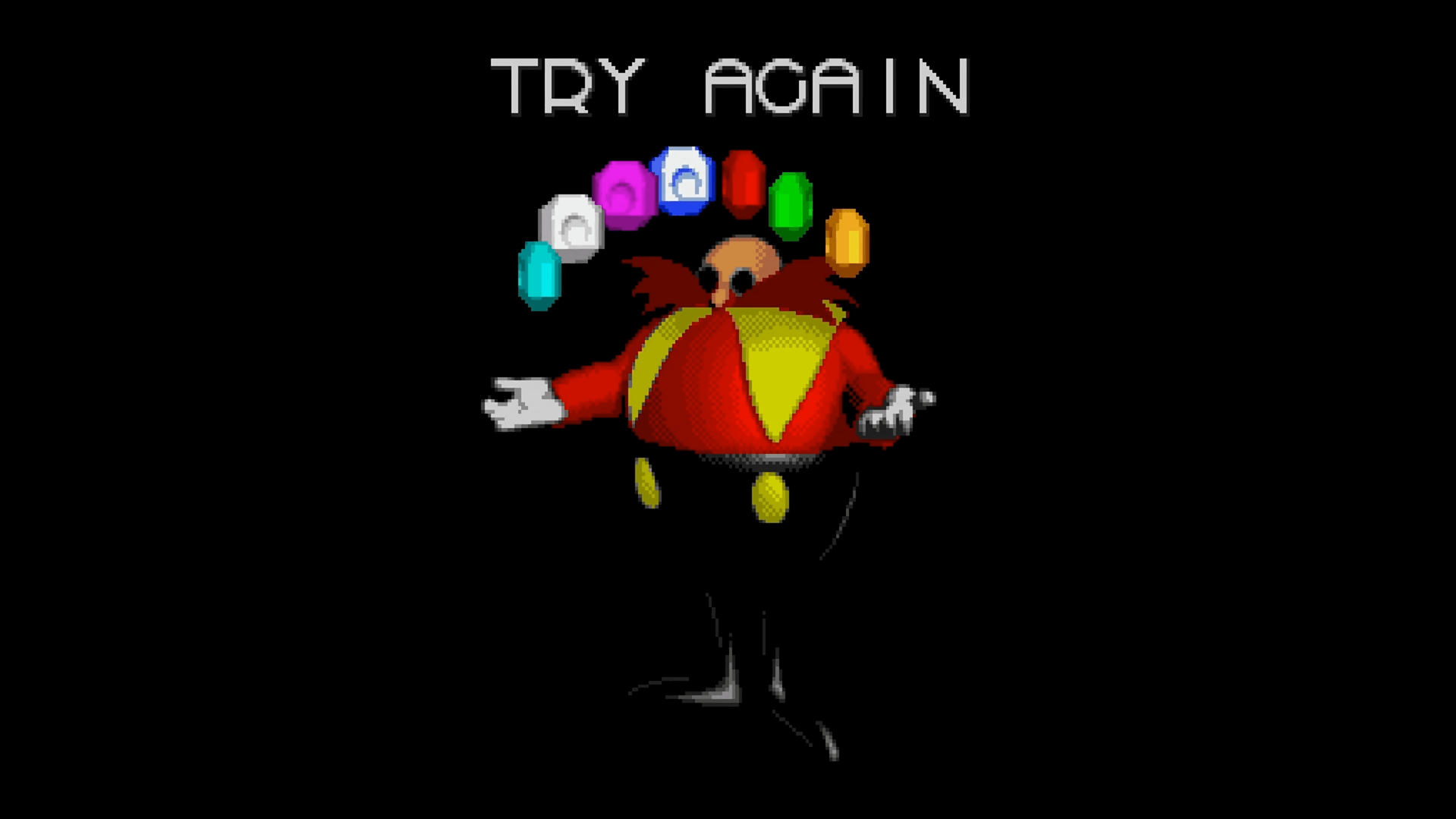
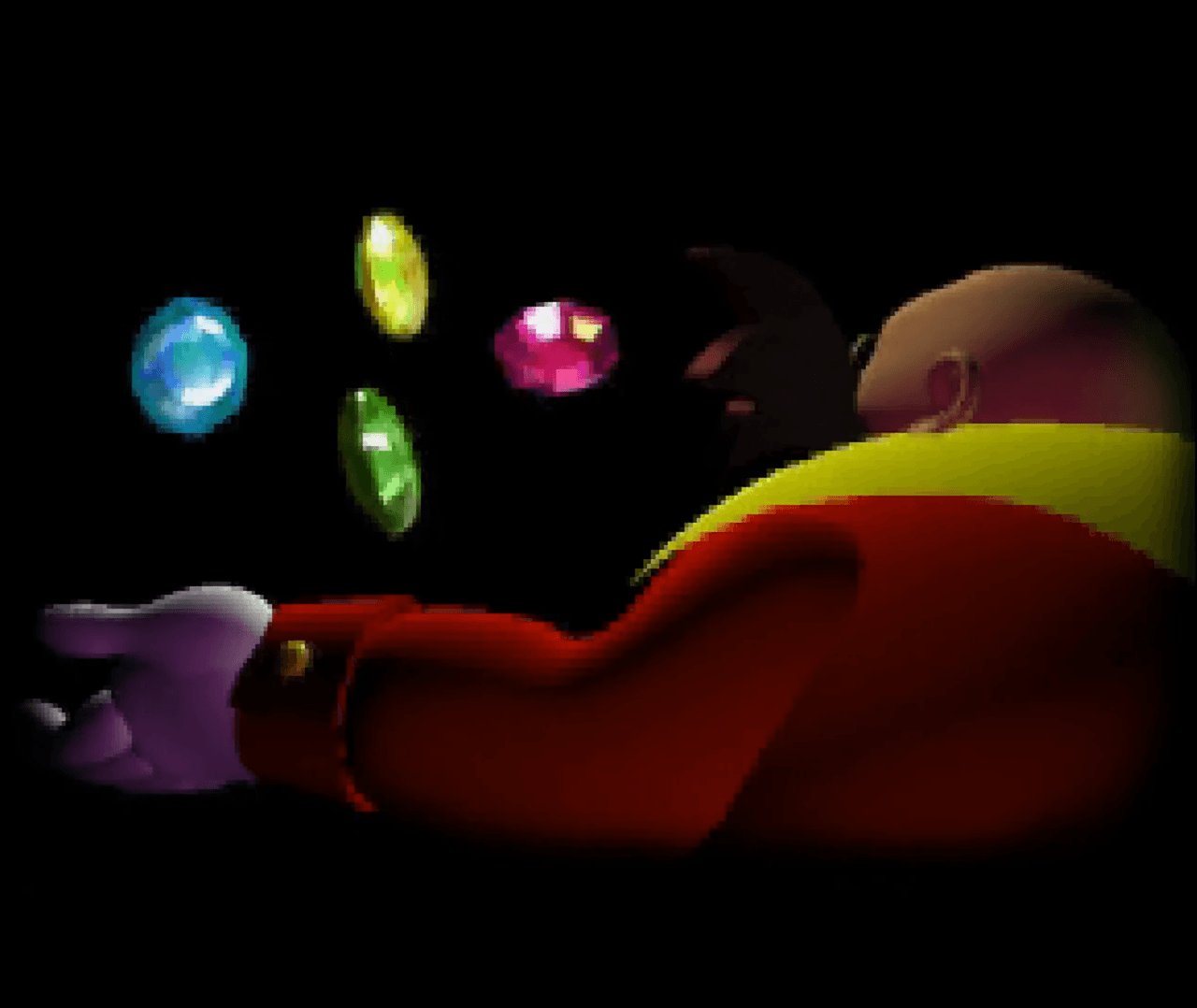
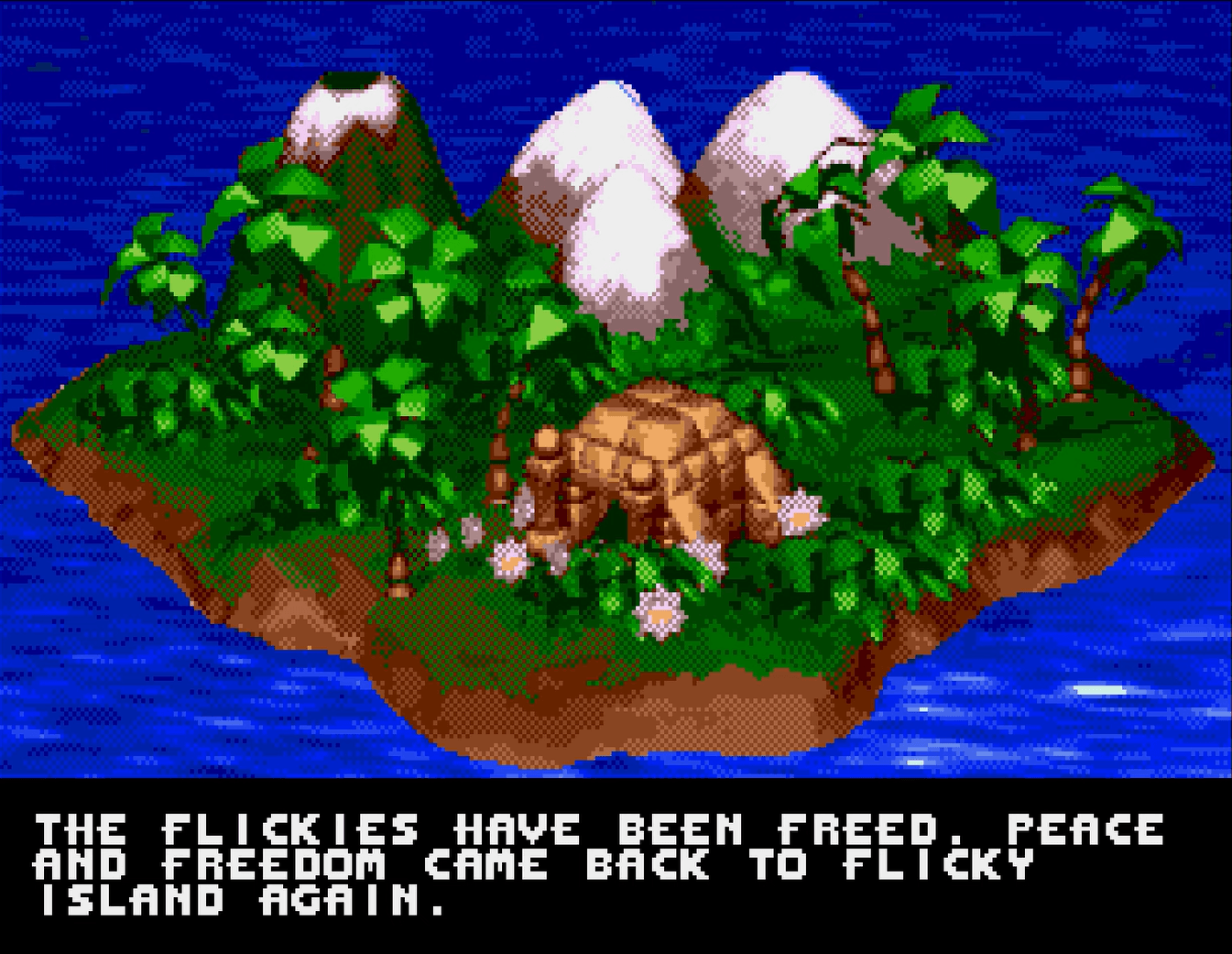
The ending depends on whether the player has obtained all seven Chaos Emeralds. If Sonic reaches Panic Puppet without all of them, Eggman escapes with the Emeralds in his possession, leaving Sonic and the Flickies without a complete victory. If Sonic collects every Chaos Emerald, he is transported to The Final Fight, a steel chamber beneath Panic Puppet where Eggman pilots his Final Weapon in a last attempt to destroy Sonic. After Sonic disables the weapon and defeats Eggman, the Flickies are freed from his control and Sonic celebrates with them as peace returns to Flicky Island.[5]Sonic 3D: Flickies’ Island (Sega Saturn) Japanese instruction booklet, pgs. 4-5.[22]Arnold, J. Douglas; Gampos, Willy (December 1996). Sonic 3D Blast! Survival Guide for Saturn and Genesis. Sandwich Islands Publishing. ISBN 1-884364-46-2.
Characters[edit]
Main and Supporting Cast
| Image | Character | Biography |
|---|---|---|
 | Sonic the Hedgehog | The world’s fastest, sonic-speed hedgehog. Once again, he’ll face off against his nemesis (?), Dr. Eggman, for the Chaos Emeralds![20]Sonic 3D: Flickies’ Island (Sega Saturn) Japanese instruction booklet, pg. 20. |
 | Miles ''Tails'' Prower | An energetic fox with two tails who adores Sonic. This time, he appears as a helper character.[21]Sonic 3D: Flickies’ Island (Sega Saturn) Japanese instruction booklet, pg. 21. |
 | Knuckles the Echidna | Sonic’s rival, the flying echidna. He’s a rival, but this time he appears as a helper character, just like Tails.[21]Sonic 3D: Flickies’ Island (Sega Saturn) Japanese instruction booklet, pg. 21. |
 | Dr. Eggman | The world’s most evil super genius scientist. This time, he’s going to beat Sonic to a pulp.[23]Sonic 3D: Flickies’ Island (Sega Saturn) Japanese instruction booklet, pg. 22. |
    | Flickies | Small birds who live on Flicky Island. They are said to be the key to the secret of the Chaos Emeralds, but they are being held by Dr. Eggman.[23]Sonic 3D: Flickies’ Island (Sega Saturn) Japanese instruction booklet, pg. 22. |
Playable Characters
- Sonic the Hedgehog
Non-Playable Characters[edit]
- Dr. Eggman
- Flicky (Flickies)
- Knuckles the Echidna
- Miles ''Tails'' Prower
Badniks
- Bat (only appearance)
- Bee (only appearance)
- Bug (only appearance)
- Bunny (only appearance)
- Crock (only appearance)
- Dragfly (only appearance)
- Firefly (only appearance)
- Fish (only appearance)
- Hunter (only appearance)
- Mouse (only appearance)
- Octopus (only appearance)
- Pengo (only appearance)
- Scorpy (only appearance)
- Scouter (only appearance)
- Shell (only appearance)
- Snake (only appearance)
- Snowman (only appearance)
- Spider (only appearance)
- Walker (only appearance)
- Whirl (only appearance)
Gameplay[edit]
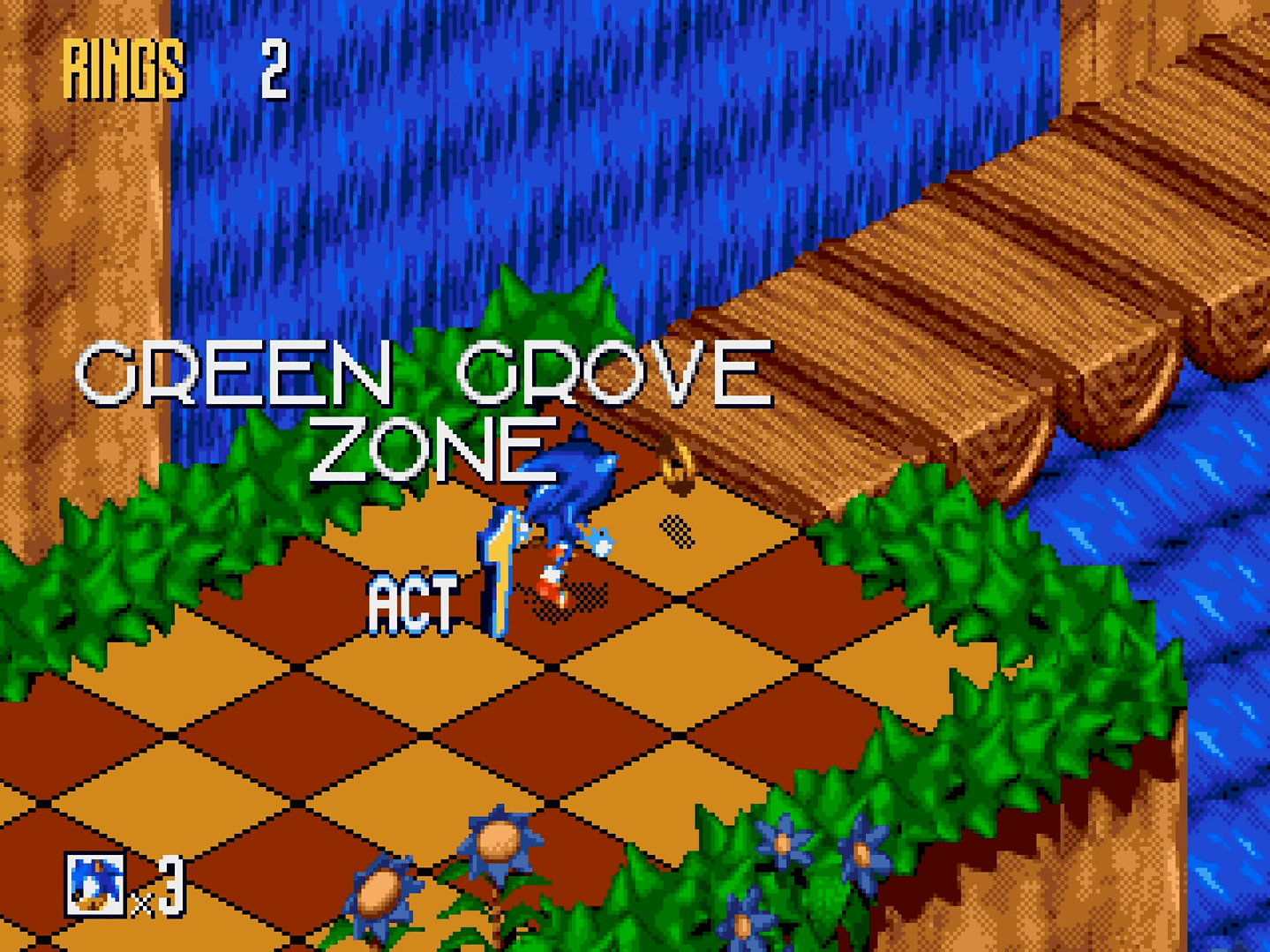
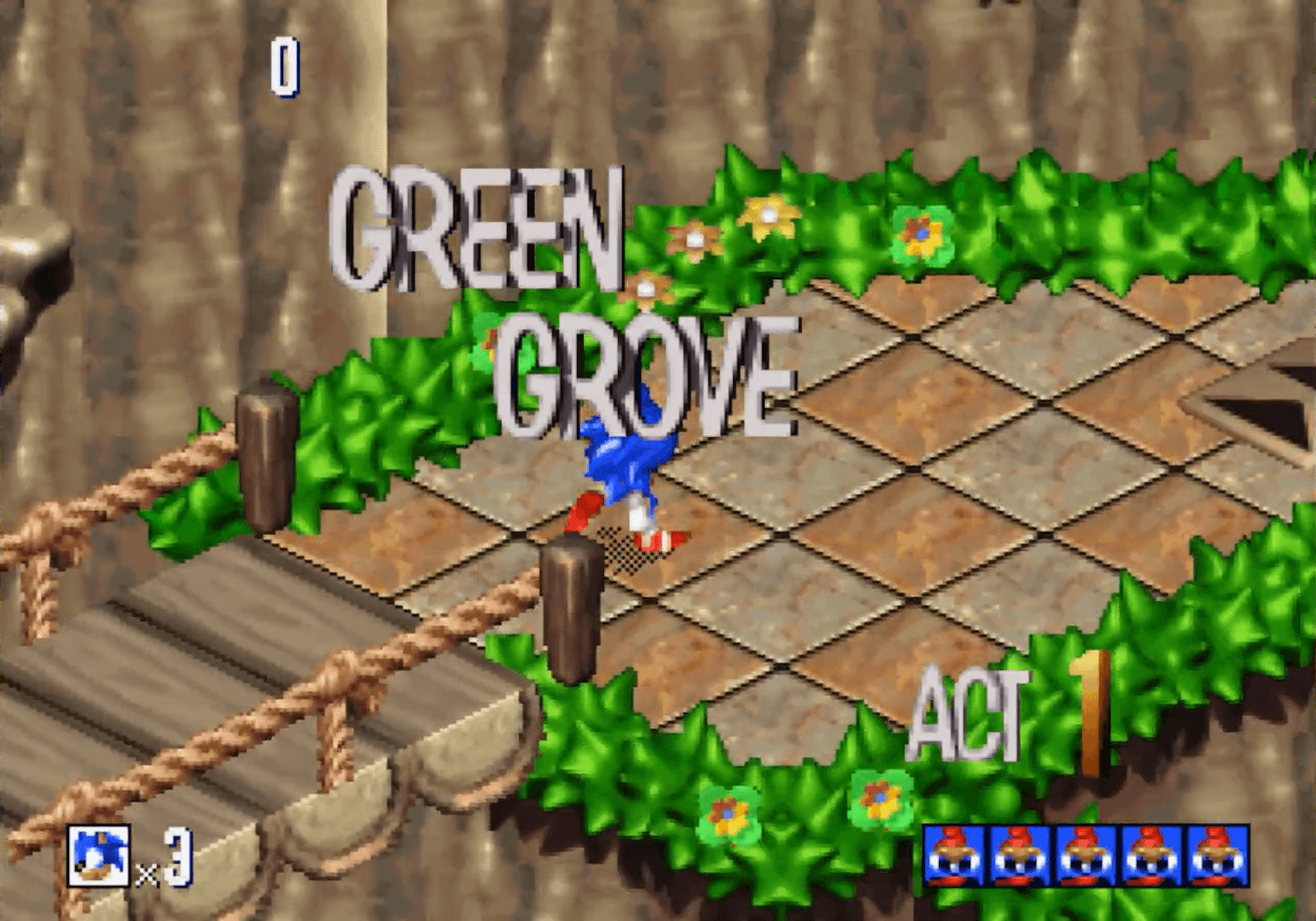
Sonic 3D: Flickies’ Island / Sonic 3D Blast is an isometric view platform game and spiritual successor to Flicky. The player controls Sonic the Hedgehog, whose goal is to save the dimension-travelling Flickies, collect the seven Chaos Emeralds, and defeat Dr. Eggman and his army of Badniks.[8]“Sonic 3D Blast, Wrecking Crew, Super Air Zonk”. GameZone. May 4, 2012. Retrieved April 7, 2015.[7]“Birdies! Love the Birdies!! Review”. Game Revolution. Game Revolution. June 6, 2004. Archived from the original on June 23, 2018. Retrieved April 7, 2015.
The playing field is presented from a 45-degree isometric angle similar to Sonic Labyrinth, using pre-rendered 3D models converted into sprites to give the illusion of a 3D world while retaining 2D gameplay.[13]“Cover Story: Sonic 3D” (PDF). Mean Machines Sega (45). pp. 22-26. July 1996. Retrieved February 5, 2018.[15]“Sonic Boom!”. Sega Saturn Magazine (15): 58–63. January 1997. Sonic retains familiar abilities from earlier titles: he can run, jump and perform a Spin Dash, collect Rings as protection, and break item boxes containing power-ups such as Speed Shoes, Invincibility, Shields and extra lives.[6]“Sonic 3D Blast: Robotnik’s Back, but so Is Sonic!” (PDF). Electronic Gaming Monthly. No. 88. Ziff Davis. November 1996. pp. 254–5.[24]“Game Over/Continue”. Sonic 3D Blast (Saturn). Sega. November 20, 1996. p. 12.
Each Zone in the game, excluding The Final Fight, is divided into three Acts. The first two Acts are standard stages focused on exploration and Flicky collection, while the third Act is a shorter boss battle against Eggman with no Flickies involved.[7]“Birdies! Love the Birdies!! Review”. Game Revolution. Game Revolution. June 6, 2004. Archived from the original on June 23, 2018. Retrieved April 7, 2015. The game features seven main Zones set across different areas of Flicky Island (such as Green Grove Zone and Diamond Dust Zone), followed by The Final Fight as an extra boss Zone that only appears if all Chaos Emeralds have been collected. In the standard Acts, each stage is further split into sections, each gated by a Dimension Ring that only opens once the player has rescued all Flickies in that area.
The core objective in each normal section is to free and recover five Flickies. Flickies are imprisoned inside Badniks; destroying a Badnik releases a Flicky, who then attempts to escape. The player must touch the bird to make it follow Sonic in a chain, then escort the group to the Dimension Ring. Once all five Flickies in a section have been deposited, Sonic either advances deeper into the Act or proceeds to the next one.[7]“Birdies! Love the Birdies!! Review”. Game Revolution. Game Revolution. June 6, 2004. Archived from the original on June 23, 2018. Retrieved April 7, 2015. Flickies can be deposited one at a time or in groups, with larger “chains” awarding higher point bonuses (see Scoring below).
Flickies behave differently depending on their color:[7]“Birdies! Love the Birdies!! Review”. Game Revolution. Game Revolution. June 6, 2004. Archived from the original on June 23, 2018. Retrieved April 7, 2015.
- Blue Flickies actively try to chase Sonic; if they cannot find him, they fly around in tight circles.
- Pink Flickies behave similarly to blue ones but fly in larger circles when Sonic is not nearby. In the Mega Drive version’s Volcano Valley Zone, these appear bright orange due to palette limitations.
- Red Flickies constantly move between two nearby points, making no effort to chase Sonic and instead performing large, high jumps that can make them difficult to catch.
- Green Flickies wander randomly with no interest in Sonic and can even appear to avoid him, making them the most troublesome to recover.
If Sonic is hit while holding at least one Ring, he loses all of his Rings and any Flickies currently following him scatter across the area. Hazards such as stray projectiles, spikes and environmental traps can also knock Flickies away even if Sonic himself is not damaged, forcing the player to recollect them before they wander too far. If Sonic is hit with no Rings in his possession, he loses a life and must restart from the beginning of the Act or from the last reached Dimension Ring, which functions as a checkpoint.[24]“Game Over/Continue”. Sonic 3D Blast (Saturn). Sega. November 20, 1996. p. 12. Losing all lives results in a game over.
Rings are scattered throughout the Acts and continue to function as Sonic’s primary form of defense. Having at least one Ring allows Sonic to survive an otherwise fatal hit; however, any hit while holding Rings will scatter them and, as noted, also scatter any Flickies in tow. Collecting one hundred Rings awards an extra life. Hidden throughout the Acts are Sonic Medals, spinning Sonic head icons often placed in hard-to-reach spots or above springs. Collecting ten Sonic Medals grants the player a Continue, which allows play to resume after a game over.[24]“Game Over/Continue”. Sonic 3D Blast (Saturn). Sega. November 20, 1996. p. 12.
Item boxes provide additional support. Besides the standard Shield, Speed Shoes, Invincibility and 1-Up power-ups, the game reintroduces the Flame Barrier from Sonic the Hedgehog 3 in fire-themed stages and debuts the Gold Shield, which grants Sonic the “Sonic Blast Attack”, a rudimentary form of the Homing Attack that allows him to home in on nearby enemies by pressing the jump button twice. Alongside these are classic environmental features such as springs, spikes and bumpers, set against checkered landscapes that visually link Flicky Island with the rest of Sonic’s world.
Due to the isometric perspective, Sonic’s movement differs from traditional side-scrolling entries. On the Mega Drive and Saturn versions,  and
and  on the D-Pad still move Sonic left and right relative to the screen, while
  and
and  move him diagonally “up” and “down” across the board. The diagonal inputs on the Mega Drive controller thus become more useful for precise movement. By default, the
  /
/ and
and  /
/ buttons make Sonic jump into a ball and perform a Spin Attack, while the
  /
/ button is dedicated to the Spin Dash. Standing still and holding / charges the Spin Dash, letting Sonic burst forward in any direction and even smash certain barricades; pressing / while already moving causes Sonic to curl into a rolling Spin Attack until his momentum fades. Because Sonic cannot crouch in this game, the Spin Dash cannot be initiated from a downwards crouch as in earlier entries.
In addition to the basic control layout, the various versions offer different button mappings (see Controls). The Saturn version also supports its analog control pad, which some reviewers considered an improvement for handling Sonic’s movement in the isometric view.[25]“Review Crew: Sonic 3D Blast“. Electronic Gaming Monthly (90): 60. January 1997. Archived from the original. Retrieved on 24 February 2022.
A secondary objective is to collect all seven Chaos Emeralds. To access the Special Stages, Sonic must locate Tails or Knuckles hidden within the Acts of the first five Zones. After finding one of them and standing nearby with at least fifty Rings, the Rings are slowly absorbed; once at least fifty have been handed over, Sonic is transported to a Special Stage.[26]Nutter, Lee (February 1997). “Review: Sonic Blast 3D”. Sega Saturn Magazine. No. 16. Emap International Limited. pp. 58–59. The player does not need to give all fifty Rings at once and can return later in the same level to finish paying the cost.
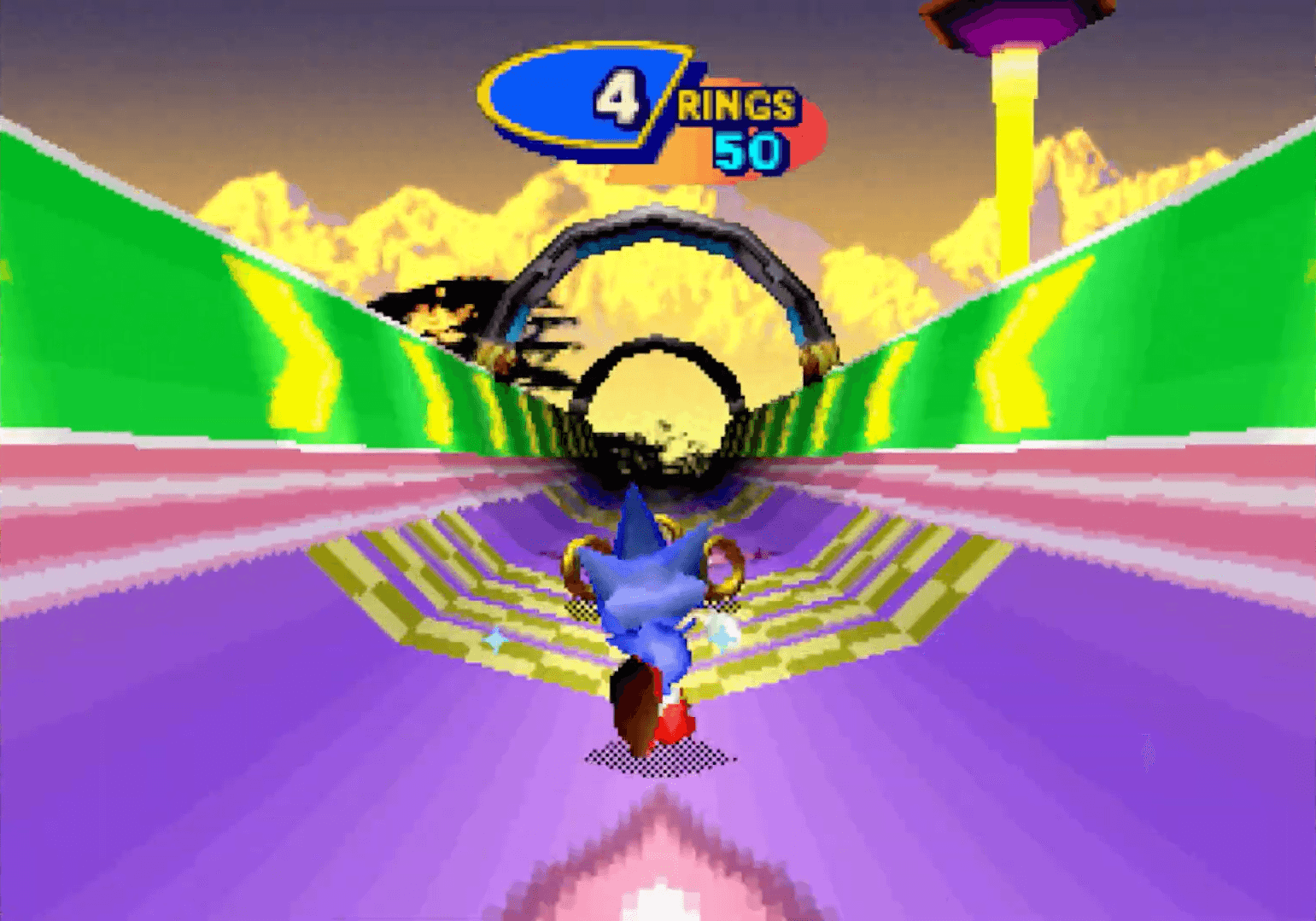
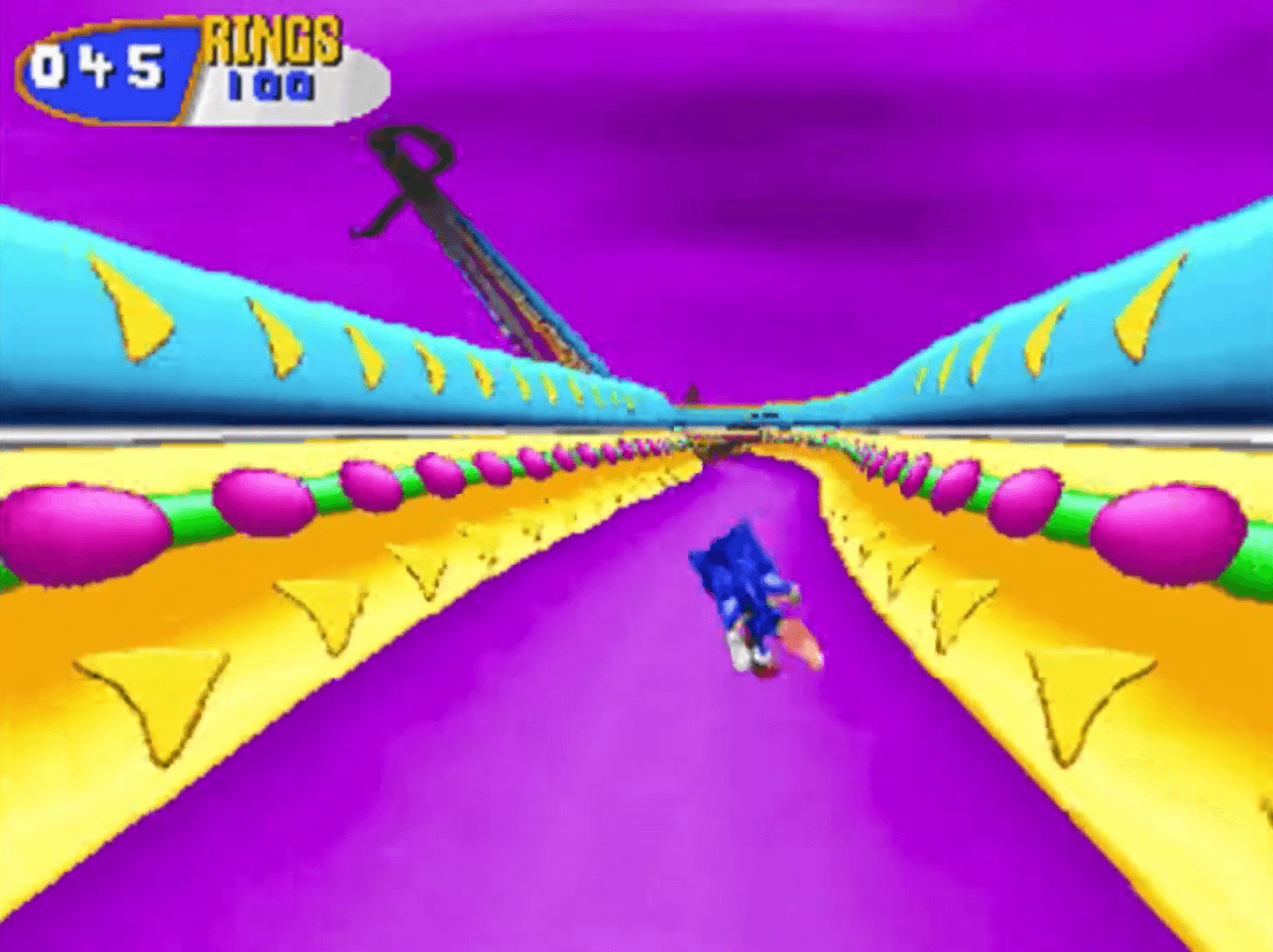
The Special Stages differ between platforms:[27]“Sonic 3D Blast (Saturn) Special Stage 1”. Youtube. Retrieved on November 25, 2025.
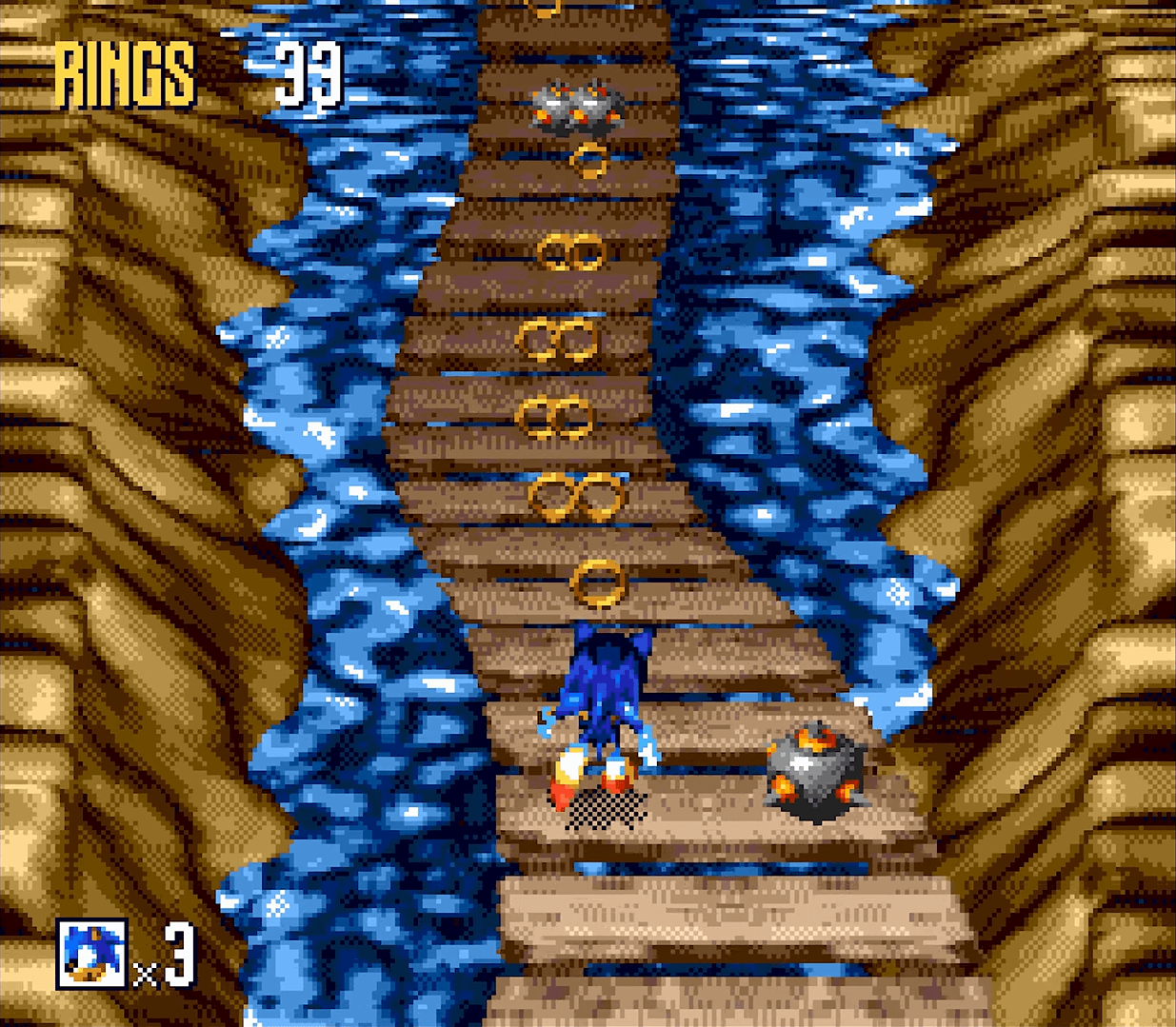
- Mega Drive / Genesis: Sonic runs along a narrow bridge suspended over a metallic grid, collecting Rings and avoiding Bombs.
- Saturn: Sonic runs through fully 3D, half-pipe-style courses similar to those in ”Sonic the Hedgehog 2”, collecting Rings while avoiding Bombs, with Ring quotas at checkpoints.
- PC: Sonic runs through a simplified half-pipe reminiscent of the Saturn version, again collecting Rings to reach the target amounts.
Meeting the Ring requirements at each checkpoint allows Sonic to continue; reaching the end of the Special Stage awards a Chaos Emerald. If the Emerald for that Act has already been collected (Saturn / PC), the player instead receives a 1-Up. In the Mega Drive version, each Act from Green Grove Zone through Volcano Valley Zone hides one Tails and one Knuckles, allowing up to two Emeralds per Act if both characters are found. After all seven Emeralds have been obtained, the player can still visit Special Stages to earn extra lives.
Collecting all seven Chaos Emeralds does not unlock Super Sonic, but it is required to access The Final Fight and obtain the game’s good ending. Without all Emeralds, the game ends after the Panic Puppet Zone boss with Eggman still in possession of them.[5]Sonic 3D: Flickies’ Island (Sega Saturn) Japanese instruction booklet, pgs. 4-5.
Scoring
Main article: Point#Sonic 3D Blast
Flicky chains
- First Flicky: 100
- Second Flicky: 200
- Third Flicky: 400
- Fourth Flicky: 800
- Fifth Flicky: 1,600
(A chain refers to the amount of Flickies deposited to a Dimension Ring at once.)
Enemies
- Standard enemies: 100
- Hunter: 200
- Snake: 500
Flicky Pod: 100 points each
Dr. Eggman bosses
- Standard: 1,000
- Panic Puppet Zone: 2,000
- The Final Fight: 3,000
End-level time bonus
- 0:59 or less: 10,000
- 1:00 to 1:59: 5,000
- 2:00 to 2:59: 2,500
- 3:00 to 3:59: 1,200
- 4:00 to 4:59: 600
- 5:00 to 5:59: 300
- 6:00 to 6:59: 100
- 7:00 or more: 0
Special Stage
- Rings: 100
- Chaos Emerald: 10,000
Other bonuses
- Tails Bonus: 100 points per Ring deposited to character
- Knuckles Bonus: 100 points per Ring deposited to character
- End-level Ring Bonus: 100 points per Ring held
- End-level Flicky Bonus: 5,000 points per section with all five Flickies rescued at once
Controls
| Button formation |  Movement Movement | |||
|---|---|---|---|---|
| Mega Drive | Saturn | PC (original) | PC (Steam) | |
 | [←]/[↑]/[→]/[↓] // [1]/[2]/[3]/[4]/[6]/[7]/[8]/[9] (numpad) | [←]/[↑]/[→]/[↓] | Walk/Run | |
| / | / | [CTRL]/[SPACE] | [A] | Spin Jump |
| | [SHIFT] | [B] | Sonic Spin Dash |
| + | + | [←]/[↑]/[→]/[↓] // [1]/[2]/[3]/[4]/[6]/[7]/[8]/[9] + [SHIFT] | [←]/[↑]/[→]/[↓] + [B] | Spin Attack |
| START | [ENTER]/[F3] | [ENTER] | Pause | |
Music and sound[edit]
Utilizing the Mega Drive’s sound hardware, a team of four composers, including Tatsuyuki Maeda, Jun Senoue, Masaru Setsumaru and Seirou Okamoto, created the soundtrack for the Mega Drive / Genesis version of Sonic 3D: Flickies’ Island / Sonic 3D Blast.[28]Traveller’s Tales; Sonic Team (November 5, 1996). Sonic 3D Blast (Sega Genesis). Sega. Level/area: Credits. The score follows the approach of Sonic 3 & Knuckles, with each Zone’s Acts sharing a common musical theme that is remixed between Acts, and several jingles (such as the Act Clear and 1-Up themes) being derived from or reusing material from Sonic 3 & Knuckles. Many themes from the Mega Drive version were later rearranged for other games in the series, and the Game Over jingle was also reused in Sonic the Hedgehog Pocket Adventure.
For the 32 bit Sega Saturn and original PC releases, the Mega Drive’s FM soundtrack was replaced by a RedBook CD audio score composed by Richard Jacques, allowing the tracks to be played on a standard CD player (with the exception of the first data track).[29]Traveller’s Tales (November 20, 1996). Sonic 3D Blast (Sega Saturn). Sega. Level/area: Credits. Sega Saturn Magazine described the Saturn soundtrack as combining traditional Sonic style music with elements of hardcore techno.[15]“Sonic Boom!”. Sega Saturn Magazine (15): 58–63. January 1997. The Saturn version’s ending credits theme, “You're My Hero“, composed by Jacques and sung by Debbie Morris, is the first dedicated vocal theme song for the Sonic series since Sonic CD.
Across both soundtracks, pieces from Sonic 3D Blast have been revisited throughout the franchise: arrangements of several Mega Drive tracks appeared in later titles such as Sonic Adventure, Shadow the Hedgehog, Sonic Chronicles: The Dark Brotherhood and Sonic Generations, while an unused Mega Drive boss theme was eventually repurposed by Senoue as a boss track in Sonic the Hedgehog 4: Episode I.[30]Sega-16 – Side by Side: Sonic 3D Blast (Genesis vs. Saturn). Sega 16.
Sound test
Mega Drive version
- 01: Green Grove Zone Act 1
Song by J.Seno, Arrange by J.Seno - 02: Green Grove Zone Act 2
Song by J.Seno, Arrange by J.Seno - 03: Rusty Ruin Zone Act 1
Song by T.Maeda, Arrange by T.Maeda - 04: Rusty Ruin Zone Act 2
Song by T.Maeda, Arrange by T.Maeda - 05: Volcano Valley Zone Act 2
Song by T.Maeda, Arrange by T.Maeda - 06: Volcano Valley Zone Act 1
Song by T.Maeda, Arrange by T.Maeda - 07: Spring Stadium Zone Act 1
Song by J.Seno, Arrange by J.Seno - 08: Spring Stadium Zone Act 2
Song by J.Seno, Arrange by J.Seno - 09: Diamond Dust Zone Act 1
Song by T.Maeda, Arrange by T.Maeda - 0A: Diamond Dust Zone Act 2
Song by T.Maeda, Arrange by T.Maeda
- 0B: Gene Gadget Zone Act 1
Song by T.Maeda, Arrange by T.Maeda - 0C: Gene Gadget Zone Act 2
Song by T.Maeda, Arrange by T.Maeda - 0D: Panic Puppet Zone Act 2
Song by T.Maeda, Arrange by T.Maeda - 0E: The Final Fight
Song by M.Sets, Arrange by M.Sets - 0F: Ending
Song by J.Seno, Arrange by M.Sets - 10: Special Stage
Song by J.Seno, Arrange by J.Seno - 11: Intro/Panic Puppet Zone Act 1
Song by J.Seno, Arrange by J.Seno - 12: Boss 2
Song by J.Seno, Arrange by M.Sets - 13: Boss 1
Song by T.Maeda, Arrange by T.Maeda - 14: Opening
Song by J.Seno, Arrange by J.Seno
- 15: Staff Roll
Song by S.Okamoto, Arrange by J.Seno - 16: Game Over
Song by J.Seno, Arrange by J.Seno - 17: Continue
Song by J.Seno, Arrange by J.Seno - 18: Act Clear
Song by J.Seno, Arrange by J.Seno - 19: 1-Up
Song by H.Drossin, Arrange by M.Sets - 1A: Chaos Emerald
Song by Y.Makino, Arrange by Y.Makino - 1B: Invincibility
Song by J.Seno, Arrange by J.Seno - 1C: Menu
Song by J.Seno, Arrange by J.Seno - ??: Unused Song 1 (Bonus Stage)
Song by J.Seno, Arrange by J.Seno - ??: Unused Song 2 (Boss Theme)
Song by J.Seno, Arrange by M.Sets
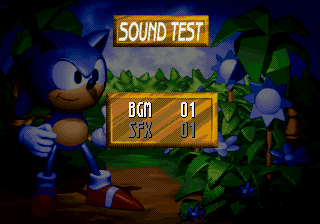
While the composers and arrangers are not listed in the in game sound test, this information was discovered within the ROM by Sonic Retro member ICEknight[31]ICEKnight. Sonic Retro. Retrieved on 25 November 2025. Additionally, while the final two tracks are present in the game’s code alongside the credits, they are not accessible through the sound test. Unused Song 2 was later reused as a boss theme in ”Sonic 4”.
Saturn version
- 01: Title
- 02: Boss
- 03: Green Grove Zone Act 1
- 04: Green Grove Zone Act 2
- 05: Rusty Ruins Zone Act 1
- 06: Rusty Ruins Zone Act 2
- 07: Spring Stadium Zone Act 1
- 08: Spring Stadium Zone Act 2
- 09: Volcano Valley Zone Act 1
- 10: Volcano Valley Zone Act 2
- 11: Diamond Dust Zone Act 1
- 12: Diamond Dust Zone Act 2
- 13: Gene Gadget Zone Act 1
- 14: Gene Gadget Zone Act 2
- 15: Panic Puppet Zone Act 1
- 16: Panic Puppet Zone Act 2
- 17: Special Stage
- 18: The Final Fight
- 19: Speed Up
- 20: Invincibility
- 21: Act Clear
- 22: Continue
- 23: You're My Hero
- 24: You’re My Hero
- 25: You’re My Hero
- 26: You’re My Hero
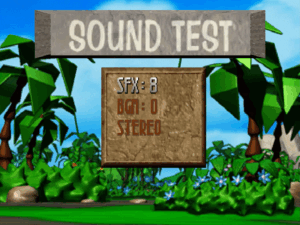
Although “You’re My Hero” appears four times in the Saturn sound test, the song only exists once in the RedBook audio track list. Some Saturn releases of the game, particularly the Japanese version, contain two copies of Panic Puppet Zone Act 2 in the sound test, with the Act 1 slot instead using a duplicate of the Act 2 music.
Development[edit]
Background and conception
Sonic 3D: Flickies’ Island / Sonic 3D Blast was conceived as a swan song for the Mega Drive/Genesis, arriving after Sega had already discontinued official support for the 16 bit console in 1995 but while late releases could still sell well for one or two years after discontinuation. The basic concept of a 3D style Sonic game built around rescuing Flickies was first explored by members of Sonic Team during development of Sonic the Hedgehog 3 (1994).[32]Langshaw, Mark (February 8, 2014). “Sonic the Hedgehog 3 retrospective: Sega mascot’s finest outing”. Digital Spy. Retrieved on January 22, 2015.
By this time, Traveller's Tales had gained Sega’s attention through technically ambitious work on games such as Puggsy (1993), Mickey Mania (1994) and Toy Story (1995).[1]“History”. The History of Sonic the Hedgehog. Les Editions Pix’n Love. 6 September 2013. ISBN 978-1-926778-96-9. With Sonic Team’s core staff focused on the Saturn title Nights into Dreams (1996), Sega approached Traveller’s Tales to develop a new Sonic game for the Mega Drive that would push the hardware and act as a final showcase for the system.[10]“Sonic 3D”. Previews. Mean Machines Sega. No. 52. Peterborough: Emap International Limited. February 1997. pp. 84, 85. ISSN 0967-9014.

Traveller’s Tales co-founder Jon Burton served as lead programmer. Development began around July 1995 and lasted roughly eight months.[9]“Cover Story: Sonic 3D” (PDF). Mean Machines Sega (45). July 1996. Retrieved February 5, 2018. Internally, the project was initially known under the working title “Sonic Spindrift” before being renamed to Sonic 3D Blast / Sonic 3D: Flickies’ Island.[33]Happy 30th Birthday Sonic! Enjoy My Earliest Sonic Prototypes!. YouTube. GameHut (23 June 2021). Retrieved on 27 September 2022. Jon Burton: This was originally called Sonic Spindrift, that was the working title for this game, obviously later it became Sonic 3D.”
Burton later suggested that Sega’s commissioning of the project was also influenced by the troubled development of the Saturn game Sonic X-treme, as the company needed a reliable way to bring Sonic into the early 3D era.[18]Minotti, Mike . The RetroBeat: Sonic 3D Blast sprints to a new legacy with an unofficial Director’s Cut. Venture Beat. Retrieved on 22 November 2017.
Gameplay and art
Sonic 3D Blast was developed from scratch using a 2D isometric presentation designed to feel like a 3D world on 16-bit hardware.[11]Wright, Steven T. (May 2, 2018). “Why the founder of Traveller’s Tales released a director’s cut of an old Sonic game 25 years later”. Eurogamer. Retrieved February 7, 2018. Traveller’s Tales created 3D models of Sonic, enemies and scenery, then converted these into pre-rendered sprites, an approach inspired by Donkey Kong Country (1994). The isometric gameplay drew on titles such as Sonic Labyrinth (1995) and Super Mario RPG (1996), while the core idea of rescuing chained Flickies directly homaged Sega’s earlier arcade game Flicky (1984).[13]“Cover Story: Sonic 3D” (PDF). Mean Machines Sega (45). pp. 22-26. July 1996. Retrieved February 5, 2018.
Sonic Team provided guidelines, Zone concepts and character designs, while Traveller’s Tales handled the bulk of programming and implementation.[34]“Sonic 3D”. MegaDrive Preview. Mean Machines Sega. No. 48. Peterborough: Emap International Limited. October 1996. pp. 34–37. ISSN 0967-9014. Burton implemented an internal exception handler so that if the game ever crashed, it would fall back to a hidden level select menu instead of displaying an error. This quirk later became famous when players discovered that physically jolting the cartridge on a Mega Drive could trigger the menu.[35]Burton, Jon (September 29, 2017). Why does punching Sonic 3D trigger a Secret Level Select?. GameHut. Archived from the original on December 12, 2021. Retrieved February 21, 2018 – via YouTube.
To give the game a more cinematic presentation, Burton and his team also created a highly compressed full motion video intro sequence, using custom compression techniques to fit the video into a 4 MB cartridge while maintaining relatively high apparent resolution for the system[36]Burton, Jon (October 4, 2017). Sonic 3D’s intro sequence is impossible to fit on a cartridge – right?. GameHut. Archived from the original on December 12, 2021. Retrieved February 21, 2018 – via YouTube.
Sega Saturn and PC versions
In parallel with the Mega Drive version, Sega commissioned a Sega Saturn version of Sonic 3D Blast as a contingency in case Sonic X-treme failed to ship for Christmas 1996.[14]Houghton, David (24 April 2008). The greatest Sonic game we never got to play. GamesRadar. Retrieved on 16 August 2023. When X-treme was cancelled, the Saturn port took its place as the flagship Sonic release for the 1996 holiday season.
The Saturn version was developed alongside the Mega Drive original in a short period of roughly seven weeks, using a custom compiler Burton wrote that allowed the Mega Drive game’s 68000 assembly code to be brought over almost unchanged. New higher resolution art, extra animation and environmental effects such as rain and fog were then overlaid on top of the original logic layer, meaning the Saturn port effectively ran on the same underlying gameplay code as the Mega Drive game.[37]Burton, Jon (May 7, 2018). Top 10 Surprising Sonic 3D Facts. Event occurs at 4:23. Retrieved May 7, 2018. Sonic 3D Blast wasn’t originally going to be called Sonic 3D Blast; its original name was actually Sonic Spindrift.
Sonic Team staff contributed directly to the Saturn version’s Special Stages, which were rebuilt as fully polygonal half pipes reminiscent of Sonic the Hedgehog 2, rather than the simpler bridge style stages of the Mega Drive release.[15]“Sonic Boom!”. Sega Saturn Magazine (15): 58–63. January 1997. The Saturn edition also featured a new RedBook audio soundtrack by Richard Jacques, a higher quality FMV opening, an updated menu and map screens between Zones, and optional support for the Saturn’s analog controller.[38]“Sonic 3D Blast: Blast’s the Name for a Blast of a Game” (PDF). Electronic Gaming Monthly. No. 89. Ziff Davis. December 1996. pp. 230–1.
A Windows PC port followed in 1997, based primarily on the Saturn version. This release retained the CD audio soundtrack and polygonal style Special Stages, but scaled back some visual effects such as fog, and was the only contemporary version to feature a built in save system.[39]GameSpot Staff (October 21, 1997). “Sonic 3D Blast Review (PC)”. GameSpot. Archived from the original on September 28, 2015. Retrieved February 27, 2015.
Release[edit]
Original release
Sonic 3D Blast was released for the Mega Drive/Genesis in North America in November 1996[note 3]Reported North American Genesis release dates vary between 7 November 1996[40]ソニック3Dブラスト. Sega (in Japanese). Archived from the original on June 23, 2018. Retrieved December 31, 2014. and 9 November 1996.[41]“GameInformer #42 pg. 22″ (PDF). Sonic Retro. October 1996. Retrieved February 16, 2018. and in Europe later the same month.[note 4]European Genesis release dates are variously given as 5 November 1996[42]“Checkpoint: Events and Software Releases”. Computer and Video Games. No. 180. United Kingdom: EMAP. November 1996. p. 49. Archived from the original on May 8, 2016. Retrieved May 5, 2017. or 14 November 1996.[43]“Sonic3D UK Postcard” (PDF). Sonic Retro. Retrieved June 9, 2018. The launch coincided with the release of the pre-rendered Game Gear title Sonic Blast.[44]Newton, James (June 25, 2012). “Sonic Blast Review”. Nintendo Life. Retrieved February 3, 2018.
A Sega Saturn version, developed in parallel as insurance in case Sonic X-treme failed to ship, followed later in 1996 for North America[38]“Sonic 3D Blast: Blast’s the Name for a Blast of a Game” (PDF). Electronic Gaming Monthly. No. 89. Ziff Davis. December 1996. pp. 230–1. and in February 1997 in Europe.[note 5]European Saturn release dates are variously given as 13 February 1997[45]Lomas, Ed (March 1997). “Checkpoint – The month’s events and software releases at a glance. Feb-March” (PDF). Computer and Video Games. No. 184. Future Publishing. p. 53. or 14 February 1997.[46]“Press release: 1997-01-31: Sega brings Sonic to Saturn in latest stage of console combat”. Sega Retro. Retrieved November 22, 2015. In Japan, the game did not arrive until much later: the Saturn version, under the title Sonic 3D: Flickies’ Island, was released on 14 October 1999 near the end of the system’s life.[47]ソニック3D フリッキーアイランド [en: Sonic 3D Flicky Island]. Sega (in Japanese). 1999. Retrieved December 31, 2014.
A Windows PC port based on the Saturn version was released in Europe on 11 September 1997[48]“Games Guide”. Computer Trade Weekly. No. 654. United Kingdom. September 8, 1997. p. 96. and saw wider worldwide release later that year.[39]GameSpot Staff (October 21, 1997). “Sonic 3D Blast Review (PC)”. GameSpot. Archived from the original on September 28, 2015. Retrieved February 27, 2015. This PC version removed certain visual effects such as fog and simplified the Special Stages, but uniquely included a save game feature.
Regional titles and versions
Outside North America the game is known as Sonic 3D: Flickies’ Island (ソニック3D フリッキーアイランド), with the original PC port using the combined name Sonic 3D Blast: Flickies’ Island in its window title and branding.[note 6]Released as Sonic 3D: Flickies’ Island (ソニック3D フリッキーアイランド Sonikku 3D Furikkī Airando) in Europe and Japan. The PC version uses the longer name Sonic 3D Blast: Flickies’ Island The original Mega Drive ROM image is identical across all regions; the game reads the console’s region code and displays Sonic 3D Blast on North American hardware and Sonic 3D: Flickies’ Island on European and Japanese systems. The Japanese Saturn release likewise uses the European title screen.
Re-releases and ports
The Mega Drive version of Sonic 3D Blast has been re-released extensively in compilation titles and through digital storefronts. It appears in:
- Arcade Collection for PC (2000)
- Twin Pack: Sonic 3D Blast & Sonic R for PC (2002)
- Xplosiv Top 10 for PC (2002)
- Sonic Mega Collection for Nintendo GameCube (2003)[49] Mirabella, Fran (November 12, 2002). “Sonic Mega Collection”. IGN. Retrieved November 16, 2014.
- Sonic Mega Collection Plus for PlayStation 2, Xbox and Windows (2004)[50]Goldstein, Hilary (November 3, 2004). “Sonic Mega Collection Plus”. IGN. Retrieved November 16, 2014.
- Sonic Mega Collection Plus & Super Monkey Ball Deluxe for Xbox (2005)
- Sega Mega Drive Ultimate Collection / Sonic's Ultimate Genesis Collection for PlayStation 3 and Xbox 360 (2009)[51]Miller, Greg (February 12, 2009). “Sonic’s Ultimate Genesis Collection”. IGN. Retrieved November 16, 2014.
- Sonic Speed Pack! for PC (compilation)
- Sonic Double Pack for PC (2008)
- Sega Fun Pack: Sonic Mega Collection Plus & Shadow the Hedgehog for PlayStation 2 (2009)
A direct digital re-release of the Mega Drive version was made available on the Wii Virtual Console in 2007 (under the title Sonic 3D Blast even in Japan),[2]Thomas, Lucas M. (December 4, 2007). “Sonic 3D Blast Review (Genesis)”. IGN. Archived from the original on November 10, 2013. Retrieved July 19, 2013. and on the Steam client for PC in 2010.[52]Sonic 3D Blast™. Steam (1 June 2010). Retrieved on 9 April 2015. The game also appeared as part of the browser based PlaySega service for VIP members.
In dedicated hardware collections, the Mega Drive version is included on the Mega Drive Mini 2 / Sega Genesis Mini 2 micro consoles (2022),[53]Peters, Jay (August 19, 2022). “Sega reveals every game coming to the Genesis Mini 2, including the controversial Night Trap”. The Verge. Retrieved March 30, 2024. and on the earlier Sega Genesis Classics compilation.
Separate from the console and PC releases, a simplified LCD handheld adaptation entitled Sonic 3D Blast was produced by Tiger Electronics in 1997.
Sales
Despite launching after Sega had formally discontinued the Mega Drive, Sonic 3D Blast proved commercially successful. Former Sega of America producer and director Mike Wallis recalled that the Mega Drive version sold over 700,000 copies worldwide in its original run,[3]Horowitz, Ken (June 19, 2007). “Interview: Mike Wallis”. Sega-16. Archived from the original on September 4, 2009. Retrieved April 7, 2015. later stating that sales ultimately exceeded one million units.[4]Horowitz, Ken (2016). “Changing of the Guard”. Playing at the Next Level: A History of American Sega Games. McFarland & Company. p. 156. ISBN 9780786499946. According to Wallis, the Saturn version was also one of that system’s better selling titles worldwide, second only to Nights into Dreams among first party releases.[3]Horowitz, Ken (June 19, 2007). “Interview: Mike Wallis”. Sega-16. Archived from the original on September 4, 2009. Retrieved April 7, 2015.[54]“Who Won the Videogame Wars of 1996?”. Next Generation. No. 28. Imagine Media. April 1997. p. 17.
| Number of copies sold | Platform | Reference |
|---|---|---|
| 700,000+ | Sega Mega Drive | Sega-16 Interview with Mike Wallis (2007-06-19) |
Reception[edit]
Contemporary
| Publication | Score |
|---|---|
| Computer and Video Games | GEN: 4/5[55]Lomas, Ed (November 1996). “Review: Sonic 3D: Flicky’s Island“. Computer and Video Games. No. 180. pp. 74–75. SAT: 3/5[56]Lomas, Ed (March 1997). “Review: Sonic 3D“. Computer and Video Games. No. 184. pp. 78–79. |
| Electronic Gaming Monthly | SAT: 6/10, 7.5/10, 7/10, 6/10[57]Smith, Shawn; Hsu, Dan; Boyer, Crispin; Sushi-X (January 1997). “Review Crew: Sonic 3D Blast“. Electronic Gaming Monthly. No. 90. Ziff Davis. p. 60. GEN: 7/10, 7.5/10, 7.5/10, 7/10[58]Smith, Shawn; Hsu, Dan; Boyer, Crispin; Sushi-X (November 1996). “Review Crew: Sonic 3D Blast“. Electronic Gaming Monthly. No. 88. Ziff Davis. p. 90. |
| GameSpot | SAT: 7/10[16]Gerstmann, Jeff (December 12, 1996). “Sonic 3D Blast Review for Saturn”. GameSpot. CNET Networks. Archived from the original on December 22, 2003. Retrieved February 25, 2022. PC: 5.6/10[39]GameSpot Staff (October 21, 1997). “Sonic 3D Blast Review (PC)”. GameSpot. Archived from the original on September 28, 2015. Retrieved February 27, 2015. |
| Mean Machines Sega | GEN: 92% [59]Jevons, Dan; Swan, Angus (November 1996). “Megadrive Review: Sonic 3D Blast“. Mean Machines Sega. No. 49. EMAP. pp. 54–56. |
| Entertainment Weekly | GEN: B[60]Walk, Gary Eng (December 13, 1996). “Sonic 3D Blast Review”. Entertainment Weekly. Archived from the original on April 25, 2009. Retrieved July 19, 2013. SAT: C[60]Walk, Gary Eng (December 13, 1996). “Sonic 3D Blast Review”. Entertainment Weekly. Archived from the original on April 25, 2009. Retrieved July 19, 2013. |
| Sega Saturn Magazine | SAT: 82%[26]Nutter, Lee (February 1997). “Review: Sonic Blast 3D”. Sega Saturn Magazine. No. 16. Emap International Limited. pp. 58–59. |
At release, critics generally viewed the Mega Drive version of Sonic 3D Blast positively. Dan Jevons and Angus Swan of Mean Machines Sega praised it as a legitimate and substantial addition to the series, welcoming the new isometric gameplay for adding depth while still feeling like Sonic and commending the controls, music and sense of inertia.[59]Jevons, Dan; Swan, Angus (November 1996). “Megadrive Review: Sonic 3D Blast“. Mean Machines Sega. No. 49. EMAP. pp. 54–56. Ed Lomas of Computer and Video Games called it “the first essential Mega Drive game in years”, arguing that the revised structure would appeal both to existing fans and to players tired of simply running right.[55]Lomas, Ed (November 1996). “Review: Sonic 3D: Flicky’s Island“. Computer and Video Games. No. 180. pp. 74–75.
Several reviewers, including Lomas and staff at Electronic Gaming Monthly, noted that mastering the perspective and controls took an adjustment period, but felt the game became enjoyable once players adapted.[55]Lomas, Ed (November 1996). “Review: Sonic 3D: Flicky’s Island“. Computer and Video Games. No. 180. pp. 74–75.[58]Smith, Shawn; Hsu, Dan; Boyer, Crispin; Sushi-X (November 1996). “Review Crew: Sonic 3D Blast“. Electronic Gaming Monthly. No. 88. Ziff Davis. p. 90. Art Angel of GamePro likewise found the isometric angle initially frustrating but ultimately praised the clever level layouts and varied soundtrack.[61]Art Angel (December 1996). “Genesis ProReview: Sonic 3D Blast“. GamePro. No. 99. IDG. p. 156.
The graphics were widely considered a technical showcase for the Mega Drive. Reviewers singled out the fluid pre-rendered sprites, colourful environments and FMV intro as impressive for the hardware, with Electronic Gaming Monthly staff describing it as one of the system’s best looking games.[58]Smith, Shawn; Hsu, Dan; Boyer, Crispin; Sushi-X (November 1996). “Review Crew: Sonic 3D Blast“. Electronic Gaming Monthly. No. 88. Ziff Davis. p. 90.[55]Lomas, Ed (November 1996). “Review: Sonic 3D: Flicky’s Island“. Computer and Video Games. No. 180. pp. 74–75.[59]Jevons, Dan; Swan, Angus (November 1996). “Megadrive Review: Sonic 3D Blast“. Mean Machines Sega. No. 49. EMAP. pp. 54–56.[61]Art Angel (December 1996). “Genesis ProReview: Sonic 3D Blast“. GamePro. No. 99. IDG. p. 156. Critics did, however, point out that the checkerboard floors could appear repetitive, even if they helped judge jumps and angles.[55]Lomas, Ed (November 1996). “Review: Sonic 3D: Flicky’s Island“. Computer and Video Games. No. 180. pp. 74–75.[59]Jevons, Dan; Swan, Angus (November 1996). “Megadrive Review: Sonic 3D Blast“. Mean Machines Sega. No. 49. EMAP. pp. 54–56.
Difficulty and pacing drew more mixed comments. Some critics, such as Jevons and Swan, found the game comparatively easy once the controls were mastered,[59]Jevons, Dan; Swan, Angus (November 1996). “Megadrive Review: Sonic 3D Blast“. Mean Machines Sega. No. 49. EMAP. pp. 54–56. while Lomas and Lee Nutter of Sega Saturn Magazine argued that it was tougher and longer than most earlier Sonic titles.[55]Lomas, Ed (November 1996). “Review: Sonic 3D: Flicky’s Island“. Computer and Video Games. No. 180. pp. 74–75.[26]Nutter, Lee (February 1997). “Review: Sonic Blast 3D”. Sega Saturn Magazine. No. 16. Emap International Limited. pp. 58–59. The relative scarcity of hidden areas compared to earlier games was also noted as reducing replay value.[55]Lomas, Ed (November 1996). “Review: Sonic 3D: Flicky’s Island“. Computer and Video Games. No. 180. pp. 74–75.[58]Smith, Shawn; Hsu, Dan; Boyer, Crispin; Sushi-X (November 1996). “Review Crew: Sonic 3D Blast“. Electronic Gaming Monthly. No. 88. Ziff Davis. p. 90.
The Saturn version, released shortly afterwards, received more moderate praise. While reviewers appreciated the higher resolution graphics, weather effects, enhanced animation and revamped 3D Special Stages, several outlets criticised how similar it remained to the 16 bit original.[57]Smith, Shawn; Hsu, Dan; Boyer, Crispin; Sushi-X (January 1997). “Review Crew: Sonic 3D Blast“. Electronic Gaming Monthly. No. 90. Ziff Davis. p. 60.[26]Nutter, Lee (February 1997). “Review: Sonic Blast 3D”. Sega Saturn Magazine. No. 16. Emap International Limited. pp. 58–59.[56]Lomas, Ed (March 1997). “Review: Sonic 3D“. Computer and Video Games. No. 184. pp. 78–79. Entertainment Weekly remarked that although Sonic 3D Blast was “super by 16 bit standards”, it felt less impressive on Saturn where more advanced 3D titles were common.[60]Walk, Gary Eng (December 13, 1996). “Sonic 3D Blast Review”. Entertainment Weekly. Archived from the original on April 25, 2009. Retrieved July 19, 2013. Jeff Gerstmann of GameSpot was more positive, highlighting the graphical upgrades, soundtrack and challenging boss fights, though he echoed concerns that searching each level for the last remaining enemy could become tedious.[16]Gerstmann, Jeff (December 12, 1996). “Sonic 3D Blast Review for Saturn”. GameSpot. CNET Networks. Archived from the original on December 22, 2003. Retrieved February 25, 2022.
The original PC port drew the harshest contemporary response. While based on the Saturn version, GameSpot’s staff criticised its inconsistent performance and camera scrolling, and concluded that the game did little to justify Sonic’s debut on Windows.[39]GameSpot Staff (October 21, 1997). “Sonic 3D Blast Review (PC)”. GameSpot. Archived from the original on September 28, 2015. Retrieved February 27, 2015.
Beyond the outlets listed above, Sega Power also awarded the game a high score of 92 percent, praising its presentation and regarding it as a strong late Mega Drive release.[62]Ellis, Les (December 1996). “Review Saturn: Sonic 3D“. Sega Power (86): 54,55. Archived from the original. Retrieved on 24 February 2022. Electronic Gaming Monthly named Sonic 3D Blast a runner up for its Genesis Game of the Year award, behind Vectorman 2.[63]“The Best of ’96”. Electronic Gaming Monthly. No. 92. Ziff Davis. March 1997. p. 86.
Retrospective
| Aggregator | Score |
| GameRankings | SAT: 67%[64]“Sonic 3D Blast for Saturn”. GameRankings. Archived from the original on December 5, 2019. Retrieved July 19, 2013. GEN: 59%[16]Gerstmann, Jeff (December 12, 1996). “Sonic 3D Blast Review for Saturn”. GameSpot. CNET Networks. Archived from the original on December 22, 2003. Retrieved February 25, 2022. |
| Publication | Score |
|---|---|
| AllGame | GEN: 3.5/5[65]Weiss, Brett Alan. “Sonic 3D Blast – Review”. AllGame. Archived from the original on November 14, 2014. Retrieved February 2, 2018. |
| Eurogamer | GEN: 6/10[66]Whitehead, Dan (November 3, 2007). “Virtual Console Roundup: Sonic 3D: Flickies Island“. Eurogamer. Archived from the original on September 16, 2014. Retrieved February 25, 2022. |
| GameRevolution | SAT: C+[7]“Birdies! Love the Birdies!! Review”. Game Revolution. Game Revolution. June 6, 2004. Archived from the original on June 23, 2018. Retrieved April 7, 2015. |
| GameSpot | GEN: 4/10[67]Shau, Austin (December 12, 2007). “Sonic 3D Blast for Wii Review”. GameSpot. CBS Interactive. Archived from the original on December 5, 2008. Retrieved February 25, 2022. |
| IGN | GEN: 6/10[2]Thomas, Lucas M. (December 4, 2007). “Sonic 3D Blast Review (Genesis)”. IGN. Archived from the original on November 10, 2013. Retrieved July 19, 2013. |
| Nintendo Life | GEN: 6/10[68]McFerran, Damien (November 2, 2007). “Sonic 3D Blast (Wii Virtual Console / Mega Drive) Review”. Nintendo Life. Archived from the original on December 22, 2011. Retrieved March 1, 2015. |
Retrospective commentary on Sonic 3D Blast has tended to be more mixed or negative than its initial reception. Many later reviewers focused on the isometric structure and slower pace as major flaws compared to side scrolling Sonic games. Lucas M. Thomas of IGN felt that the game lacked the trademark sense of speed and intense action, describing the core design as a repetitive, laid back fetch quest with only occasional bursts of excitement.[2]Thomas, Lucas M. (December 4, 2007). “Sonic 3D Blast Review (Genesis)”. IGN. Archived from the original on November 10, 2013. Retrieved July 19, 2013. Austin Shau of GameSpot similarly called the gameplay “an exercise in tedium”, criticising Sonic’s relatively sluggish movement and slippery deceleration.[67]Shau, Austin (December 12, 2007). “Sonic 3D Blast for Wii Review”. GameSpot. CBS Interactive. Archived from the original on December 5, 2008. Retrieved February 25, 2022.
Damien McFerran of Nintendo Life considered the fundamental loop of hunting down the last few enemies to free their Flickies inherently repetitive, arguing that only the boss encounters and Special Stages broke up the formula in a satisfying way.[68]McFerran, Damien (November 2, 2007). “Sonic 3D Blast (Wii Virtual Console / Mega Drive) Review”. Nintendo Life. Archived from the original on December 22, 2011. Retrieved March 1, 2015. Some writers, such as Game Revolution’s Z Roc, nonetheless praised the underlying idea and noted that the Flicky collection mechanic and larger maps offered more exploration than traditional stages, even if the execution did not fully realise that potential.[7]“Birdies! Love the Birdies!! Review”. Game Revolution. Game Revolution. June 6, 2004. Archived from the original on June 23, 2018. Retrieved April 7, 2015.
Despite reservations about the gameplay, later critiques continued to praise the visual and audio presentation. Reviewers highlighted the pre rendered graphics, colourful environments and smooth animation as impressive for a 16 bit system and still appealing in hindsight, with McFerran calling the visuals “stunning considering the hardware”.[68]McFerran, Damien (November 2, 2007). “Sonic 3D Blast (Wii Virtual Console / Mega Drive) Review”. Nintendo Life. Archived from the original on December 22, 2011. Retrieved March 1, 2015. The sound design, including the reused ring scatter effect and many of the music tracks, was also singled out as a strong point, with Thomas giving the soundtrack one of the highest subscores among the game’s elements and remarking that several pieces remained memorable.[2]Thomas, Lucas M. (December 4, 2007). “Sonic 3D Blast Review (Genesis)”. IGN. Archived from the original on November 10, 2013. Retrieved July 19, 2013.[67]Shau, Austin (December 12, 2007). “Sonic 3D Blast for Wii Review”. GameSpot. CBS Interactive. Archived from the original on December 5, 2008. Retrieved February 25, 2022.
Some outlets went as far as ranking Sonic 3D Blast among the weaker entries in the series. USgamer and Complex both argued that it did not feel like a “true” Sonic game, with Complex objecting to the use of “3D” in the title for a game that still relied on sprites and an isometric view.[69]USgamer Team (August 18, 2017). “Gotta Go Fast: Ranking All of The Sonic The Hedgehog Games”. USgamer. Archived from the original on August 25, 2017. Retrieved February 5, 2018.[70]Knight, Rich. “Ranking Every “Sonic the Hedgehog” Platformer”. Complex. Retrieved February 5, 2018. PC Gamer described it as an early sign of the difficulties the franchise would face transitioning fully into 3D.[71]“The Sonic games ranked from best to worst for some reason & Knuckles”. PC Gamer. September 1, 2017. Retrieved February 5, 2018. The game is often referred to as a black sheep of the series.[72]Armstrong, Jason (October 14, 2006). “Sonic Mega Collection Review (GCN)”. Nintendo Life. Retrieved July 27, 2018.
Other retrospective writers have been more forgiving. Brett Alan Weiss of AllGame described Sonic 3D Blast as a “nice departure” from the usual formula and appreciated the attempt to experiment while the series was still popular.[65]Weiss, Brett Alan. “Sonic 3D Blast – Review”. AllGame. Archived from the original on November 14, 2014. Retrieved February 2, 2018. Jeremy Parish of 1UP.com, reassessing the game in the context of Sonic Mega Collection Plus, concluded that it was “much better than you might be led to believe by the negative reviews it garnered back in the day”.[73]Parish, Jeremy (November 29, 2004). “Sonic Mega Collection Plus Review for PS2 from”. 1UP.com. Archived from the original on October 3, 2012. Retrieved February 9, 2015.
Legacy[edit]
Sonic 3D Blast occupies a distinctive place in the series as the final Mega Drive Sonic the Hedgehog title and the first original Sonic game released for the Sega Saturn, conceived as a sort of farewell for the 16-bit console and an early attempt to bring Sonic into a three dimensional styled environment.[1]“History”. The History of Sonic the Hedgehog. Les Editions Pix’n Love. 6 September 2013. ISBN 978-1-926778-96-9.[2]Thomas, Lucas M. (December 4, 2007). “Sonic 3D Blast Review (Genesis)”. IGN. Archived from the original on November 10, 2013. Retrieved July 19, 2013. Despite the system having already been discontinued, the Mega Drive version was commercially successful, with producer Mike Wallis recalling sales of over seven hundred thousand copies and later stating that it ultimately exceeded one million units sold.[3]Horowitz, Ken (June 19, 2007). “Interview: Mike Wallis”. Sega-16. Archived from the original on September 4, 2009. Retrieved April 7, 2015. The Saturn release was also one of that system’s better selling titles worldwide, second only to NiGHTS into Dreams... among Sega published games.[3]Horowitz, Ken (June 19, 2007). “Interview: Mike Wallis”. Sega-16. Archived from the original on September 4, 2009. Retrieved April 7, 2015.[17]“Who Won the Videogame Wars of 1996?”. Next Generation. No. 28. Imagine Media. April 1997. p. 17.
Certain musical pieces from both the Mega Drive and Saturn or PC soundtracks were later re arranged for other <em>Sonic</em> games, including Sonic Adventure, Shadow the Hedgehog, Sonic Chronicles: The Dark Brotherhood and Sonic Generations.[30]Sega-16 – Side by Side: Sonic 3D Blast (Genesis vs. Saturn). Sega 16. For Sonic Adventure, composer Jun Senoue has said he reused some of his Sonic 3D Blast tracks because he personally liked them and felt that, since the Mega Drive version had never been released in Japan, those pieces had not been widely heard there.[30]Sega-16 – Side by Side: Sonic 3D Blast (Genesis vs. Saturn). Sega 16.[74]Summer of Sonic 2011 Retrospect (Interview with Jun Sunoue). London. July 2011. An unused beta track from the Mega Drive version was later repurposed by Senoue as the boss theme in Sonic the Hedgehog 4: Episode I.[30]Sega-16 – Side by Side: Sonic 3D Blast (Genesis vs. Saturn). Sega 16.[75]Sterling, Jim (April 6, 2010). “Sonic 4’s Eggman theme is from Sonic 3D Blast?”. Destructoid. Archived from the original on September 24, 2015. Retrieved February 3, 2018.
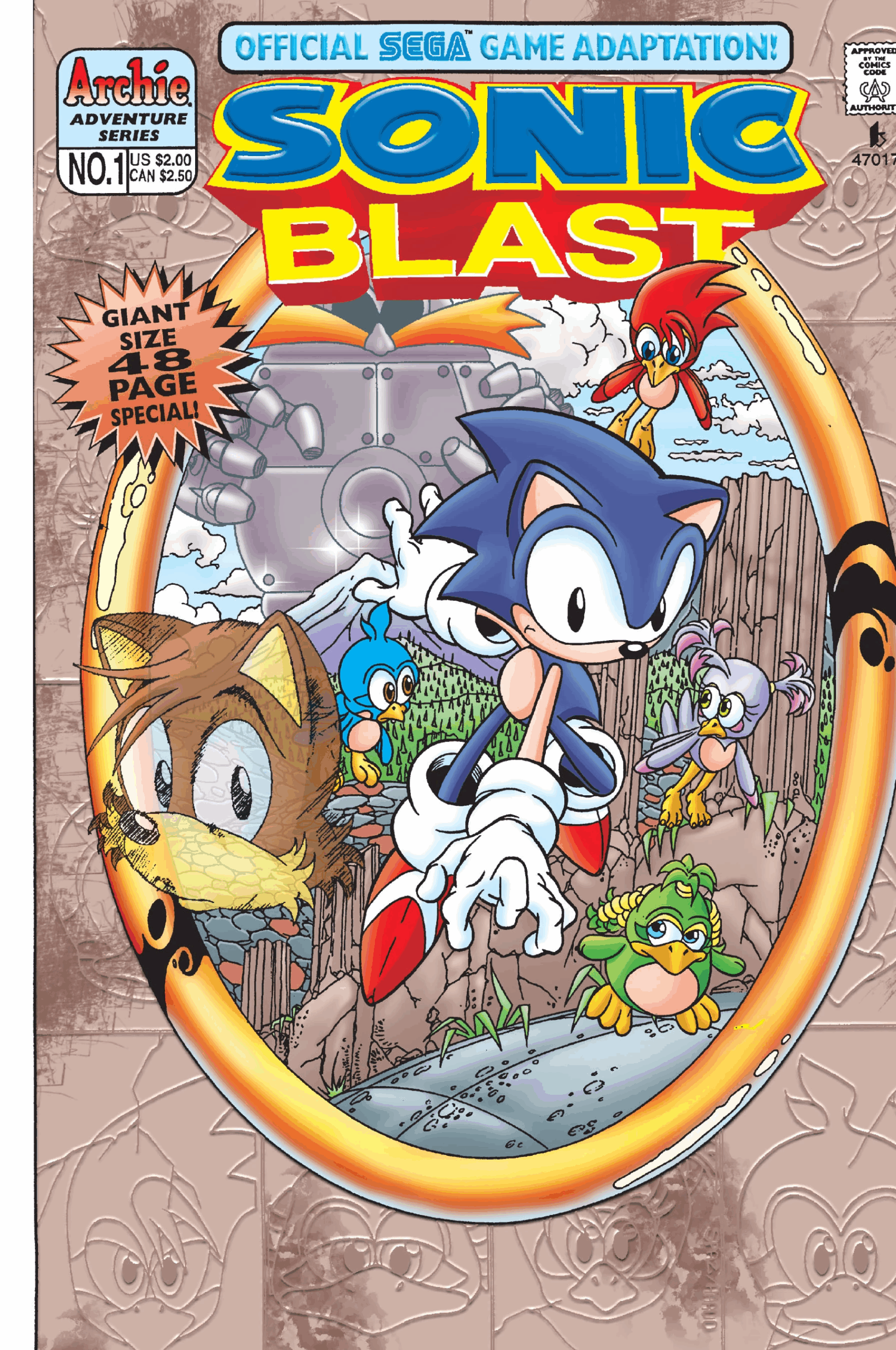
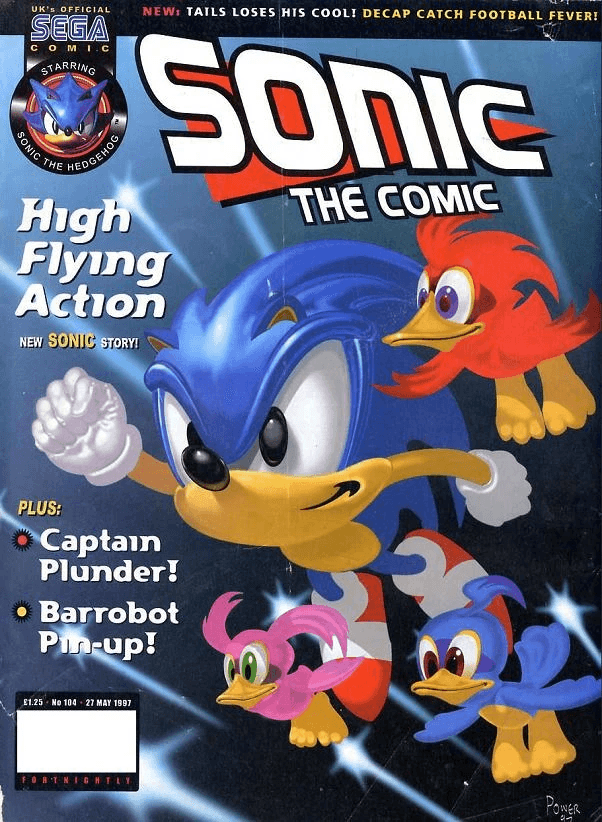
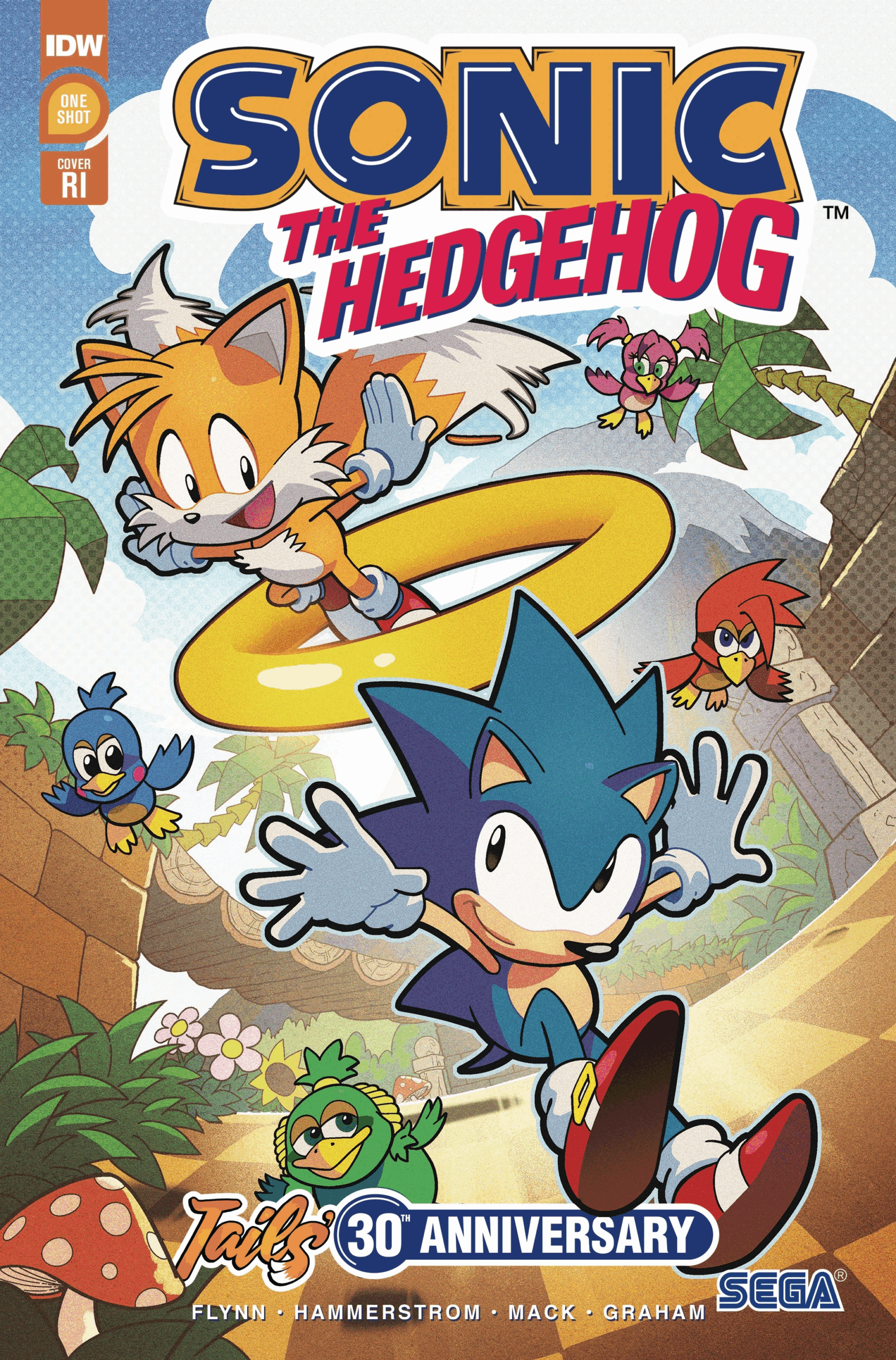
Beyond music, the game has been revisited in print and later media. Archie Comics produced a forty eight page special, Sonic Blast, which directly adapts the basic premise of Sonic 3D Blast with Sonic and the Knothole Freedom Fighters confronting Robotnik on Flicky Island.[76]Gallagher, Mike; DeCesare, Angelo (December 1996). “Sonic Blast”. Archie Sonic Blast (1). Archie Comics. A loose adaptation also appeared in issues 104 through 106 of Sonic the Comic, integrating the Flicky Island setting into that series ongoing narrative.[77]Sonic the Comic, no. 104 (May 1997). Fleetway Publications. Many years later, the IDW Publishing one shot Sonic the Hedgehog: Tails' 30th Anniversary Special presented a story positioned as a spiritual successor to Sonic 3D Blast and Tails' Skypatrol, with Witchcart and her minions taking over Flicky Island and capturing Sonic, leaving Miles ''Tails'' Prower to save both him and the Flickies.
For developer Traveller's Tales, Sonic 3D Blast was one of the studio’s earliest high profile projects and the beginning of a longer association with Sega properties. The company collaborated with Sonic Team again on the Saturn racing title Sonic R in 1997,[78]Pétronille, Marc; Audureau, William (2014). The History of Sonic the Hedgehog. Pix’n Love. ISBN 978-1-926778-96-9. and in later years became best known for licensed games based on the Lego toy line. Through that work they would eventually revisit the Sonic franchise in the 2015 crossover game Lego Dimensions, where Sonic appears as a playable character and themed level pack.[18]Minotti, Mike . The RetroBeat: Sonic 3D Blast sprints to a new legacy with an unofficial Director’s Cut. Venture Beat. Retrieved on 22 November 2017.[79]Fahey, Mike (July 23, 2016). “Sonic The Hedgehog And Fantastic Beasts Headline Lego Dimensions’ Wave Seven”. Kotaku. Retrieved October 1, 2019.
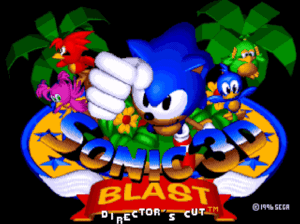
The game’s mixed critical reputation led to it often being regarded as a black sheep within the franchise, particularly in retrospective rankings that criticized its isometric viewpoint and slower pace but continued to praise its visuals and music.[66]Whitehead, Dan (November 3, 2007). “Virtual Console Roundup: Sonic 3D: Flickies Island“. Eurogamer. Archived from the original on September 16, 2014. Retrieved February 25, 2022.[67]Shau, Austin (December 12, 2007). “Sonic 3D Blast for Wii Review”. GameSpot. CBS Interactive. Archived from the original on December 5, 2008. Retrieved February 25, 2022.[68]McFerran, Damien (November 2, 2007). “Sonic 3D Blast (Wii Virtual Console / Mega Drive) Review”. Nintendo Life. Archived from the original on December 22, 2011. Retrieved March 1, 2015.[71]“The Sonic games ranked from best to worst for some reason & Knuckles”. PC Gamer. September 1, 2017. Retrieved February 5, 2018.[69]USgamer Team (August 18, 2017). “Gotta Go Fast: Ranking All of The Sonic The Hedgehog Games”. USgamer. Archived from the original on August 25, 2017. Retrieved February 5, 2018. Interest in the title was renewed in 2017 when lead programmer Jon Burton released an unofficial director's cut patch for the Mega Drive version, Sonic 3D Blast: Director's Cut, featuring refined controls, a password save system, Time Attack challenges, a level editor style Debug Mode and the ability to transform into Super Sonic.[18]Minotti, Mike . The RetroBeat: Sonic 3D Blast sprints to a new legacy with an unofficial Director’s Cut. Venture Beat. Retrieved on 22 November 2017.[80]Wales, Matt (October 13, 2017). “Sonic 3D’s original developer is creating an unofficial Director’s Cut”. Eurogamer. Retrieved October 14, 2017. This fan facing update has helped reframe the game for some players as an interesting experimental step in Sonic’s history, rather than only a misstep in the move toward three dimensional gameplay.
Cheats[edit]
Mega Drive / Genesis version
Level Select
- On the title screen, press , , Right, , , Up, Down, .
If entered correctly, a chime will play and you will be taken to the menu screen. From there, choosing the Start option will bring up the Level Select screen. - In the Genesis version, there is also a peculiar glitch based method of accessing the Level Select. By physically tilting or striking the cartridge so that the game momentarily “crashes,” an internal exception handler can trigger and drop the player into the hidden Stage Select, according to Traveller’s Tales founder Jon Burton.[81]Kuchera, Ben (3 October 2017). Why physically hitting Sonic 3D Blast unlocks a secret menu. Polygon.
Level Skip
- After activating the Level Select and entering a Zone, pause the game and press to immediately skip to the next level.
- If this is done during a Special Stage, the game will award the corresponding Chaos Emerald as if the stage had been cleared.
Sega Saturn version
Level Select (Japanese Saturn version)
- On the title screen of the Japanese Sega Saturn version, press Down on the D-Pad three times, then press any of the six face buttons (A through Z) to jump to a Zone; a Ring sound will confirm the input.
- Press START afterwards to enter the main menu and then begin the game from the chosen stage.
Level Skip
- On most Saturn releases, Level Skip is enabled by default.
- At the title screen, hold and press START.
- Once in the main game, press START to pause, then press , or to advance to the next level.
- At the title screen, hold
Easy Emeralds / Quick Emerald Gain (Saturn)
- Also enabled by default in Saturn versions:
- At the title screen, hold and press START.
- During gameplay, pause the game and press
 to trigger the Easy Emeralds function, allowing very rapid collection of Chaos Emeralds.
- At the title screen, hold
Trivia[edit]
- Director Jon Burton revealed on his GameHut YouTube channel that the Sega Saturn port of the game runs on essentially the exact same gameplay code as the Mega Drive / Genesis version. To streamline development, he wrote his own compiler so that the original hex assembly code could be ported directly, with the updated Saturn graphics overlaid on top of the original assets rather than interacting with the gameplay code.
- In the Mega Drive / Genesis version, there is a peculiar glitch that can be triggered in the Sound Test menu. By playing track 14 (the boot up cutscene music) and then quickly switching to track 19 (the 1-Up jingle) at the last moment, the game begins to play a series of random notes and sound effects. Letting this run long enough will eventually cause the glitchy audio to override the standard music and sound effects for the rest of the session.
- The European box artwork for Sonic 3D Blast was created by design studio Me Company, using a clay model of Sonic the Hedgehog’s head as the basis for the illustration.[82]Y2K Aesthetic Institute on Twitter. Twitter (20 October 2019). Retrieved on 20 October 2019.
- This is the second game to feature Knuckles the Echidna’s socks in the wrong color. They are blue instead of green; the first instance of incorrect sock color was in Sonic 3 & Knuckles, where they appeared yellow when not playing as Knuckles.
- In the Mega Drive / Genesis version, the Level Select input → ↑ ↓ is notable for spelling out “Baracuda” on the controller.
- The Mega Drive / Genesis Level Select can also be triggered by intentionally making the game crash, as described in the Cheats section, due to an internal exception handler that falls back to the hidden Stage Select menu.
- At Jack in the Box fast food restaurants in the United States, copies of the PC version of Sonic 3D Blast were given away with kids’ meals up until the release of Sonic Adventure.
- All of the game’s Zone names are alliterations, similar to those in Sonic the Hedgehog CD (for example, Green Grove, Rusty Ruin, Diamond Dust).
- Richard Jacques, composer of the Saturn / PC soundtrack, later remixed the Green Grove Zone music for the Sega racing game ”Metropolis Street Racer” as the track “It Doesn’t Really Matter,” sung by T. J. Davis, who had previously worked with Jacques on Sonic R.
- The Sega Saturn port uses an arrangement of the 1-Up jingle from Sonic the Hedgehog and Sonic the Hedgehog 2 instead of the Sonic 3 & Knuckles 1-Up jingle by Jun Senoue that was reused for the Mega Drive / Genesis version. Both versions use the same Chaos Emerald jingle. Despite this, original composer Yukifumi Makino is not credited in the Saturn release.
- This is the second Sonic game where collecting all seven Chaos Emeralds does not unlock Super Sonic. The Emeralds are instead required to access The Final Fight and obtain the good ending.
- Sonic 3D Blast was the last Sonic game released for the Sega Mega Drive / Genesis.
- This is the first Sonic title to be released on the Sega Saturn, although Sonic the Hedgehog and Dr. Eggman had already appeared as unlockable characters in Christmas NiGHTS into Dreams....
- It is the only Sonic game where the European version features a different title from the North American version, using Sonic 3D: Flickies’ Island outside North America.
- One of Sonic’s idle or waiting animations from this game was later reused in Sonic Generations as one of Classic Sonic’s animations.
- The Japanese Sega Saturn version features slightly faster loading times but has the Level Skip code removed or altered compared to other Saturn versions.
- Matthew Felix holds a documented world record high score of 1,746,900 points in the Mega Drive / Genesis version, achieved on 19 December 2013.[83]Highest score Sonic 3D Blast Sega Genesis. RecordSetter.
- In Japan, Sonic 3D Blast was the third to last first party Saturn title to be released and remained a Saturn exclusive there until Sonic Mega Collection finally brought the Mega Drive version to the region.
- Sonic 3D Blast shares several core mechanics with the earlier Sega arcade game Flicky, which introduced the Flickies. Both games revolve around rescuing small birds that form a chain behind the player, scattering when hit by an enemy, and clearing stages by safely escorting all birds to a goal point.
- Sonic 3D Blast is one of the two Sonic titles included in the Arcade Collection for PC, the other being Sonic R.
- Multiple musical cues, such as the 1-Up jingle and Continue music, were reused from Sonic 3 & Knuckles. The game also reuses several sound samples from earlier Sonic titles, while the Saturn / PC version enhances many of the sound effects.
- Like Sonic the Hedgehog CD, Sonic & Knuckles Collection and Sonic R, the original PC port of Sonic 3D Blast was released under the “Sega PC” brand.
- A promotional screenshot for Sonic Jam on the Tiger Game.com handheld showed Sonic 3D Blast as a planned title for that system, but this version was later cancelled for unknown reasons.
- Unlike many earlier Sonic releases, the Mega Drive / Genesis version uses a single ROM worldwide. The regional differences are limited to the title screen, which displays Sonic 3D Blast on North American hardware and Sonic 3D: Flickies’ Island on European and Japanese systems.
- In issue 54 of the Spanish magazine Superjuegos, a feature on Sonic 3D Blast refers to most of the game’s Zones using alternate names derived from previous Sonic titles:
- Green Grove Zone is called “Green Hill“.
- Rusty Ruin Zone is called “Marble Zone“.
- Spring Stadium Zone is called “Casino Night” (matching the name used for the original uncompressed Spring Stadium theme).
- Diamond Dust Zone is called “Snow Mountain Zone”, a name later reused for Snow Mountain Zone in Sonic Dash, which also uses a remix of Sonic 3D Blast’s Diamond Dust music.
- Volcano Valley Zone is called “Volcano Zone”.
- Gene Gadget Zone is referred to as “Chemical Plant“.
- Panic Puppet Zone is referred to as “Scrap Brain“.
Notes[edit]
- ↑ Outside North America the game is marketed as Sonic 3D: Flickies’ Island. The Japanese titles are ソニック3Dブラスト (Sonikku Surī Dī Burasuto) and ソニック3D フリッキーアイランド (Sonikku Surī Dī Furikkī Airando). The original PC release uses the combined name Sonic 3D Blast: Flickies’ Island.
- ↑ The Japanese Mega Drive version of the game did not appear until its inclusion in Sonic Mega Collection, whereas the Saturn version was released there in 1999 as Sonic 3D: Flickies’ Island.
- ↑ Reported North American Genesis release dates vary between 7 November 1996[40]ソニック3Dブラスト. Sega (in Japanese). Archived from the original on June 23, 2018. Retrieved December 31, 2014. and 9 November 1996.[41]“GameInformer #42 pg. 22″ (PDF). Sonic Retro. October 1996. Retrieved February 16, 2018.
- ↑ European Genesis release dates are variously given as 5 November 1996[42]“Checkpoint: Events and Software Releases”. Computer and Video Games. No. 180. United Kingdom: EMAP. November 1996. p. 49. Archived from the original on May 8, 2016. Retrieved May 5, 2017. or 14 November 1996.[43]“Sonic3D UK Postcard” (PDF). Sonic Retro. Retrieved June 9, 2018.
- ↑ European Saturn release dates are variously given as 13 February 1997[45]Lomas, Ed (March 1997). “Checkpoint – The month’s events and software releases at a glance. Feb-March” (PDF). Computer and Video Games. No. 184. Future Publishing. p. 53. or 14 February 1997.[46]“Press release: 1997-01-31: Sega brings Sonic to Saturn in latest stage of console combat”. Sega Retro. Retrieved November 22, 2015.
- ↑ Released as Sonic 3D: Flickies’ Island (ソニック3D フリッキーアイランド Sonikku 3D Furikkī Airando) in Europe and Japan. The PC version uses the longer name Sonic 3D Blast: Flickies’ Island
References[edit]
- ↑ a b c d e “History”. The History of Sonic the Hedgehog. Les Editions Pix’n Love. 6 September 2013. ISBN 978-1-926778-96-9.
- ↑ a b c d e f g Thomas, Lucas M. (December 4, 2007). “Sonic 3D Blast Review (Genesis)”. IGN. Archived from the original on November 10, 2013. Retrieved July 19, 2013.
- ↑ a b c d e f Horowitz, Ken (June 19, 2007). “Interview: Mike Wallis”. Sega-16. Archived from the original on September 4, 2009. Retrieved April 7, 2015.
- ↑ a b Horowitz, Ken (2016). “Changing of the Guard”. Playing at the Next Level: A History of American Sega Games. McFarland & Company. p. 156. ISBN 9780786499946.
- ↑ a b c d e f g h Sonic 3D: Flickies’ Island (Sega Saturn) Japanese instruction booklet, pgs. 4-5.
- ↑ a b c “Sonic 3D Blast: Robotnik’s Back, but so Is Sonic!” (PDF). Electronic Gaming Monthly. No. 88. Ziff Davis. November 1996. pp. 254–5.
- ↑ a b c d e f g “Birdies! Love the Birdies!! Review”. Game Revolution. Game Revolution. June 6, 2004. Archived from the original on June 23, 2018. Retrieved April 7, 2015.
- ↑ a b “Sonic 3D Blast, Wrecking Crew, Super Air Zonk”. GameZone. May 4, 2012. Retrieved April 7, 2015.
- ↑ a b c “Cover Story: Sonic 3D” (PDF). Mean Machines Sega (45). July 1996. Retrieved February 5, 2018.
- ↑ a b “Sonic 3D”. Previews. Mean Machines Sega. No. 52. Peterborough: Emap International Limited. February 1997. pp. 84, 85. ISSN 0967-9014.
- ↑ a b Wright, Steven T. (May 2, 2018). “Why the founder of Traveller’s Tales released a director’s cut of an old Sonic game 25 years later”. Eurogamer. Retrieved February 7, 2018.
- ↑ Langshaw, Mark (February 8, 2014). “Sonic the Hedgehog 3 retrospective: Sega mascot’s finest outing”. Digital Spy. Retrieved January 22, 2015.
- ↑ a b c “Cover Story: Sonic 3D” (PDF). Mean Machines Sega (45). pp. 22-26. July 1996. Retrieved February 5, 2018.
- ↑ a b Houghton, David (24 April 2008). The greatest Sonic game we never got to play. GamesRadar. Retrieved on 16 August 2023.
- ↑ a b c d “Sonic Boom!”. Sega Saturn Magazine (15): 58–63. January 1997.
- ↑ a b c d Gerstmann, Jeff (December 12, 1996). “Sonic 3D Blast Review for Saturn”. GameSpot. CNET Networks. Archived from the original on December 22, 2003. Retrieved February 25, 2022.
- ↑ a b “Who Won the Videogame Wars of 1996?”. Next Generation. No. 28. Imagine Media. April 1997. p. 17.
- ↑ a b c d Minotti, Mike . The RetroBeat: Sonic 3D Blast sprints to a new legacy with an unofficial Director’s Cut. Venture Beat. Retrieved on 22 November 2017.
- ↑ Wales, Matt . Sonic 3D’s original developer is creating an unofficial Director’s Cut. Eurogamer. Retrieved on 14 October 2017.
- ↑ a b Sonic 3D: Flickies’ Island (Sega Saturn) Japanese instruction booklet, pg. 20.
- ↑ a b c Sonic 3D: Flickies’ Island (Sega Saturn) Japanese instruction booklet, pg. 21.
- ↑ Arnold, J. Douglas; Gampos, Willy (December 1996). Sonic 3D Blast! Survival Guide for Saturn and Genesis. Sandwich Islands Publishing. ISBN 1-884364-46-2.
- ↑ a b Sonic 3D: Flickies’ Island (Sega Saturn) Japanese instruction booklet, pg. 22.
- ↑ a b c “Game Over/Continue”. Sonic 3D Blast (Saturn). Sega. November 20, 1996. p. 12.
- ↑ “Review Crew: Sonic 3D Blast“. Electronic Gaming Monthly (90): 60. January 1997. Archived from the original. Retrieved on 24 February 2022.
- ↑ a b c d Nutter, Lee (February 1997). “Review: Sonic Blast 3D”. Sega Saturn Magazine. No. 16. Emap International Limited. pp. 58–59.
- ↑ “Sonic 3D Blast (Saturn) Special Stage 1”. Youtube. Retrieved on November 25, 2025.
- ↑ Traveller’s Tales; Sonic Team (November 5, 1996). Sonic 3D Blast (Sega Genesis). Sega. Level/area: Credits.
- ↑ Traveller’s Tales (November 20, 1996). Sonic 3D Blast (Sega Saturn). Sega. Level/area: Credits.
- ↑ a b c d Sega-16 – Side by Side: Sonic 3D Blast (Genesis vs. Saturn). Sega 16.
- ↑ ICEKnight. Sonic Retro. Retrieved on 25 November 2025
- ↑ Langshaw, Mark (February 8, 2014). “Sonic the Hedgehog 3 retrospective: Sega mascot’s finest outing”. Digital Spy. Retrieved on January 22, 2015.
- ↑ Happy 30th Birthday Sonic! Enjoy My Earliest Sonic Prototypes!. YouTube. GameHut (23 June 2021). Retrieved on 27 September 2022. Jon Burton: This was originally called Sonic Spindrift, that was the working title for this game, obviously later it became Sonic 3D.”
- ↑ “Sonic 3D”. MegaDrive Preview. Mean Machines Sega. No. 48. Peterborough: Emap International Limited. October 1996. pp. 34–37. ISSN 0967-9014.
- ↑ Burton, Jon (September 29, 2017). Why does punching Sonic 3D trigger a Secret Level Select?. GameHut. Archived from the original on December 12, 2021. Retrieved February 21, 2018 – via YouTube.
- ↑ Burton, Jon (October 4, 2017). Sonic 3D’s intro sequence is impossible to fit on a cartridge – right?. GameHut. Archived from the original on December 12, 2021. Retrieved February 21, 2018 – via YouTube.
- ↑ Burton, Jon (May 7, 2018). Top 10 Surprising Sonic 3D Facts. Event occurs at 4:23. Retrieved May 7, 2018.
Sonic 3D Blast wasn’t originally going to be called Sonic 3D Blast; its original name was actually Sonic Spindrift.
- ↑ a b “Sonic 3D Blast: Blast’s the Name for a Blast of a Game” (PDF). Electronic Gaming Monthly. No. 89. Ziff Davis. December 1996. pp. 230–1.
- ↑ a b c d GameSpot Staff (October 21, 1997). “Sonic 3D Blast Review (PC)”. GameSpot. Archived from the original on September 28, 2015. Retrieved February 27, 2015.
- ↑ ソニック3Dブラスト. Sega (in Japanese). Archived from the original on June 23, 2018. Retrieved December 31, 2014.
- ↑ “GameInformer #42 pg. 22″ (PDF). Sonic Retro. October 1996. Retrieved February 16, 2018.
- ↑ “Checkpoint: Events and Software Releases”. Computer and Video Games. No. 180. United Kingdom: EMAP. November 1996. p. 49. Archived from the original on May 8, 2016. Retrieved May 5, 2017.
- ↑ “Sonic3D UK Postcard” (PDF). Sonic Retro. Retrieved June 9, 2018.
- ↑ Newton, James (June 25, 2012). “Sonic Blast Review”. Nintendo Life. Retrieved February 3, 2018.
- ↑ Lomas, Ed (March 1997). “Checkpoint – The month’s events and software releases at a glance. Feb-March” (PDF). Computer and Video Games. No. 184. Future Publishing. p. 53.
- ↑ “Press release: 1997-01-31: Sega brings Sonic to Saturn in latest stage of console combat”. Sega Retro. Retrieved November 22, 2015.
- ↑ ソニック3D フリッキーアイランド [en: Sonic 3D Flicky Island]. Sega (in Japanese). 1999. Retrieved December 31, 2014.
- ↑ “Games Guide”. Computer Trade Weekly. No. 654. United Kingdom. September 8, 1997. p. 96.
- ↑ Mirabella, Fran (November 12, 2002). “Sonic Mega Collection”. IGN. Retrieved November 16, 2014.
- ↑ Goldstein, Hilary (November 3, 2004). “Sonic Mega Collection Plus”. IGN. Retrieved November 16, 2014.
- ↑ Miller, Greg (February 12, 2009). “Sonic’s Ultimate Genesis Collection”. IGN. Retrieved November 16, 2014.
- ↑ Sonic 3D Blast™. Steam (1 June 2010). Retrieved on 9 April 2015.
- ↑ Peters, Jay (August 19, 2022). “Sega reveals every game coming to the Genesis Mini 2, including the controversial Night Trap”. The Verge. Retrieved March 30, 2024.
- ↑ “Who Won the Videogame Wars of 1996?”. Next Generation. No. 28. Imagine Media. April 1997. p. 17.
- ↑ a b c d e f g Lomas, Ed (November 1996). “Review: Sonic 3D: Flicky’s Island“. Computer and Video Games. No. 180. pp. 74–75.
- ↑ a b Lomas, Ed (March 1997). “Review: Sonic 3D“. Computer and Video Games. No. 184. pp. 78–79.
- ↑ a b Smith, Shawn; Hsu, Dan; Boyer, Crispin; Sushi-X (January 1997). “Review Crew: Sonic 3D Blast“. Electronic Gaming Monthly. No. 90. Ziff Davis. p. 60.
- ↑ a b c d Smith, Shawn; Hsu, Dan; Boyer, Crispin; Sushi-X (November 1996). “Review Crew: Sonic 3D Blast“. Electronic Gaming Monthly. No. 88. Ziff Davis. p. 90.
- ↑ a b c d e Jevons, Dan; Swan, Angus (November 1996). “Megadrive Review: Sonic 3D Blast“. Mean Machines Sega. No. 49. EMAP. pp. 54–56.
- ↑ a b c Walk, Gary Eng (December 13, 1996). “Sonic 3D Blast Review”. Entertainment Weekly. Archived from the original on April 25, 2009. Retrieved July 19, 2013.
- ↑ a b Art Angel (December 1996). “Genesis ProReview: Sonic 3D Blast“. GamePro. No. 99. IDG. p. 156.
- ↑ Ellis, Les (December 1996). “Review Saturn: Sonic 3D“. Sega Power (86): 54,55. Archived from the original. Retrieved on 24 February 2022.
- ↑ “The Best of ’96”. Electronic Gaming Monthly. No. 92. Ziff Davis. March 1997. p. 86.
- ↑ “Sonic 3D Blast for Saturn”. GameRankings. Archived from the original on December 5, 2019. Retrieved July 19, 2013.
- ↑ a b Weiss, Brett Alan. “Sonic 3D Blast – Review”. AllGame. Archived from the original on November 14, 2014. Retrieved February 2, 2018.
- ↑ a b Whitehead, Dan (November 3, 2007). “Virtual Console Roundup: Sonic 3D: Flickies Island“. Eurogamer. Archived from the original on September 16, 2014. Retrieved February 25, 2022.
- ↑ a b c d Shau, Austin (December 12, 2007). “Sonic 3D Blast for Wii Review”. GameSpot. CBS Interactive. Archived from the original on December 5, 2008. Retrieved February 25, 2022.
- ↑ a b c d McFerran, Damien (November 2, 2007). “Sonic 3D Blast (Wii Virtual Console / Mega Drive) Review”. Nintendo Life. Archived from the original on December 22, 2011. Retrieved March 1, 2015.
- ↑ a b USgamer Team (August 18, 2017). “Gotta Go Fast: Ranking All of The Sonic The Hedgehog Games”. USgamer. Archived from the original on August 25, 2017. Retrieved February 5, 2018.
- ↑ Knight, Rich. “Ranking Every “Sonic the Hedgehog” Platformer”. Complex. Retrieved February 5, 2018.
- ↑ a b “The Sonic games ranked from best to worst for some reason & Knuckles”. PC Gamer. September 1, 2017. Retrieved February 5, 2018.
- ↑ Armstrong, Jason (October 14, 2006). “Sonic Mega Collection Review (GCN)”. Nintendo Life. Retrieved July 27, 2018.
- ↑ Parish, Jeremy (November 29, 2004). “Sonic Mega Collection Plus Review for PS2 from”. 1UP.com. Archived from the original on October 3, 2012. Retrieved February 9, 2015.
- ↑ Summer of Sonic 2011 Retrospect (Interview with Jun Sunoue). London. July 2011.
- ↑ Sterling, Jim (April 6, 2010). “Sonic 4’s Eggman theme is from Sonic 3D Blast?”. Destructoid. Archived from the original on September 24, 2015. Retrieved February 3, 2018.
- ↑ Gallagher, Mike; DeCesare, Angelo (December 1996). “Sonic Blast”. Archie Sonic Blast (1). Archie Comics.
- ↑ Sonic the Comic, no. 104 (May 1997). Fleetway Publications.
- ↑ Pétronille, Marc; Audureau, William (2014). The History of Sonic the Hedgehog. Pix’n Love. ISBN 978-1-926778-96-9.
- ↑ Fahey, Mike (July 23, 2016). “Sonic The Hedgehog And Fantastic Beasts Headline Lego Dimensions’ Wave Seven”. Kotaku. Retrieved October 1, 2019.
- ↑ Wales, Matt (October 13, 2017). “Sonic 3D’s original developer is creating an unofficial Director’s Cut”. Eurogamer. Retrieved October 14, 2017.
- ↑ Kuchera, Ben (3 October 2017). Why physically hitting Sonic 3D Blast unlocks a secret menu. Polygon.
- ↑ Y2K Aesthetic Institute on Twitter. Twitter (20 October 2019). Retrieved on 20 October 2019.
- ↑ Highest score Sonic 3D Blast Sega Genesis. RecordSetter.
External Links[edit]
- Sega of America webpage: Saturn
- Official website on Sega.com (archive)
- Sega of Japan Virtual Console page (Japanese)
- Nintendo catalogue pages: US, UK, AU
- Sonic 3D: Flickies’ Island on Steam
- Official Saturn website (in Japanese)
- Sonic 3D Blast at MobyGames
- Sonic 3D Blast at GameFAQs
- Sonic 3D Blast at Hardcore Gaming 101
- Sonic 3D Blast at The Cutting Room Floor
- Sonic 3D Blast
- “Side by SIde: Sonic 3D Blast (Genesis vs. Saturn)
- Classic Interview: Katsuhisa Sato (Sonic 3D Blast)
Related Sonic News Articles[edit]
Discover more from Sonic City ⋆★ Sonic the Hedgehog News, Media, & Community ★⋆
Subscribe to get the latest posts sent to your email.