A newly published interview with former STI artist Chris Senn has shed new light on the visual development of Sonic X-treme, including the long-discussed similarities between the game’s unreleased Badnik designs and the enemies seen in Sonic the Hedgehog 3.
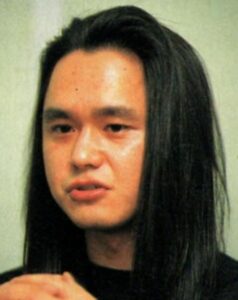
He most notably worked as a graphic designer at SEGA for games like Panic!, Sonic 3 & Knuckles, and Skies of Arcadia.
Image Source: Saturn Fan (Issue 8/April 25, 1997) – Pg. 89
Speaking with Retro64 and an anonymous interviewer, Senn confirmed that Sonic 3 artist Satoshi Yokokawa played a direct role in helping him refine the style of Sonic X-treme’s enemies during his time at Sega Technical Institute.
According to Senn, he was already trying to study Sonic’s visual language by gathering whatever reference material he could find, but things became much clearer once he began speaking with Yokokawa directly.
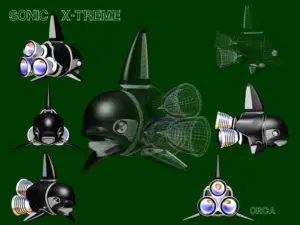
“One of the enemies I designed was the orca enemy, which basically looks like a robotic orca but with rocket engines on the back,” Senn said. “That was loosely based on a sketch he did.”
Senn explained that Yokokawa’s feedback helped him better understand how Sonic enemy designs were meant to read visually, especially when it came to emphasizing weapons, mouths, claws, and other aggressive features.
“He thought – he was giving me suggestions like, ‘Look, if you’re going to have something like a weapon, or an arm, or a head with a mouth that bites, you want to make the graphic more prominent, or the design of that part more prominent – like bigger – so you want to push to be more extreme.’,” Senn recalled.
That advice ended up having a major effect on how he approached the project’s enemy roster. Looking back, Senn said the guidance helped his work feel much closer to Sonic 3’s style.
Once Yokokawa started giving me feedback, it really helped me push certain aspects of the visuals to be more prominent, which ended up feeling more Sonic 3-like, because he was the designer of the characters there.
That is a significant detail for fans who have long pointed out just how closely some of Sonic X-treme’s Badnik concepts resemble the enemies from Sonic 3 and Sonic & Knuckles. The interview also finally puts a name to the artist Senn had previously struggled to recall, with Senn ultimately confirming, “Yokokawa.”
Anyway, this awesome artist who was designing the Badniks… I asked him for feedback on the enemy designs I was doing. There’s an evolution of my visual designs for that stuff. Before I spoke to him, I had… Sonic 2. This was before the internet was a thing. You couldn’t just look something up. There was no Siri, none of that. There were old files here and there, and some people had a drawing here and there. I scoured magazines to get snapshots of the enemies, the line drawings, but I could start to think in that style by having almost like a mood board of stuff. That was super helpful, but actually it was Yokokawa.
The interview also clears up another long-running point of confusion involving the old Rock the Rock promotional video for Sonic 3. In that video, Chris Senn was credited alongside Kunitake Aoki as one of the game’s artists, leading some fans over the years to wonder whether Senn had actually worked on Sonic 3 itself.
It stood out as one of the company’s most ambitious marketing campaigns and was later broadcast as an MTV special a week after the event.
Senn flatly denied that, saying he had “zero to do with” Sonic 3 and believes the credit was simply the result of confusion during the making of the promotional video.
“If there’s one thing I don’t like – if this was for Sonic 3 – I had nothing to do with Sonic 3, first of all, let’s make that clear” Senn said. “They may have lumped me into Sonic 3, but I had zero to do with that.”
Instead, Senn said his connection to Sonic 3 came through studying the game’s art and getting feedback from artists on the Japanese side of STI. He described Yokokawa as “so friendly and super cool,” and said their conversations were especially valuable because he was trying to immerse himself in Sonic’s established style as much as possible.
“I tried really hard,” Senn said. “I tried to immerse myself in that style as much as possible.”
Elsewhere in the interview, Senn also spoke about the challenge of designing Mecha Sonic concepts for Sonic X-treme and clarified that while he has seen some existing Mecha Sonic material from the games since, he had not seen Sonic 3 concept art for Mecha Sonic Mk. II at the time while designing the Mecha Sonic Mk. III concept. Even so, the overlap in inspiration seems to have led him in a very similar direction.
Chris Senn: Okay, did I see concept art for the Sonic 3 Mk. II character? No. Did I even know that it was called Mk. II when I was designing these? No.
Retro64: This is the character.
[Senn is shown a piece of his concept art for the Sonic X-treme character Mecha Sonic followed by the Sonic & Knuckles sprite of the character Mecha Sonic Mk. II]
Chris Senn: No, of course I’ve seen it since, but one day we’re working on it… No, I didn’t see that.
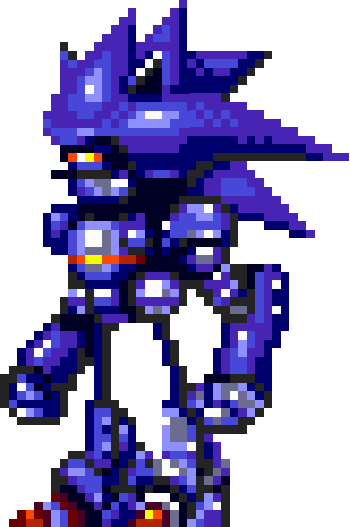
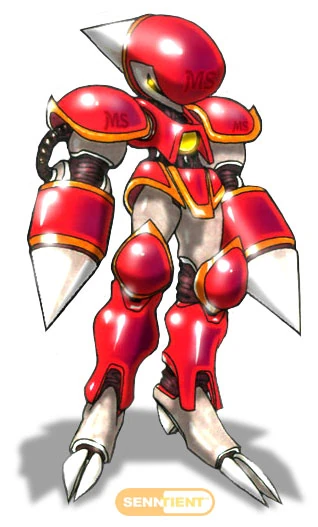
When shown side-by-side comparisons between his X-treme Mecha Sonic concepts and a Mecha Sonic sprite from the Genesis era, Senn said the resemblance was not intentional in that specific case, but acknowledged that he was drawing from many of the same influences, including Sonic art, anime, and mechanical design work he admired at the time.
Let’s take a look at, stylistically, a couple of the elements here, because this is interesting that you brought this up. Let’s start from before I even joined STI. I was super into anime, which a lot of people call – [exaggerated] “anime.” [in a Southern accent] “Oh, you’re into that anime thing.” I grew up in high school. That sounds weird. [in a Southern accent] “I was born in high school!” I had found a buddy who bootlegged Japanese VHS tapes. There were anime tapes and everything anime-related, with the exception of the lower-cost stuff you’d see in Saturday morning cartoon shows. The actual OVAs were all imports and absolutely not mainstream. You had to go to like one place in L.A., or maybe two, to find bootleg stuff – posters, if you wanted those. They were not all over the place like they are now or as they’ve been for a long time, so I scrounged to find all sorts of stuff. When I was in 10th grade, I was picking anime I really loved and then copying it to try to learn the style.
That’s why nowadays when a lot of people are up in arms about AI – “Well, it’s just combing the internet and stealing styles” – I’m like, “Yes.” I get the ethical dilemma that this poses. However, I learned exactly the same way AI is learning: by copying styles. So you’ve probably seen the Miyazaki-style AI where you can just feed whatever you want – like Walking Dead or Breaking Bad or whatever – into it, and now all of a sudden it’s anime. That’s how I learned. I have a different perspective, a little bit, from a lot of the artists out there who are really feeling threatened and pissed off. “Hey, you’re stealing stuff!” There’s a legitimate concern there, and there needs to be widespread governance of all this so that everybody understands what the rules are, because right now it’s still the Wild West. I did want to bring up that point. That’s kind of how I learned different styles – by copying them. With anime, I did the exact same thing. Before I even met Yokokawa, and before I even thought there would be an opportunity to work at STI, I was already drawing in different styles. It was an amalgam of different things, different inspirations, which I think is what any artist does unless they’re really hyper-focused on a style.
For fans interested in Sonic X-treme’s visual history, the biggest takeaway here is that the Sonic 3 connection was real, just not in the way many assumed. Chris Senn did not work on Sonic 3 itself, but one of the key artists behind Sonic 3’s enemies, Satoshi Yokokawa, directly influenced how Senn shaped Sonic X-treme’s Badnik roster.
The interview also goes deeper into the internal struggles surrounding Sonic X-treme’s development, including the now-infamous meeting with SEGA executives that ultimately sealed the project’s fate. Senn describes the moment as a missed opportunity that still stands out to him years later.
Beyond X-treme, the interview touches on Senn’s later work on Sonic Boom: Rise of Lyric, where he once again attempted to bring new ideas to the franchise, particularly with cooperative gameplay. However, many of those ideas were cut during development due to time constraints and shifting priorities.
Throughout the interview, Senn emphasizes that his perspective reflects only one side of a much larger story, noting that different members of the team may remember events differently. Still, the discussion provides one of the most detailed firsthand accounts yet of both Sonic X-treme’s troubled development and the creative influences behind its distinctive visual identity.
Stay tuned to Sonic City for more Sonic X-treme News and Updates!
Discover more from Sonic City ⋆★ Sonic the Hedgehog News, Media, & Community ★⋆
Subscribe to get the latest posts sent to your email.