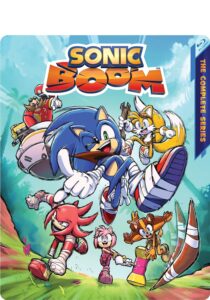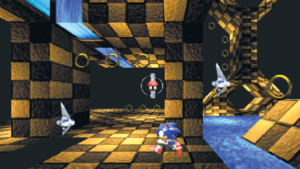
A newly surfaced interview with former Sega Technical Institute developer Chris Senn sheds new light on the troubled development of Sonic Boom: Rise of Lyric, revealing how the project gradually lost its direction.
Senn, who previously worked on the cancelled Sonic X-treme, joined Big Red Button Entertainment with the goal of finally finishing a Sonic game.
“The reason I joined that company – Big Red Button Entertainment – was to get a chance to close the chapter of Sonic in my life, because Sonic X-treme had remained open and got canceled,” Senn said. “I really wanted to finish a Sonic game.”
Early in development, the project had a clear idea built around cooperative gameplay.
The vision for the game was “stronger with your friends.” That simple statement just made my imagination explode. Working with your friends in a cooperative Sonic game, real time – that sounds amazing.
But that direction did not last. As deadlines closed in, major features were cut.
“We were running out of time and money, so decisions were made which ultimately chopped all of the awesome cooperative stuff from the game,” Senn explained. “That’s why you have the [sarcastically] “Hey, let’s work together. I’ll stand on this pressure plate.” “Oh, I’ll stand on the other pressure plate. This is so fun.” And I was like, “Oh my God, this is… Ugh.” It was very disappointing.”
Technical challenges added even more pressure. The game was being developed for the Wii U before the hardware was finalized, leaving the team without full specifications.
We were developing for a new hardware device – the Wii U – which wasn’t finished yet, so we didn’t have all the specs and we didn’t necessarily have versions we could run that were bug-free. That was really hard.
At the same time, the project was tied to a broader multimedia rollout that included a TV series and merchandise, leading to last-minute changes.
They’d come back with, “Well, could you add these vehicles in the game?” And we’re like, “Dude, we’re shipping in six months.
For Senn, the biggest issue came down to something more fundamental. The game no longer felt like Sonic.
About six months from shipping, and before that I had brought up, “Where’s the speed in our game?” I saw lots of combat being developed, puzzles, but where’s the speed?
The answer he received stuck with him.
The reaction I got was unanimously, “Well, we’re not making a classic Sonic game.”
Senn pushed back, questioning how a Sonic title could work without speed, but the direction did not change.
At one point – I kid you not – one of the pitches for this game was, “This is going to be the slowest Sonic game ever.”
That approach left the game caught between ideas.
If we nail [co-op], then okay, I could understand there being some allowance for, “It’s not the fastest Sonic game,” but you can work with your friends. There’d be something to latch onto. Ultimately what we created didn’t do either.
Released in 2014, Sonic Boom: Rise of Lyric was widely criticized for its technical issues, lack of polish, and departure from traditional Sonic gameplay. Senn’s comments reinforce the long-standing view that the problems were rooted in development constraints, shifting priorities, and a vision that never fully came together.
Stay tuned to Sonic City for more Sonic Boom: Rise of Lyric News and Updates!
Discover more from Sonic City ⋆★ Sonic the Hedgehog News, Media, & Community ★⋆
Subscribe to get the latest posts sent to your email.